Issue 23 of 24 · 28 January 2024

Diritti al punto - January 2024

Dear readers, the new year has begun in the same tragic climate in which 2023 ended. The Russo-Ukrainian conflict continues and attempts to achieve a...

Editorial

Editorial

The new year has begun in the same tragic climate in which 2023 ended. The Russo-Ukrainian conflict continues and attempts to achieve a just peace seem futile; the crisis in the Middle East is heading towards escalation, and the humanitarian situation in Gaza is extremely dire.

In this issue, we discuss the right to education denied in Ukraine and Russia’s manipulation of Ukrainian education systems.
The climate crisis progresses in parallel with political crises. The outcomes of COP28 show that, no matter how much states commit, efforts are not enough to resolve the damaging consequences of climate change.

Our in-depth analyses of international humanitarian law continue. In this issue, we explain the differences between international and non-international armed conflicts.

Amnesty International forgets no one. Russia is not only the country that militarily attacked Ukraine; it is also the country that silences—sometimes forever—dissidents and political opponents. We take stock of Aleksei Navalny's situation following the period of silence during which there was no news of him.

If you enjoy our newsletter, please share it and invite anyone you wish to subscribe by clicking the link at the bottom of the page.

Article 1

The right to education denied in Ukraine

The right to education denied in Ukraine

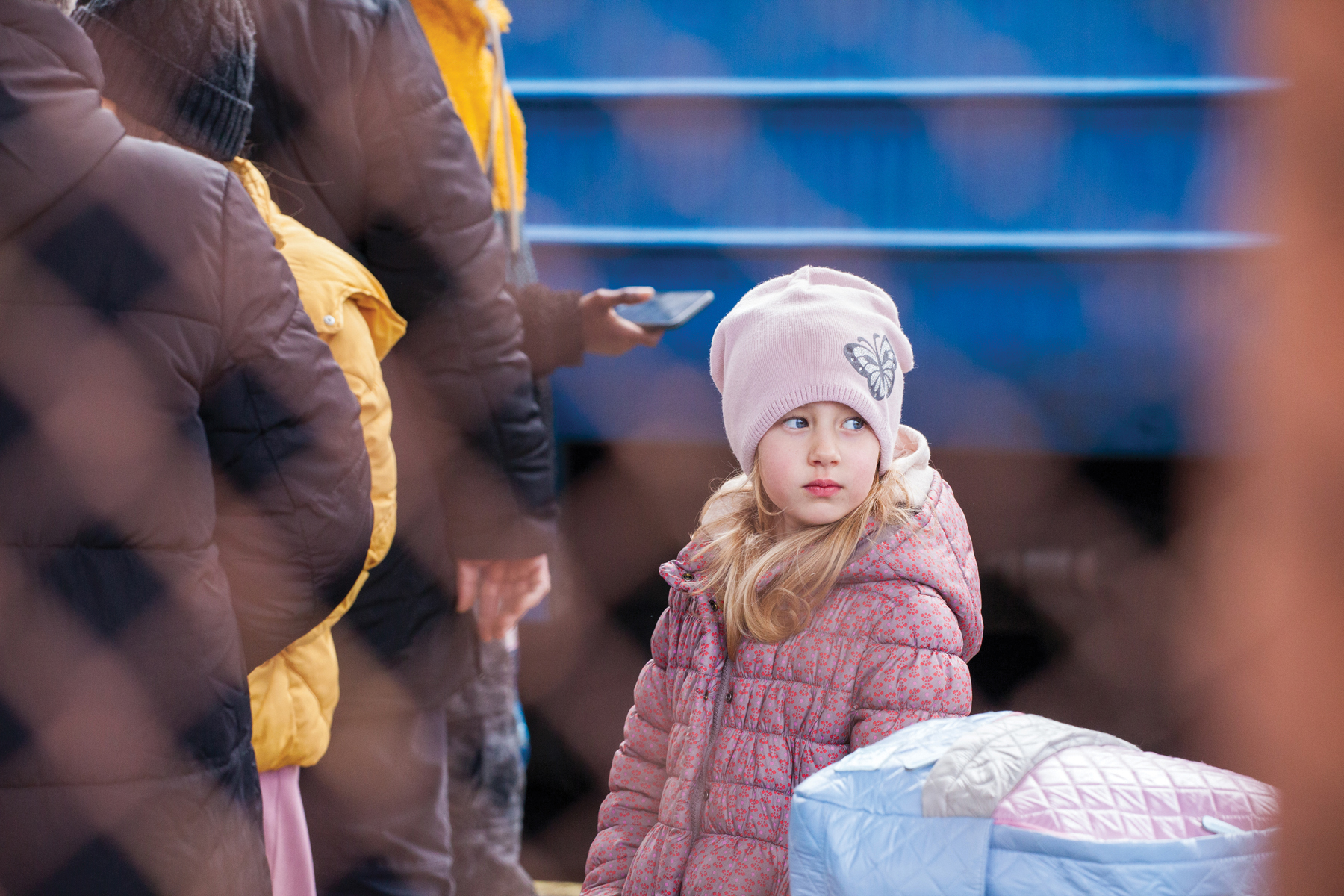
24 February 2022: the Armed Forces of the Russian Federation invade Ukraine. Death, destruction, mass displacement, indiscriminate attacks, and repression. Russian targets have also included children, who, over these years, have been denied a fundamental right: the right to education.

For some time now in the Ukrainian territories occupied by Russia, the population has faced intimidation from soldiers who prohibit them from continuing their studies and pursuing educational pathways in schools.

Resisting leads to brutal reprisals, threats, and the risk of children being placed in "re-education" institutions, through adoption by Russian families or compulsory enrolment in schools that follow the Russian curriculum. However, many Ukrainian parents have chosen not to surrender to the wave of terror and have instead sought, with the help of teachers, to organise lessons based on the Ukrainian curriculum. Secret meetings and book deliveries serve as an antithesis to searches and reprisals.

From the perspective of international law, it should be recalled that Russian attacks have not spared hospitals and schools, even though, as civilian infrastructure, they must never be targeted, even if used for military purposes. Furthermore, it should be considered that Russia and Ukraine have ratified the United Nations Convention on the Rights of the Child, which recognises education as a fundamental right aimed at developing the personality, talents, and abilities of young people. Moreover, according to the International Covenant on Economic, Social and Cultural Rights (ICESCR), parents have the right to choose their children's school in accordance with their own convictions.

It is evident that, for two years now, these principles of international law have been completely flouted on Ukrainian territory.

Amnesty International conducted research based on interviews with 23 educators and 16 families who lived, or are still living, under Russian occupation.

In particular, a message distributed to many students in Berdiansk is striking, stating: “Look around you. You can see that Ukraine has destroyed Kharkiv, Mariupol and other cities. If you don't want Ukraine to kill you, tell us everything you see and learn.” An indoctrination attempt by the Russian authorities, who seek to disorient students in order to erase not only buildings and cities, but also destroy the history, culture, and identity of a people.

From the Kharkiv region, teachers Hanna and Olena described receiving a message from their school urging them to teach the Russian curriculum at the start of the new school year in September 2022. Both refused and were forced into hiding.

From the Zaporizhzhia region, however, a teacher recounted continuing to provide online lessons to their students in order to ensure continuity of learning and not abandon their pupils.

From the Kherson region, Kseniya shared her story and that of her son Kyrylo with Amnesty; he had been threatened by Russian soldiers with being sent to a Russian orphanage if he did not return to school. Kyrylo returned to school—a school decorated with Russian symbols and with armed personnel waiting for him and his classmates at the entrance and inside the building. That was no longer Kyrylo's school.

The Russian attempt to monopolise education in Ukraine has resulted in a shortage of qualified staff, children left alone in classrooms and forced to read specific books, an absence of quality teaching personnel, and widespread mental and physical stress.

Amnesty International calls on the Russian authorities to end indiscriminate attacks on civilian buildings and to halt the coercion exerted on students and teachers. It urges the Ukrainian Government to expand the provision of information, data coverage, and internet access to enable young people to access the resources, including digital ones, needed to continue their education.

Amnesty International's appeal to States is to allocate their resources to guarantee the right to education in an accessible and safe manner.

Amnesty International - Ukraine: Children’s education is one more casualty of Russian aggression

Article 2

COP28, climate change, and human rights
As stated years ago by the IPCC, the United Nations body for assessing climate change, global warming is an undeniable reality, just as it is undeniable that anthropogenic greenhouse gas emissions are its primary driver. The resulting climate changes represent a threat to fundamental human rights for hundreds of millions of people, such as the rights to life, health, sanitation, water, food, housing, work, and self-determination.

The consequences of rising temperatures have the greatest impact precisely on those countries and communities that have contributed least to causing them.

According to the World Food Programme USA (WFP USA), among the countries most exposed to the climate crisis are Sudan and South Sudan, Somalia, Chad, Madagascar, Pakistan, and the entire Sahel region. Global warming in these areas in particular does not merely translate into rising temperatures, but generates floods, droughts, wildfires, and extreme weather events such as cyclones and hurricanes.

It is all too easy to imagine how, in such contexts, women, persons with disabilities, Indigenous peoples, and migrants pay the highest price. Conversely, the wealthiest countries are the ones primarily responsible for the crisis.

According to EU data, the USA, China, the EU, Russia, and Brazil—which account for roughly 50% of the world's population and generate over 60% of income—consume 63.4% of the fossil fuels produced on the planet and are responsible for more than 61.6% of global greenhouse gas emissions. For this reason, climate justice is essential, requiring not only drastic emission reduction measures, but also support for the most vulnerable groups.

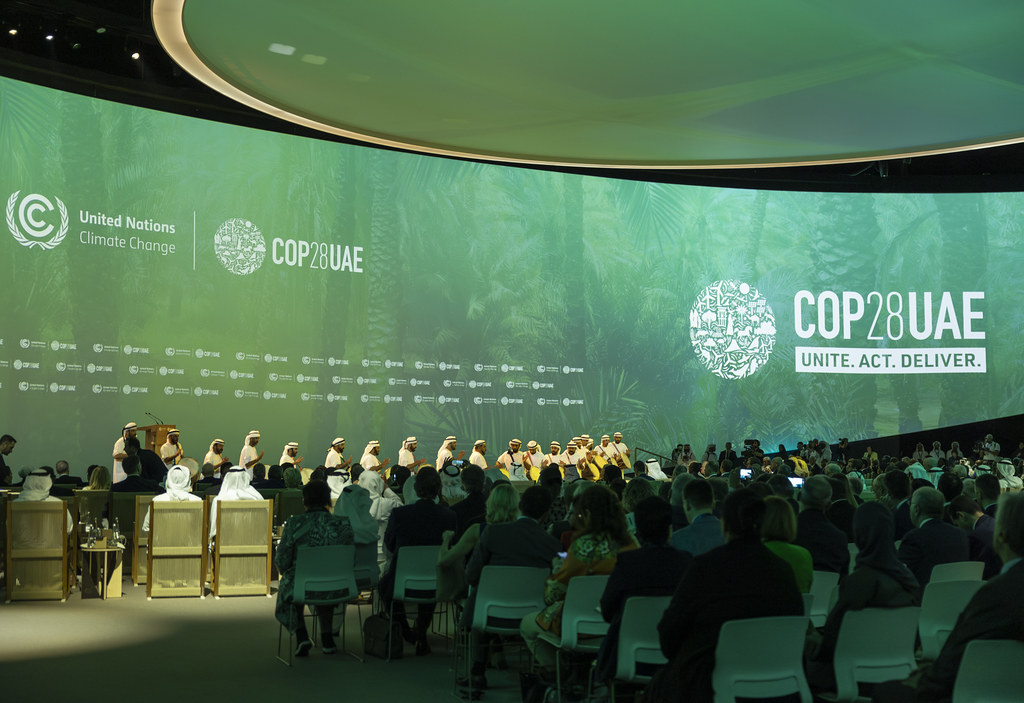
Against this backdrop, COP28, the international conference dedicated to climate change, recently concluded. It was attended by 198 countries, hosted by the United Arab Emirates, the country holding the rotating presidency of the summit.

COP28 achieved the notable outcome of recognising, for the first time, the need to end the world's damaging reliance on fossil fuels, the phase-out of which was declared inevitable.

Despite this important milestone, many have voiced doubts and reservations. Amnesty International expressed concern over the insufficient commitment by more developed countries—those primarily responsible for the damage caused to the planet—to support the countries most severely affected by climate change. Furthermore, it criticised the role granted to the fossil fuel industry in the transition, which even allows scope for increased production.

In this regard, Amnesty's climate advisor Ann Harrison stressed that appointing a member of the Organization of the Petroleum Exporting Countries (OPEC) to the presidency, coupled with the blatant disregard for human rights demonstrated during the proceedings, left a heavy stain on the conference itself.

Other human rights organisations have also voiced apprehension. Human Rights Watch (HRW) stated that without a commitment to taking concrete measures to limit the temperature rise to 1.5°C, the so-called phasing out risks remaining a statement of intent devoid of real meaning.

Unfortunately, prospects for the immediate future are not encouraging. COP29 will take place this coming November in Azerbaijan, another authoritarian, oil-producing country responsible across multiple levels for serious and documented human rights violations.

Article 3

The difference between international and non-international armed conflicts
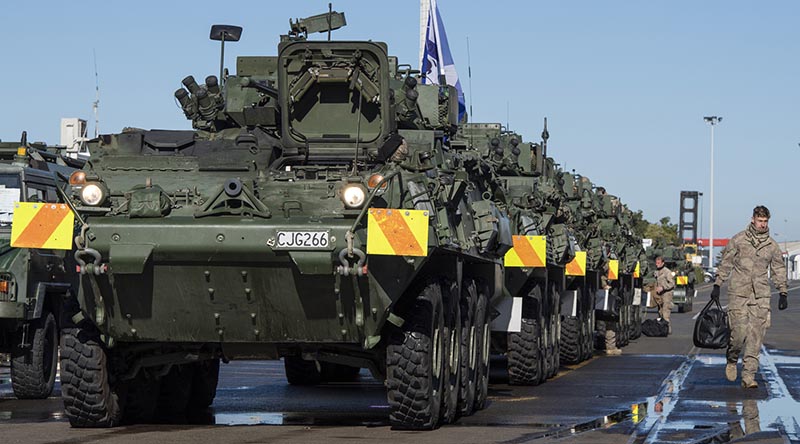
How is the conflict resulting from Russia's aggression against Ukraine classified? And which rules apply? Can we say the same for the conflict in the Middle East? International humanitarian law (IHL) applies to armed conflicts of both an international and a non-international character, albeit with different sets of rules. Even before classifying a conflict to determine the applicable law, one must first assess whether an armed conflict exists. The commentaries to the 1949 Geneva Conventions are a crucial interpretative tool and provide guidance on applying the rules of international humanitarian law contained within the Conventions. The first version of the Commentaries dates back to the 1950s, drafted by the International Committee of the Red Cross and a panel of experts who ensure their continuous updating, with the latest major update dating to 2016.

Common Article 2(1) of the four Geneva Conventions provides that “In addition to the provisions which shall be implemented in peacetime, the present Convention shall apply to all cases of declared war or of any other armed conflict which may arise between two or more of the High Contracting Parties, even if the state of war is not recognized by one of them.” Article 3, on the other hand, refers to cases where the armed conflict is not of an international character. These two provisions distinguish between the two types of armed conflict, international and non-international, for the purpose of identifying the applicable law. More simply, in the case of an armed conflict of an international character, the four Geneva Conventions of 1949 and Additional Protocol I of 1977 apply, whereas if the armed conflict is not of an international character, Common Article 3 of the 1949 Geneva Conventions and Additional Protocol II of 1977 apply.

In any case, neither the Conventions nor the Additional Protocols provide a definition of an armed conflict, nor do they offer an explanation of the difference between an international and a non-international armed conflict. We find clarification in the Commentaries.

The resort to armed force (the use of military means and weaponry) by a State against an opposing party qualifies as an armed conflict, even in the absence of a formal declaration of war and even when a state of war is not recognized. The International Criminal Tribunal for the former Yugoslavia, in the Tadić case, defined armed conflict in this sense, and this definition is regarded as the contemporary benchmark for any interpretation of armed conflict under humanitarian law.

An armed conflict is defined as international when a State resorts to armed force (through the deployment of national armed forces or military agencies attributable to the State) against another State or States, even when the targeted State does not respond militarily. Meanwhile, civil wars or an armed conflict between a State and a non-State armed group (not attributable to any State) are classified as “non-international”, provided that the level of armed violence reaches a certain threshold of intensity that goes beyond internal disturbances and tensions. The distinction therefore lies primarily in the status of the belligerent parties.

The classification must be based on facts and IHL criteria; it is vital not only for outlining the rules that parties to the conflict are bound to respect, but also for enabling key institutions and organisations, such as the UN, the International Committee of the Red Cross, national courts, or international tribunals, to define their respective jurisdictions.

According to the analysis by the Geneva Academy of International Humanitarian Law and Human Rights, the crisis in Ukraine, which erupted in 2014, was initially characterised as a non-international armed conflict between pro-Russian armed groups and the Ukrainian armed forces, before transforming into an international armed conflict owing to Russia's overall control over the separatist armed groups and the military operations conducted directly by Russian armed forces on Ukrainian territory. Ukraine and Russia are bound to respect the rules of humanitarian law applicable to international armed conflicts.

RULAC Geneva Academy - online armed conflict monitoring portal (in English)

Article 4

The story of Aleksei Navalny: where we stand
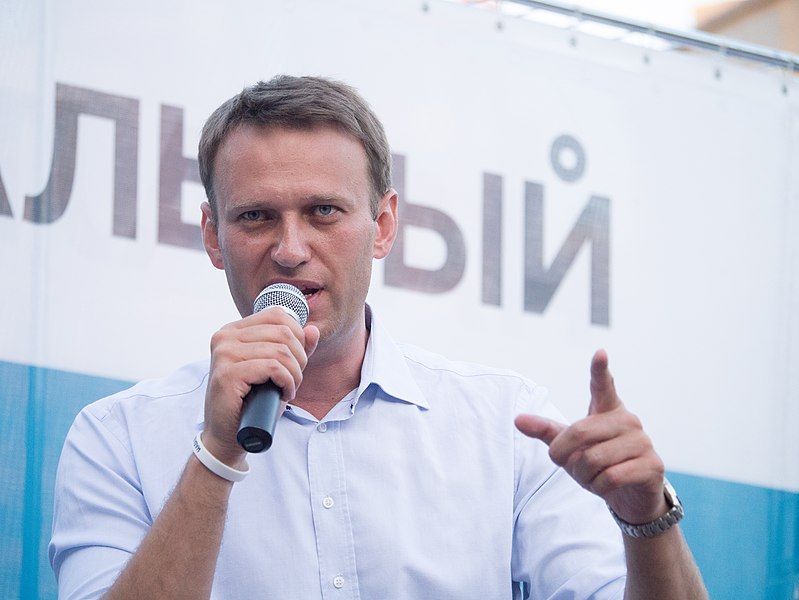
Sunday 17 January 2021, Sheremetyevo Airport in Moscow: Aleksei Navalny is arrested by Russian authorities on charges of fraud. The activist had returned to Russia after taking refuge in Germany following a poisoning by Russian police in the summer of 2020. In light of these events, Amnesty International immediately took a clear and firm stance, demanding Navalny's unconditional release.

Let us recall who Aleksei Navalny is. A Russian politician and anti-corruption activist, in 2011 he founded the Anti-Corruption Foundation (known as FBK in Russian) to expose corruption in Russia's corridors of power. His choices landed him behind bars dozens of times over the years, until in 2019 the European Court of Human Rights (ECtHR) ruled that the sentences imposed lacked legal foundation. In response, the Russian Supreme Court ordered a retrial that upheld the latest judgment, requiring Navalny to report regularly to Russian authorities until 30 December 2020. However, on 20 August 2020, during a flight between Tomsk (Siberia) and Moscow, the activist collapsed. Tests carried out in Russia firmly ruled out poisoning, but on 22 August his family managed to have Navalny transferred to a Berlin hospital, and roughly ten days later a German military laboratory announced it had detected a nerve agent from the Novichok group.

Amnesty International condemned the Russian authorities, stating that the lack of investigation into the case constitutes a clear violation of the right to life. Furthermore, the Kremlin claimed to have destroyed all its chemical weapons stockpiles in 2017, thereby implicitly admitting to having lost control over its territory to the extent that chemical weapons can be produced and circulated freely. The concern is that Russia actually remains in possession of such instruments to eliminate political dissidents, in breach of the 1993 Chemical Weapons Convention to which it is a signatory. However, light has not yet been shed on this aspect of the affair, which remains one of the most controversial and, at the same time, most concerning for human rights.

Returning to the moment of Navalny's arrest in Moscow on 17 January 2021, it is worth highlighting that independent broadcasters were barred from the hearing, which was held at a Moscow police station rather than in a courtroom, and Navalny was only allowed to meet his lawyer at the start of the proceedings.

The affair fell into silence until 4 August 2023, when a Moscow court issued a new 19-year prison sentence against Navalny. The hearing was held behind closed doors, denying anyone the opportunity to attend the trial. For this reason, the European Union continues to condemn the criminal procedure followed in Russia, as does Amnesty International. In this regard, significant words were spoken by Marie Struthers, Amnesty's Director for Eastern Europe and Central Asia, who stated that “This new sentence against Aleksei Navalny is a stealth life sentence. It is also a sinister act of political revenge targeting not only Navalny, but state opponents across the country. The outcome of today’s sham trial is just the latest example of the systematic oppression of Russian civil society, which has intensified since Russia's invasion of Ukraine.”
View original email version