Editorial
in this issue of Diritti al punto we feature an interview with Alba Bonetti, President of Amnesty International Italy. In the interview, Alba Bonetti explains what the AI Annual Report is and addresses key issues and findings from the latest 2023-2024 report, including gender-based violence in Italy, the importance of maintaining the offence of torture in the Italian legal system, and Amnesty International's decision to call for an immediate ceasefire in Gaza.
What are the social consequences of disability, and what does it mean to live with a disability in countries such as Liberia? A lack of care facilities, insufficient funding for healthcare and welfare, and widespread poverty make life even harder for disabled people. On top of difficulties accessing essential services, there are the risks associated with discrimination that impact human rights; Amnesty International is committed to eliminating all forms of prejudice and abuse against persons with disabilities.
Where is the line between technological efficiency and the limits of surveillance? A series of investigations conducted by Amnesty International across several countries, including Serbia and India, revealed that using automated tools to deliver welfare services leads to privacy violations and even cases of discrimination driven by algorithmic decision-making.
If you enjoy our newsletter, please share it and invite others to subscribe by clicking the link at the bottom of the page.
Interview with Alba Bonetti, President of Amnesty International Italy
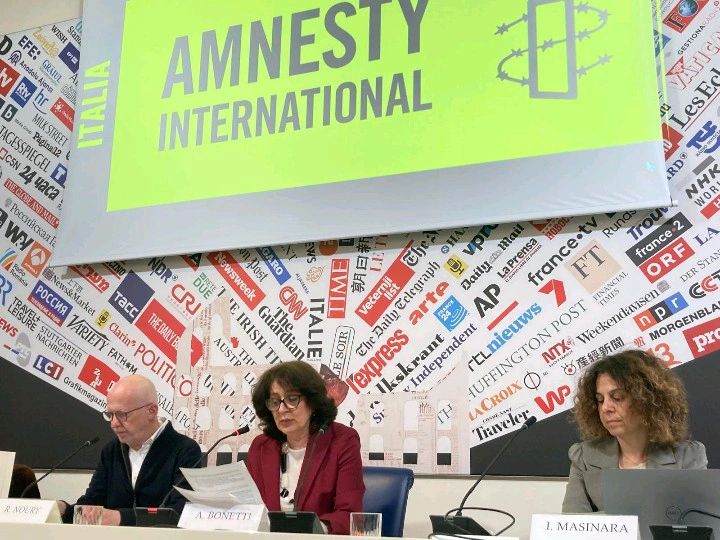
What is the Annual Report, and why is it so important for Amnesty International?
At the very heart of Amnesty International's work is research: rigorous, accurate, and independent. The findings of this research can lead to an appeal (for an individual case) or a campaign (a coordinated, usually multi-year action addressing a phenomenon that involves human rights violations affecting many people). The Annual Report is the comprehensive overview of our monitoring of the state of human rights across almost every country in the world (155 out of 193 in total). It is a benchmark reference, valuable for gaining a swift global overview.
In 2023, Italy recorded a very high number of gender-based violence cases. In Amnesty International's view, is Italy's response adequate to tackle this phenomenon?
Italy is failing to implement the so-called Istanbul Convention on preventing and combating violence against women and domestic violence, despite having signed it in 2013. There are three key areas of intervention to address this issue: prevention, victim protection, and the proportionate punishment of perpetrators. In the wake of femicides that provoke strong public outcry, politicians call for—and often pass—harsher penalties, a measure that is patently ineffective in deterring anyone intent on committing femicide. Support facilities for victims of violence are underfunded, as also highlighted by the Council of Europe Commissioner for Human Rights, who criticised the lack of shelters for women victims of gender-based violence and the shortage of funding for service providers. Most crucially, education on relationships and mutual respect between genders is dramatically lacking, even though it is the only effective preventative measure to curb the phenomenon in future generations.
What does Amnesty International's report reveal regarding cases of torture in Italy, and what actions does Amnesty Italy plan to take to prevent the repeal of the offence of torture?
The Report cites incidents that occurred in Biella (March 2023), where over 20 prison officers under investigation for alleged torture in prison were suspended, and in Verona (June 2023), where five police officers were placed under house arrest for acts of torture aggravated by racial hatred. Other officers were also investigated for violent offences, while an even greater number were transferred for failing to report abuses committed by colleagues, including at police headquarters. The Report also highlights the trial of 105 prison officers and other officials charged with multiple offences, including torture, following the repression of a protest at Santa Maria Capua Vetere prison in April 2020.
Further incidents have occurred during the current year (allegations of torture at the Beccaria juvenile detention centre in Milan).
Through its Lobby & Advocacy team, Amnesty Italy is monitoring the progress of the bill tabled by Fratelli d’Italia aimed at repealing the offence of torture by reclassifying it as a general aggravating circumstance. In the current climate, we believe amending the offence would jeopardise the prosecution of those who use torture as an instrument of oppression. We therefore strongly urge the government and parliament not to backtrack on the offence of torture and to retain intact the statutory provision introduced into the criminal code in 2017 which, despite certain shortcomings, has proven effective in ensuring accountability for those who use torture as a tool of abuse.
Regarding the situation in the Middle East, Amnesty International took a historic stance by calling for a "ceasefire". What weight does this position carry for Amnesty International, and what are the next steps in light of the grave human rights violations documented in the report?
In the immediate aftermath of 7 October, we condemned the massacre committed by Hamas and other Palestinian armed groups, and we have since repeatedly drawn the attention of governments and the public to the disproportionate attacks against civilians carried out by Israeli armed forces. The decision to call for a ceasefire, shared with many other organisations, was immediately followed by global mobilisations. Once again, ordinary people proved to be one step ahead of governments and international institutions: the United States brazenly exercised its veto at the UN Security Council, stalling the ceasefire resolution for weeks, while Italy consistently abstained.
Amnesty Italy is monitoring government action on arms transfers: in November, the government suspended new licences for the export of weapons and military equipment to Israel. However, exports under pre-existing licences have continued, despite mounting evidence of unlawful attacks on civilians and civilian infrastructure by Israel in the occupied Gaza Strip.
Living conditions of persons with disabilities in Liberia
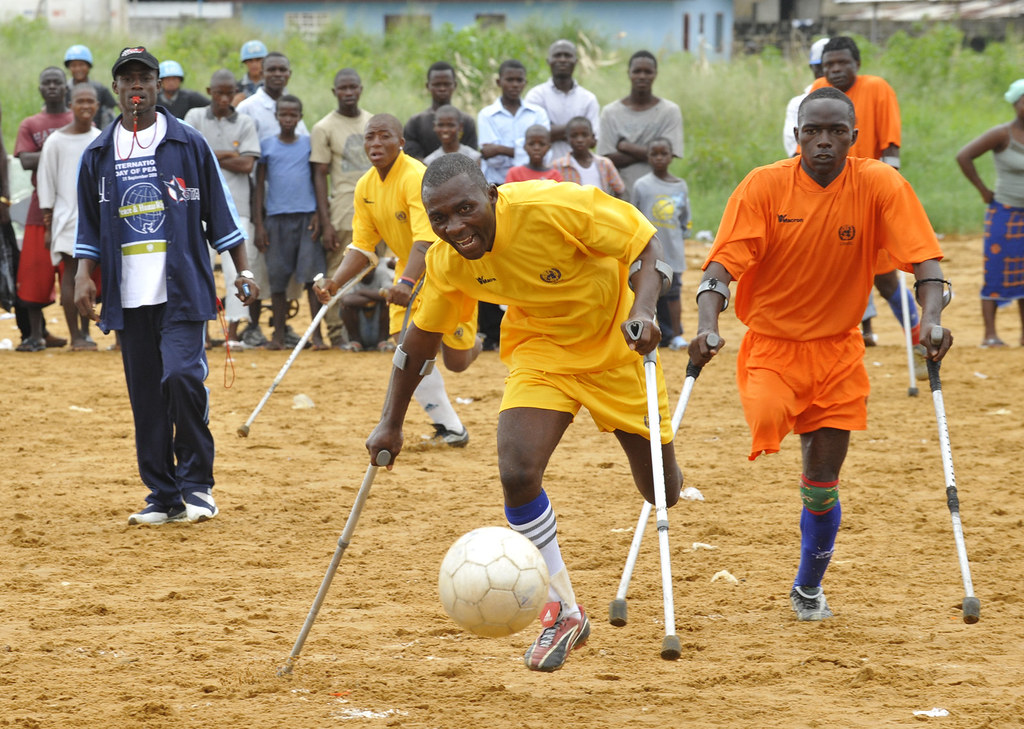
Liberia, situated in West Africa, faces considerable challenges in safeguarding the fundamental rights and well-being of persons with disabilities. The situation of people with disabilities is complex, spanning socio-economic, cultural, and infrastructural dimensions, and demands thorough analysis along with targeted interventions to enhance the quality of life of this vulnerable population. At present, Liberia has a significant proportion of persons with disabilities, who confront hardships linked to poverty, limited access to healthcare services, and social exclusion.
The country has ratified the Convention on the Rights of Persons with Disabilities (CRPD), committing to guarantee equal opportunities, active participation, and the full enjoyment of human rights for persons with disabilities. However, translating these commitments into reality remains a challenge. The CRPD underlines the importance of dismantling the physical and social barriers that prevent full accessibility for persons with disabilities, but implementing these provisions is frequently hindered by inadequate resources, a lack of awareness, and entrenched cultural barriers.
The healthcare situation for persons with disabilities in Liberia is particularly critical. The lack of accessible facilities and qualified personnel prevents them from accessing essential healthcare services, thereby heightening their vulnerability to severe illness and deteriorating their health conditions. Access to education also represents a major challenge: schools often lack accessible infrastructure and teachers trained to support the diverse needs of students. Employment integration is another critical area, with limited job opportunities due to geographic barriers, discrimination, and a lack of awareness among employers. Consequently, many persons with disabilities are unable to achieve economic and social independence.
Beyond practical challenges, persons with disabilities must overcome cultural and social barriers. Discrimination, stigmatisation, and a lack of awareness are widespread issues requiring a concerted response from both society and government. A pivotal step towards improving the situation is investing in accessibility and inclusive infrastructure: adopting universal design standards can and must ensure that all individuals, including persons with disabilities, have access to new infrastructure.
The situation in Liberia calls for joint efforts from the international community, the Liberian government, and civil society organisations. Through an integrated approach combining practical interventions, legislative reform, and public awareness campaigns, it is possible to bring about significant improvements in the quality of life for persons with disabilities. The effective implementation of CRPD provisions and the adoption of inclusive strategies are crucial steps to ensure that everyone, regardless of ability, can fully enjoy their fundamental human rights.
Amnesty International is deeply committed to persons with disabilities, championing their human rights and working to end discrimination and rights violations worldwide. The organisation has emphasised the vital importance of ensuring equal access to essential services, including education and healthcare, for persons with disabilities. Amnesty International is also dedicated to raising public awareness about the issues faced by persons with disabilities and tackling stereotypes and prejudice. Furthermore, the organisation has condemned violations of the rights of persons with disabilities, including instances of segregation, violence, and abuse. In 2022, an in-depth briefing on the issue setting out Amnesty's position was published.
Saudi Arabia at the helm of the UN Commission on the Status of Women: between paradox and opportunity

In an increasingly interconnected, online, click-away world, questions surrounding the use of digital technologies are mounting. On the one hand, these technologies drive innovation and data collection, enabling swift and practical solutions for everyday needs; on the other, they bring to the fore a range of issues linked to "technologies of control" and surveillance.
“Amnesty International has demonstrated that the unchecked digitalisation of social protection systems brings numerous risks to human rights and exacerbates inequalities,” stated Imogen Richmond-Bishop, Technology and Economic, Social and Cultural Rights Researcher at Amnesty Tech.
With the escalating risk of global, environmental, humanitarian, and food crises, “robust social protection systems are more critical than ever to shield individuals and entire communities from economic insecurity,” Imogen Richmond-Bishop explained.
While reassuring from certain viewpoints, these tools also present alarming prospects, where information and communications technologies could foster pervasive and invasive forms of control over individuals' private lives, calling into question hard-won rights and fundamental freedoms.
Such is the case in Serbia with the so-called Social Card. This automated welfare delivery system reportedly strips the poorest and most marginalised communities of financial support, driving them deeper into poverty. According to Amnesty International's report on Serbia, the groups hardest hit are notably Roma communities and persons with disabilities, who find themselves unable to pay for utilities and basic necessities after being cut off from social assistance following the rollout of the Social Card registry.
In India, the Aadhaar biometric identity system—which assigns a unique identification number to citizens and residents, including children—is used to verify and authenticate identity across various public services, including social security benefits and food rations, resulting in the exclusion of a substantial segment of the population from receiving any form of assistance.
The paradox lies in the fact that the right to social security in the strict sense, even when facilitated through such technologies, is nonetheless undermined by the failure to uphold the right to privacy and by discrimination arising from algorithmic decision-making.
The double-edged nature of digital technology has even touched Europe, notably the Netherlands, where the algorithmic system used by the tax authorities in 2021 engaged in racial profiling of child benefit recipients. The algorithm was intended to verify whether benefit claims were legitimate or fraudulent, but the system erroneously penalised thousands of parents from low-income and ethnic minority backgrounds, plunging them into severe debt and poverty.
In its report "Social Protection in the Digital Age", Amnesty International examines the human rights risks stemming from the unmonitored use of digital technologies as effective tools for progress, yet contentious when it comes to safeguarding equality and delivering genuine social protection.
Amnesty International report "Social Protection in the Digital Age"
Contributors to this issue: Francesca Cocozza, Gabriele Leggeri, Giulia Solferino
This email was sent to {{contact.EMAIL}}
You received this email because you are subscribed to our newsletter.

View original email version
Did someone send you this link? Get it every month
Subscribe to Diritti al Punto: the next issue straight to your inbox.
Check your inbox
We have sent you a confirmation link. Click the button in the email to complete your subscription. The link is valid for 7 days.
Can't see the email? Check your spam and promotions folders, or.