Issue 17 of 24 · 5 August 2024

Diritti al punto - July 2024

Dear readers, last June the tragic story of Satnam Singh, the Indian farm labourer who died in an accident at work, shocked everyone....

Editorial

Editorial

Last June, the tragic story of Satnam Singh, the Indian farm labourer who died in an accident at work, shocked everyone. Alongside the cruelty and inhumanity shown by his employer, there was no lack of firm condemnation of the exploitation of agricultural workers and gangmaster practices (caporalato). Amnesty International had already addressed the issue and, in the face of this grave incident, once again made its voice heard to defend the right to work.

The war in Sudan continues. Although the world's attention is captured by the crisis in the Middle East and the protracted, grave conflict in Ukraine, the civilian population in Sudan suffers from a total absence of food, water, and humanitarian aid. Forced to endure violence and continuous displacement, they are victims of the worst consequences of a conflict with no end in sight.

Toomaj Salehi is the Iranian rapper who faced a death sentence for denouncing, through his music, the repression and violence of the Iranian government. His story is an example of youth courage and resistance; Amnesty International has launched an appeal to raise awareness of his case and demand his release.

If you enjoy our newsletter, please share it and invite anyone you wish to subscribe by clicking on the link at the bottom of the page.

Article 1

Satnam Singh: the fight against gangmaster exploitation and the right to work
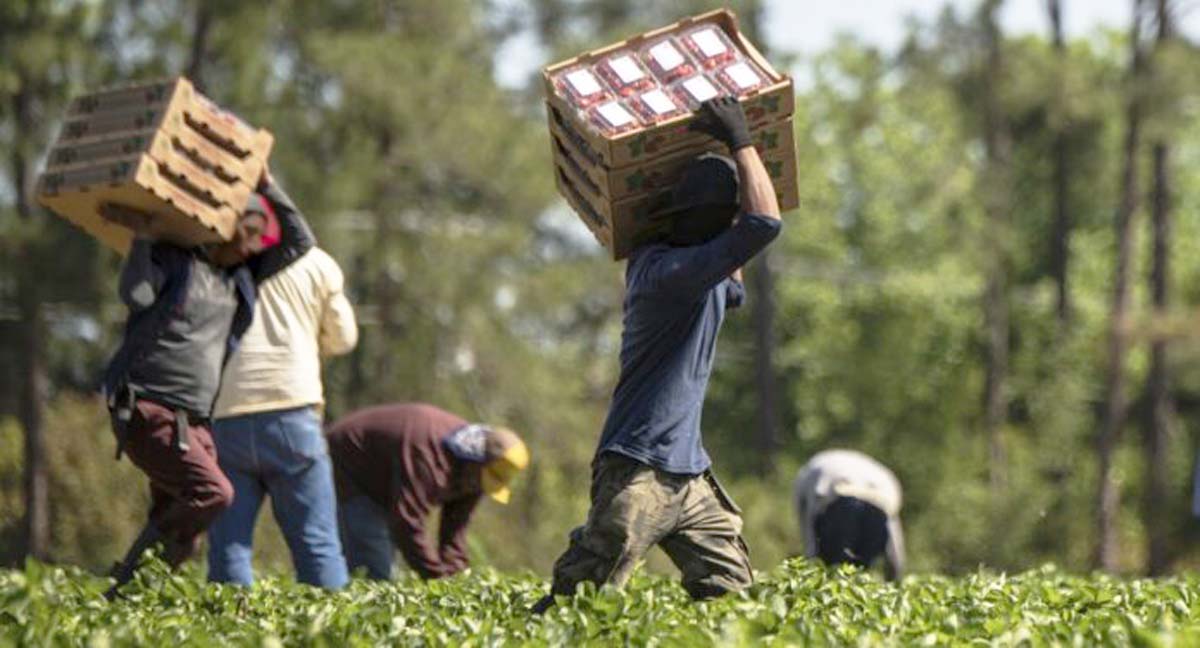
It is Monday 17 June. Satnam Singh is still alive, but he has lost his right arm in a severe accident at work. Thirty-six hours later, he dies in hospital.

Satnam Singh, an Indian national, had moved to Italy in 2021 and had been working on a farm in the province of Latina for two years. Twelve hours a day for 4.00 euros an hour. That Monday last June, something went wrong: a plastic-wrapping machine severed Satnam's arm and fractured his legs.

The incident involving Satnam shocked everyone because of the inhumanity of his employer, who dumped him outside his home without calling emergency services, condemning him to certain death. Moreover, it became the emblem of yet another workplace fatality and of the scourge of gangmaster exploitation (caporalato). According to Istat estimates cited in the 6th Agromafie and Caporalato Report, in 2021 there were approximately 230,000 irregularly employed workers in the agricultural sector.

The phenomenon of gangmaster exploitation and the abuse of migrant workers in the agricultural and construction sectors across many parts of Italy is widespread. Low wages, irregular contracts, and an absence of safety standards and protections.

As early as 2012, Amnesty International had addressed the issue and published a report denouncing the conditions of many Indian agricultural labourers who worked 9–10 hours a day, almost seven days a week, for around 3.00–3.50 euros an hour. A situation not unlike that of today—the very same conditions in which Satnam lost his life.

Amnesty International has always stood against such injustices. Under Article 7 of the International Covenant on Economic, Social and Cultural Rights, States Parties are obliged to respect, protect, and fulfil "the right of everyone to the enjoyment of just and favourable conditions of work".

The recruitment of labour without safeguards, undeclared work, and employers' disregard for their duties towards employees have not been stemmed over time, not even by attempted legislative interventions such as, in Italy, the so-called "Rosarno Law" (Legislative Decree no. 109 of 2012), transposing the EU's 2009 "Sanctions Directive".

The limited impact of this legislative intervention had already been denounced by Amnesty International in 2014: the risk was that workers' ability to access remedies and criminal prosecution as penalties for severe labour exploitation would be weakened.

Legislative developments in 2016 (Law no. 199 of 2016), taking into account the growing phenomenon of migration, sought to revise provisions countering gangmaster practices in order to introduce significant amendments and specific support measures for agricultural workers.

In 2024, little has changed: in the aftermath of the accident, there were numerous reactions from the press, politicians, and institutions. Satnam has been added to the endless list of men and women who lost their lives on an ordinary day, during their working routine.

As Article 1 of the Italian Constitution states, "Italy is a democratic Republic founded on labour". The dignity, health, and safety of those who work must be guaranteed.

Article 2

The conflict in Sudan: civilian suffering and arms supplies
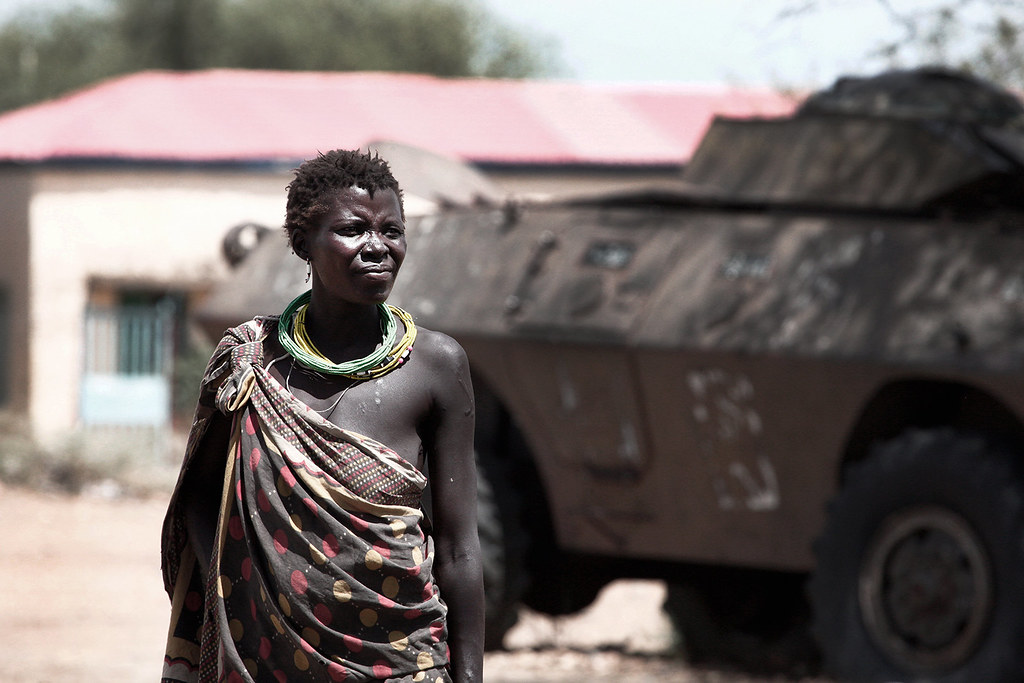
On 25 July, Amnesty International published the investigation "New weapons fuelling the Sudan conflict", an in-depth analysis that "documents how recently manufactured or recently transferred weapons and ammunition from countries including China, Russia, Serbia, Turkey, the United Arab Emirates and Yemen are being imported in large quantities into Sudan...".

One year and three months after the outbreak of the civil war, the situation continues to deteriorate, and the international diplomatic deadlock, coupled with both parties to the conflict—the Sudanese Armed Forces and the Rapid Support Forces—presuming victory, leaves no room for immediate peaceful solutions.

The consequences are terrible for the civilian population in war zones—a population that has effectively been living in conditions of continuous instability and armed conflict for more than 20 years.

The advance of the civil war into the country's most populous cities and the destruction of key enclaves such as Wad Madani—the country's richest agricultural area—has forced civilians into continuous displacement, both internally and to neighbouring countries, in search of "a safe place". Given that Sudan is the third-largest African country by area, journeys are arduous and have devastating consequences. Even before the conflict began, the need for humanitarian aid in Sudan was extremely high. For several years, millions of people have been living as internally displaced persons, in refugee camps and makeshift shelters.

Food, water, and medical care are scarce everywhere, and the only thriving market is the arms trade. As was the case with the war in Darfur, according to some experts the conflict in Sudan continues to be a proxy war for Middle Eastern countries which, together with Russia and Turkey, fuel a continuous supply of weapons, circumventing embargoes and bans.

We are witnessing what is currently the world's largest displacement crisis. More than 8 million people, including almost 4 million children, have been forced to leave their homes at least once; half the population—around 29 million people—needs humanitarian assistance.

Alongside Amnesty International, many voices have been raised to denounce the population's plight, but with little impact; we are thus witnessing a humanitarian catastrophe that is currently unprecedented anywhere in the world.

Recently, Emergency, the only medical NGO currently operating in Sudan, once again denounced the disastrous healthcare situation: everything is lacking, there are no healthcare facilities in the conflict areas able to treat patients, and 80% of hospitals across the entire country are out of service.

The resources provided by foreign governments to address the food and health crisis are insufficient, and the United Nations aid coordination agency, OCHA, is still negotiating with the various warring parties to allow the delivery of humanitarian aid on a regular and "safe" basis.

In addition to the lack of food, water, and shelter, civilians face horrific violence at the hands of armed militias on the ground: rape, ethnic killings, and relentless abuse against a defenceless population.

In recent days, the UN Secretary-General's Personal Envoy for Sudan, Ramtane Lamamra, launched talks in Geneva between representatives of the Sudanese Armed Forces and the paramilitary Rapid Support Forces, but no outcome has yet been announced.

On 23 July, the United States announced that it had invited the Sudanese army and the paramilitary Rapid Support Forces to participate in ceasefire talks. General Mohamed Hamdan Dagalo, leader of the RSF, accepted US Secretary of State Blinken's invitation.

Saudi Arabia will act as mediator, whilst the African Union, Egypt, and the United Arab Emirates, along with the United Nations, will attend as observers.

Blinken stated that "the goal is to reach a nationwide cessation of violence, enable humanitarian access to all those in need, and develop a robust monitoring and verification mechanism to ensure implementation of any agreement."

Sign Amnesty International's petition for an arms embargo on Sudan.

Article 3

Toomaj Salehi: the Iranian rapper who became a symbol of resistance against the regime
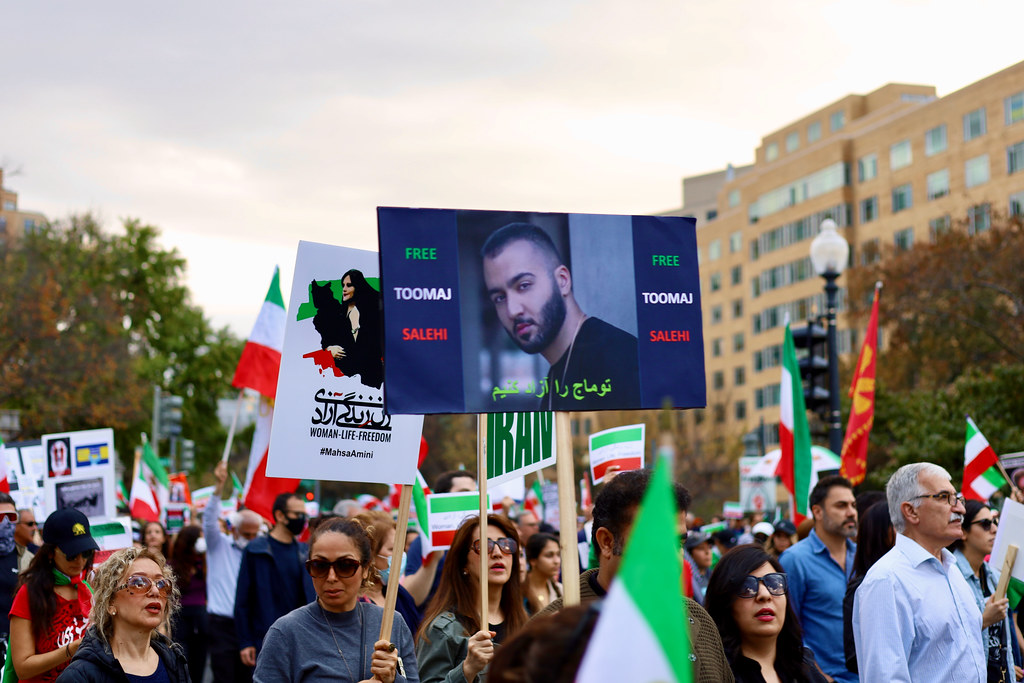
The name Toomaj Salehi is resounding internationally and becoming a symbol of resistance against the Iranian regime. His story, marked by undaunted courage and a passion for justice, is both inspiring and tragic.

Born in Iran, Toomaj Salehi is a rapper who has used his music as a means to denounce social and political injustice in his country. His lyrics, incisive and critical, are a clear call to action against the repression and violence of the Iranian government. However, this courage has cost him dearly. In November 2021, he was arrested by the Iranian authorities, who charged him with "propaganda against the state" and "insulting the supreme leader". Despite the evident risk, the rapper never stopped speaking out against the regime. His detention drew the attention of international human rights organisations, including Amnesty International, which launched a campaign for his release.

His case became even more contentious when, in April 2024, he was sentenced to death. The sentence sparked a wave of global outrage: Salehi is seen as a key figure in mobilising Iranian youth against oppression. His music, blending rap elements with Persian tradition, is a powerful tool of resistance. His lyrics address themes such as freedom, equality, and human rights, openly defying the Iranian regime. This made him a target for the authorities, who view him as a threat to their grip on power. The rapper has become a symbol not only in Iran, but also abroad. Many see in him the face of the struggle for freedom in Iran, a country where artistic expression and freedom of speech are severely restricted. His death sentence is seen as a desperate attempt by the regime to silence a voice capable of inspiring and mobilising the masses.

However, the international community has not remained silent. Amnesty International has intensified its efforts to halt the execution of Toomaj Salehi, issuing appeals and mobilising global public opinion. According to the organisation, the trial was profoundly unfair, lacked fair trial guarantees, and was marked by vague and trumped-up charges. Amnesty emphasised that the death sentence is a violation of the right to freedom of expression and urgently called for the commutation of his sentence and his immediate release.

At present, Toomaj remains detained in Iran and faces execution. His story is an example of courage and resistance in the face of repression, inspiring many to continue fighting for their rights. The international campaign for his release continues, with many calling on the Iranian government to respect human rights and end repression. Toomaj's courage in speaking out openly against the Iranian regime, despite the severe consequences, continues to inspire many in Iran and around the world. His death sentence is further proof of the harsh realities faced by dissidents in Iran, but also of the strength of international solidarity in the struggle to uphold human rights.
View original email version