Issue 11 of 24 · 13 April 2025

Diritti al punto - March 2025

Dear readers, 22 March marks World Water Day, established by the United Nations. In many countries around the world, water resources...

Editorial

Editorial

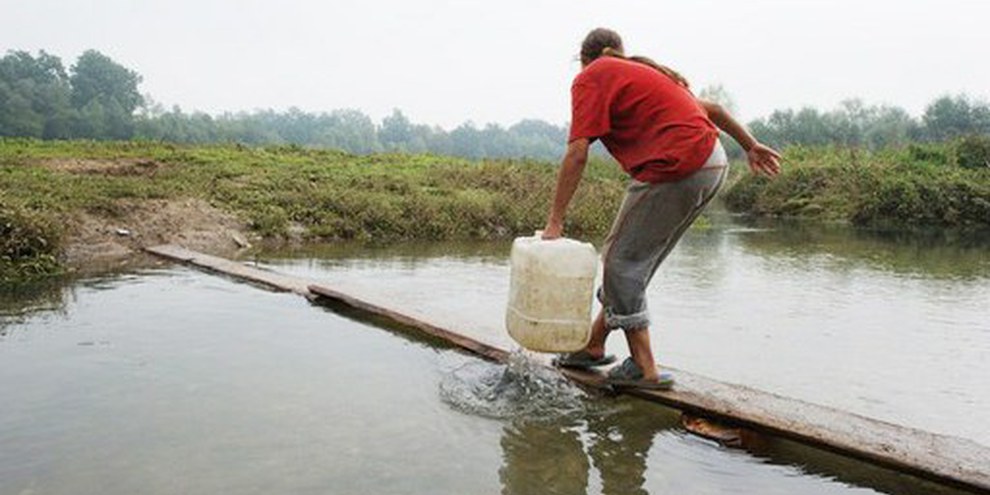
22 March marks World Water Day, established by the United Nations. In many countries around the world, water resources are scarce, posing a threat to the rights to health, education, and social and economic development. Water scarcity is also a cause of, and at times a weapon in, conflict. Amnesty International has documented how, in certain territories, access to water resources is deliberately restricted as a means of political and social coercion.

On 27 February 2025, a group of Uyghurs detained in Thailand were deported to China. They had been arrested in March 2014 after fleeing persecution and discrimination in the Xinjiang Uyghur Autonomous Region of China. Although Thailand is bound by the principle of non-refoulement under the 1951 Geneva Refugee Convention, it exposed the Uyghurs to human rights violations. Amnesty International urged the Thai government to uphold the Uyghurs' right to seek asylum.

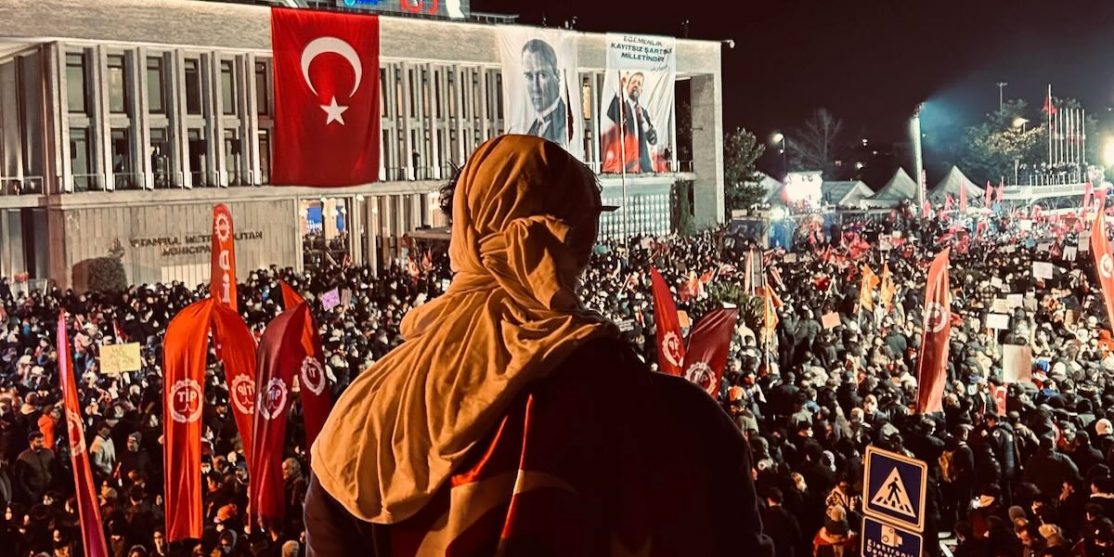
Following the arrest of the Mayor of Istanbul on 19 March, a series of peaceful protests and demonstrations broke out across Turkey, met with severe repression by the Turkish government. The grounds for the arrest have raised significant doubts, widely seen as a pretext frequently used by the Erdoğan government to stifle political opponents. Amnesty International called on the Turkish authorities to end the use of unnecessary and indiscriminate force and to guarantee the right to peaceful protest.

If you enjoy our newsletter, please share it and invite anyone interested to subscribe by clicking the link at the bottom of the page.

Article 1

World Water Day and human rights

World Water Day, celebrated on 22 March, has deep roots in the international environmental context of the 1990s. It was established by the United Nations in 1992 within the framework of Agenda 21, the outcome of the historic Rio Conference. The initiative officially came into being through UN Resolution A/RES/47/193 of 22 December 1992, with the aim of creating an annual occasion dedicated to raising awareness of the importance of freshwater and the sustainable management of water resources.

Alongside Member States, numerous non-governmental organisations have recognised the potential of this day to focus public attention on the critical water challenges of our time. Since 1997, the World Water Council has engaged thousands of people in the World Water Forum during the week of March in which the Day is celebrated. These initiatives have helped bring to light dramatic realities, such as the fact that more than one billion people still lack access to clean water.

In many countries around the world, access to water also has a gender dimension: where water is not available in homes, in eight out of ten cases the task of collecting it falls to women and girls, who often travel long distances on foot carrying heavy loads. In contexts marked by conflict or endemic violence, this chore exponentially increases the risk of assault, violence, and rape. The lack of running water also impacts female personal hygiene: approximately 500,000 women and girls are unable to manage their menstrual hygiene adequately, putting them at risk of infections that can compromise their sexual and reproductive health.

The issue of water is also deeply intertwined with the right to education. According to 2021 UNICEF estimates, three in ten schools globally lack basic water services, and more than one in four lacks essential sanitation facilities. Under these conditions, it becomes especially difficult for girls to manage personal hygiene, and many adolescent girls are forced to miss school during their periods. This link between the right to water and the right to education highlights how ensuring access to water resources represents a fundamental pillar in the protection of human rights.

Water scarcity is not only a matter of denied rights, but also a cause and instrument of conflict. Between 2000 and 2023, as many as 1,385 conflicts were documented in which water resources served as a trigger or as a weapon against civilian populations. An emblematic example is the Syrian civil war, which, in addition to religious, social, and political tensions, was exacerbated by acute water shortages compounded by a prolonged drought between 2007 and 2010.

In some contexts, water becomes a tool of control and oppression. Amnesty International has documented how, in certain territories, access to water resources is deliberately restricted as a form of political and social pressure. Such practices constitute grave violations of international law and fundamental human rights, aggravating pre-existing tensions and contributing to regional instability.

The climate crisis is profoundly disrupting global hydrological cycles, producing paradoxical effects: while some regions suffer prolonged droughts, others face devastating floods. In the Horn of Africa, for instance, Somalia experienced its worst drought in 40 years in 2023, followed immediately by catastrophic flooding. This oscillation between extreme events severely undermines the availability of drinking water and the food security of entire communities.

Forced displacement linked to water scarcity represents one of the most tragic consequences of the global water crisis. According to the World Bank's Groundswell report, by 2050 around 216 million people could be forced to migrate due to climate impacts, including water stress. Such forced movements are already taking place in various parts of the world, with the Horn of Africa among the hardest-hit regions.

Somalia is an emblematic case of migration dynamics driven by the water crisis. In 2023 alone, according to UNHCR estimates, the combination of drought, floods, conflict, and insecurity caused nearly 3 million new internal displacements across the country. These population movements place additional strain on resources in destination areas, generating potential tensions with host communities.

In refugee camps and areas hosting refugees and displaced people, ensuring adequate water, sanitation, and hygiene (WASH) services represents a critical challenge. UNHCR has implemented several best practices in this area, such as extending the water supply network in Agadez, Niger, and solarising 295 boreholes in 2023, significantly improving the living conditions of displaced populations.

Appropriate technological solutions, such as rainwater harvesting systems, low-energy desalination, and efficient irrigation, can make a significant contribution to improving water access in vulnerable communities. However, it is essential that these solutions are developed and implemented with the full involvement of local communities, respecting their traditional knowledge and cultural specificities.

The interconnected nature of the water crisis, climate change, and human rights demands integrated responses that transcend national and sectoral boundaries. International cooperation, sustainable technological innovation, and the empowerment of the most vulnerable communities are essential components of any effective strategy to tackle these challenges. As citizens, consumers, and members of civil society, we all have a role to play in protecting and sustainably managing this irreplaceable resource, ensuring a future of dignity and rights for all.

Article 2

Thailand fails to respect the principle of non-refoulement: 48 Uyghurs deported to China
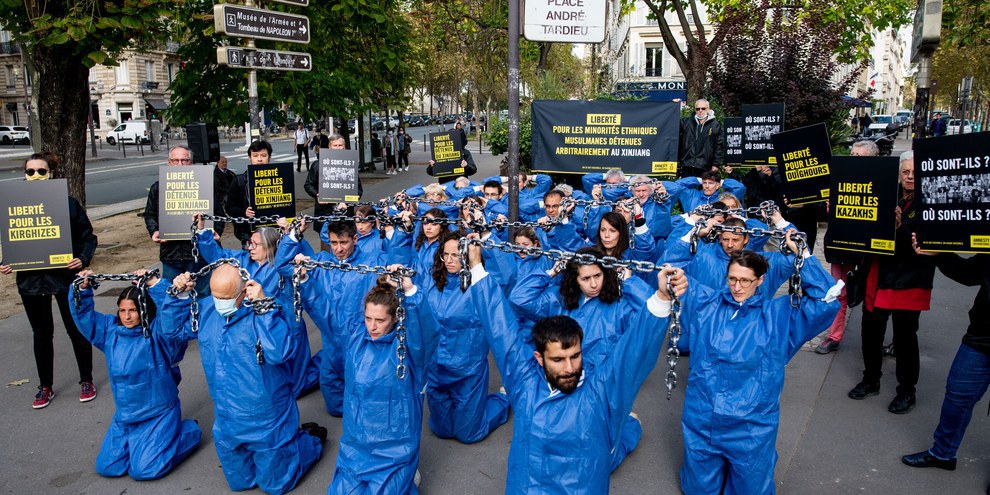
On 27 February 2025, a group of Uyghurs detained in Thailand were deported to China in the middle of the night in six vans with tinted windows, escorted by police cars.

These are approximately 48 Uyghurs who were among the 300 arrested on 13 March 2014 by Thai authorities after fleeing persecution and discrimination in the Xinjiang Uyghur Autonomous Region of China.

In its 2021 report, Amnesty International had already documented the pattern of abuse and harassment suffered by Uyghurs, as well as Kazakhs and other Muslim ethnic minority groups in Xinjiang, at the hands of the Chinese government, including the use of internment camps where thousands of people have been arbitrarily detained. Grounds for arbitrary detention included behaviours such as possessing a religious image or communicating with someone abroad. Amnesty International interviewed individuals who managed to escape detention and documented repeated torture and ill-treatment, dehumanisation, the use of electric shocks, and interrogations on "tiger chairs"—steel chairs fitted with chains and handcuffs that hold the body in agonising positions.

The detention of the Uyghurs in Thailand and efforts to halt their deportation have drawn sustained international scrutiny. Indeed, in January 2025, United Nations experts sent a letter to the Thai government urging authorities to halt the potential transfer of 48 Uyghurs to the People's Republic of China, warning that the group faced a real risk of torture or other cruel, inhuman, or degrading treatment or punishment if repatriated—particularly given their serious health conditions, including diabetes, kidney dysfunction, lower-body paralysis, skin conditions, gastrointestinal diseases, and cardiac and pulmonary issues.

Thailand is bound by the principle of non-refoulement (Article 33 of the 1951 Convention Relating to the Status of Refugees), which prohibits the transfer of individuals to any country or jurisdiction where they would face a real risk of serious human rights violations. How, then, can the Thai government's decision—a historic ally of the United States—to deport the Uyghurs be explained?

Two weeks prior to the transfer, Thai Prime Minister Paetongtarn Shinawatra travelled to China on an official visit and met President Xi Jinping in Beijing. High on the agenda was combating so-called scam centres—facilities where armies of trafficked victims are forced into modern slavery to carry out online scams targeting victims worldwide. A few days after the Prime Minister's return, Thai armed forces raided several centres in Myanmar, freeing 250 people from twenty different countries. In light of these developments, the repatriation of the Uyghurs to China, together with the crackdown on scam centres, could be viewed as a rapprochement between Bangkok and Beijing—a realignment shifting the geopolitical balance in Southeast Asia.

Amnesty International urged the Thai government to guarantee the Uyghurs' right to seek asylum, grant them access to a full, effective, and fair procedure to assess their claims, and allow them access to legal counsel, family members, and appropriate medical care.

The deportation of the Uyghurs and the geopolitical context

Article 3

Protests in Turkey

Amnesty International, alongside eleven other organisations, has called on the Turkish authorities to immediately halt attacks against peaceful protesters, end all forms of censorship targeting journalists and news outlets, and cease the crackdown on online freedom of speech.

Protests in Istanbul erupted following the arrest on 19 March of Mayor Ekrem İmamoğlu, President Erdoğan's primary political opponent. Ekrem İmamoğlu, 53, a member of the Republican People's Party (CHP), was among the frontrunners in the party's primaries for the upcoming Turkish presidential election scheduled for 2028. At 7:30 a.m., İmamoğlu's home was raided by dozens of police officers, and he was placed under arrest on charges of corruption and alleged links to the PKK (Kurdistan Workers' Party, an armed organisation that declared a ceasefire with the Turkish state in early March). The grounds for his arrest have raised widespread doubts, strongly pointing to a pretext routinely employed by the Turkish government to sideline political rivals.

Following his arrest, widespread protests broke out, met by severe police repression. The government imposed bans on gatherings, curbing the right to peaceful assembly—a component of broader freedom of expression—and carried out a wave of arrests against demonstrators. Erdoğan claimed the demonstrations were instigated by İmamoğlu, turning them into a "movement of violence"; in reality, the protests were overwhelmingly peaceful, descending into clashes only when riot police moved in to disperse them. Since 19 March, more than 1,800 people have been arrested. Amnesty International has called on the Turkish authorities to end the use of unnecessary and indiscriminate force against peaceful demonstrators and to open investigations into unlawful acts of police violence. The European Union, through a joint statement by High Representative for Foreign Affairs Kaja Kallas and Commissioner for Enlargement Marta Kos, urged Turkish authorities to ensure full transparency in their actions, adding that İmamoğlu's arrest raises serious concerns regarding Turkey's adherence to its democratic traditions.

Despite police repression, the protests continue. The majority of demonstrators are young people, some of whom previously took part in the 2013 Gezi Park protests, reflecting a persistent undercurrent of dissent against Erdoğan. For many of those interviewed, this is not merely a protest, but an act of resistance.

Alongside the suppression of mass protests, Amnesty has documented repressive measures against independent media and journalists, both local and international. The organisation urged Turkish authorities to end these restrictions on freedom, reiterating that journalists and observers must be protected.

The right to protest remains under threat across numerous countries. Amnesty International continues its work of monitoring, research, and campaigning to document violations of this right, which is an expression of the broader freedom of thought. Alongside the efforts of international organisations, civil society groups, and NGOs, stronger action is needed from the European Union and individual states to take decisive steps against repressive policies.
View original email version