Issue 9 of 24 · 7 July 2025

Diritti al punto - June 2025

Dear readers, the right to vote is one of the fundamental cornerstones of modern democracy and constitutes an essential element for the...

Editorial

Editorial

the right to vote is one of the fundamental cornerstones of modern democracy and constitutes an essential element for the protection of human rights. The history of voting rights in Italy portrays the progressive expansion of democratic participation. In 1946, with universal suffrage, the right to vote was extended to women. Today, the right to vote faces new challenges related to social inclusion and democratic representation. Amnesty International continues to uphold the importance of ensuring access to democratic participation for all, fighting against every form of discrimination and exclusion.

Fifty years ago, the family law reform came into force in Italy, a milestone for the principle of equality between spouses. Despite legislative developments and social progress, women's freedom remains seriously threatened today. News reports and ISTAT data show that cases of violence against women continue to rise, particularly within relational and domestic contexts. Preventing and combating domestic violence and gender-based discrimination means tackling their cultural roots and causes, requiring a significant and systematic commitment from institutions and civil society.

In 1999, the Ottawa Convention on the Prohibition of the Use, Stockpiling, Production and Transfer of Anti-Personnel Mines and on their Destruction entered into force. To date, 165 States are party to the treaty, but recent geopolitical crises and armed conflicts have sparked parliamentary debates in several States that have perceived a threat to their national security, questioning their treaty commitments. Among them is Ukraine, which recently decided to withdraw from the Convention, as well as other States, including the Baltic states, Poland, and Finland, which are currently debating the matter.

If you enjoy our newsletter, please share it and invite others to subscribe by clicking the link at the bottom of the page.

Article 1

The right to vote: a pillar of democracy and an instrument of inclusion

The right to vote represents one of the fundamental cornerstones of modern democracy and constitutes an essential element for the protection of human rights. As enshrined in Article 48 of the Italian Constitution, “All citizens, male and female, who have attained their majority, are voters”, a principle reflecting the achievement of universal suffrage in Italy only in 1946.

The history of voting rights in our country portrays the progressive expansion of democratic participation. In 1861, the year of Italian Unification, less than 2% of the population of around 22 million could vote: only literate male citizens aged over 25 who paid direct taxes to the State. Universal male suffrage was introduced in 1918, while women obtained the right to vote only in 1946, on the occasion of the institutional referendum and the elections for the Constituent Assembly.

The principle of universal suffrage, as defined by the Constitution, establishes that the vote is “personal and equal, free and secret”. These characteristics ensure that every citizen can express their will without external influence and that every vote carries equal democratic value.

The 1948 Universal Declaration of Human Rights states in Article 21 that “Everyone has the right to take part in the government of his country, directly or through freely chosen representatives” and that “The will of the people shall be the basis of the authority of government”. This principle highlights that political participation is not merely a privilege, but a fundamental right enabling citizens to influence the decisions affecting their lives and the future of society.

Disenfranchisement represents a form of discrimination that can perpetuate inequalities and marginalisation. For this reason, Amnesty International has always championed the importance of guaranteeing access to the vote for all citizens, combating any form of discrimination that may restrict democratic participation.

A concrete example of direct democracy was recently seen during the five abrogative referendums of 8 and 9 June 2025: four concerned labour issues and the repeal of certain provisions of the Jobs Act, whilst the fifth addressed citizenship.

On the latter in particular, Amnesty made its position clear by supporting the “yes” campaign. For the first time in the history of Italian referendums, voting away from home was also guaranteed for those who, due to study, work, or medical treatment, were in a different province from their place of residence.

As is known, failing to reach the required turnout quorum, the outcome of the referendum was legally void.

Today, the right to vote faces new challenges linked to social inclusion and democratic representation. The exclusion of hundreds of thousands of people permanently residing in Italy who lack citizenship represents one of the major social justice issues of our time.

As highlighted by Amnesty International’s “Protect the Protest” campaign, the right to political participation also includes the freedom to protest peacefully and make one’s voice heard. These rights are interconnected and mutually reinforcing in building a fairer and more inclusive society.

The right to vote remains a vital tool for the realisation of human rights and the creation of fairer societies. As an organisation that defends human rights globally, Amnesty International continues to advocate the importance of guaranteeing access to democratic participation for all, combating every form of discrimination and exclusion.

Democracy thrives on the active participation of citizens, and voting is the primary means through which everyone can contribute to social change and the protection of fundamental rights. Only through genuine democratic inclusion can we build a future where human rights truly belong to everyone.

Article 2

Women’s Rights between Law and Culture
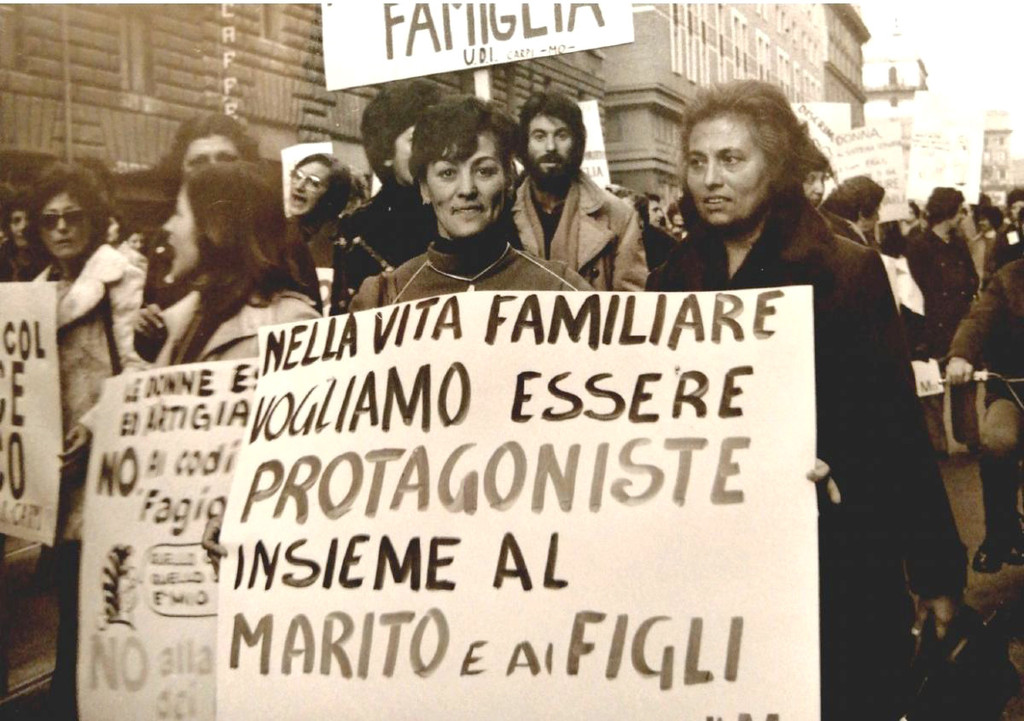
Fifty years ago, Law 151/75 reforming family law came into force.

Last May, President of the Republic Sergio Mattarella commemorated the anniversary, underlining the importance of this law while drawing attention to the growing cases of violence still suffered by women today, particularly within domestic settings.

The Family Law Reform Act, recalling the principles of our Constitution, rewrote substantial parts of the Civil Code. Among these was the principle of equality between wife and husband, recognising full parity between spouses in both rights and duties (art. 143 of the Civil Code), including with respect to the maintenance and upbringing of children (art. 147 of the Civil Code).

The reform, by granting equal rights and equal duties to husband and wife, represented a major step forward that made Italy a fairer and freer country.

The reform was strongly backed by prominent political figures such as Nilde Iotti, a leading figure in the Italian Communist Party and the first woman to serve as President of the Chamber of Deputies; Giglia Tedesco, a socialist politician committed to the struggle for women’s rights and gender equality; and Marisa Rodano, a representative of the Italian Communist Party and a benchmark of Italian feminism.

Law 151/75 was a genuine breakthrough, but fifty years on, today’s society presents us with a reality where women’s freedom is gravely threatened.

In 1981, Law 442/1981 abolished the “rehabilitating marriage” (matrimonio riparatore) and honour crimes, finally establishing that violence and oppression could never be justified by any notion of honour, and that every individual has the right to be free from all forms of coercion or abuse, particularly in the domestic sphere. Until that year, if marriage between the victim and perpetrator followed a sexual assault, the marriage extinguished the penalty for that crime—which was not infrequently committed against a minor. Even after the enactment of the law, however, rape remained classified as a crime against public morality rather than against the person. Only in 1996 did lawmakers classify rape as a crime “against the person”.

On 25 November 2024, on the occasion of the International Day for the Elimination of Violence against Women, Alba Bonetti, President of Amnesty International Italy, declared: “Italy is part of that minority of European States that have not yet aligned their definition of rape with the principle of consent. Currently, Article 609-bis of the Criminal Code defines rape based on the use of deception, force, or abuse of authority. These conditions are not always present (in a great many cases the rapist is a family member or friend) and, above all, they fail to take into account the victim’s will.” Furthermore, on 8 March, Amnesty relaunched the #IOLOCHIEDO campaign advocating the amendment of Article 609-bis of the Criminal Code.

In Italy since 1996, a series of legislative acts against gender-based violence have followed, including the 2013 ratification of the 2011 Istanbul Convention on preventing and combating violence against women—recognised as a form of human rights violation and discrimination—and the enactment of Law No. 119 of 2013 on femicide. These two legislative milestones marked an important and necessary acknowledgement of a structural and widespread phenomenon that extends well beyond official statistics. Then, as now, this form of violence remains difficult to investigate because it is often concealed and kept hidden by the victims themselves. Domestic violence, or violence occurring within emotional and romantic relationships, is the most difficult to report; women often feel isolated, trapped in fear, and paralysed by an ordeal that, if confronted, would upend their lives and those of their loved ones. Too often, it takes a femicide to finally bring to light that hidden and denied violence.

The fight against domestic violence and gender-based discrimination requires a substantial and systematic commitment from institutions and civil society. While necessary and essential, laws alone cannot solve the problem. The priority is to dismantle discrimination and stereotypes linked to gender roles and sexism, conditions in which male violence against women often takes root.

A 2014 study by ISTAT identified a dangerous mechanism among the risk factors for violence against women: the intergenerational transmission of violence, which can be triggered either by witnessing violence between parents or by experiencing it directly.

Sons who live with a father who is violent towards their mother are significantly more likely to commit violent acts against their partners in the future (21.9% compared to an average rate of 5.2%), and daughters are more likely to become victims: boys learn violence, and girls learn to tolerate it. However self-evident it may seem, effectively addressing the situation and breaking this cycle of abuse requires urgent educational and preventative policies that foster awareness against behaviours of indifference and acceptance towards violence.

Preventing violence means tackling its cultural roots and causes. For this reason, targeted educational programmes aimed at raising awareness, especially among younger generations, are essential.

On 22 November 2023, eleven days after the femicide of Giulia Cecchettin, Minister of Education Giuseppe Valditara announced the “Educating on Relationships” project, an initiative intended for schools to discuss relationships, respect, and gender-based violence with students; however, it was never implemented. Sadly, to this day, no such school educational project exists; the Minister merely asserted the need to further supplement the civic education guidelines with themes regarding the culture of respect towards women.

“Ten years have passed since Italy ratified the Istanbul Convention, the international legal framework on ways to counter and eliminate violence against women. Of the three pillars of action set out by the Convention (prevention, protection, prosecution), Italian governments over these years have favoured harsher penalties and a degree of investment, however partial, in anti-violence support centres. Little or nothing has been done to address the root causes of the problem, which are purely cultural.” Alba Bonetti, President of Amnesty International Italy.

Article 3

The Ottawa Convention and the withdrawal of the Baltic States and Ukraine

The Convention on the Prohibition of the Use, Stockpiling, Production and Transfer of Anti-Personnel Mines and on their Destruction, known as the Ottawa Convention, was signed by 122 States on 3 December 1997 and entered into force in 1999. In international law, it is an essential treaty for banning anti-personnel mines, aiming to prohibit the use, stockpiling, production, and transfer of such devices, and mandating the destruction of existing stockpiles alongside assistance to victims. To date, 165 States are party to the Treaty, 157 of which have destroyed their stockpiles, amounting to over 47 million devices worldwide. Among the States that have not joined the Convention are China, India, the Republic of Korea, the Russian Federation, and the United States of America.

Italy is the country that has destroyed the highest number of landmines, the majority of which came from industrial stockpiles. Furthermore, Italy actively participates in the Ottawa follow-up process, both diplomatically—by attending all Convention meetings—and operationally. In particular, it has allocated significant funding to humanitarian demining programmes and promotes an integrated approach to the clearance of explosive remnants, governed by separate treaties whose objectives are strongly complementary.

The situation appears more complex, however, when looking at European territories close to conflict zones. More recently, Ukraine formally decided on 29 June, via a presidential decree signed by President Volodymyr Zelenskyy, to withdraw from the Convention it ratified in December 2005. Behind this decision lies the deteriorating military situation on the front line, which is compelling military leadership to make drastic choices, such as the massive deployment of landmines to halt the Russian offensive. It must be noted that upon gaining independence from the Soviet Union, Ukraine inherited vast military arsenals, including substantial quantities of anti-personnel and anti-tank mines. Following the signing of the Convention, the destruction of legacy stockpiles progressed slowly before grinding to a halt after the outbreak of the war in Donbas. The use of mines has escalated even further since 2022 in the Russia-Ukraine war, by both sides.

Ukraine's decision is not an isolated case. In early 2025, the system built around the Convention was already showing signs of strain. Indeed, in March, the Baltic States—specifically the defence ministers of Lithuania, Latvia, Estonia, and Poland—jointly announced their intention to withdraw from the Convention, with the explicit goal of strengthening their defences following Russia’s invasion of Ukraine.

This move came to fruition in June: on 27 June, Estonia, Latvia, and Lithuania deposited their instruments of withdrawal from the Treaty with the United Nations. These will take effect in six months.

In early June, the parliaments of Finland and Poland also formally approved proposals to exit the treaty, and the deposit of their withdrawal notices is considered imminent.
View original email version