Editorial
Press freedom: the significance of the Sakharov Prize
On 22 October 2025, the European Parliament awarded the Sakharov Prize for Freedom of Thought to two journalists whose lives epitomise courage in the face of repression: Belarusian Andrzej Poczobut and Georgian citizen Mzia Amaglobeli. It is no coincidence that in 2025 both laureates are media workers currently in detention. In these times, journalists face mounting risks and vulnerabilities, and press freedom is no longer a universally guaranteed value, but an increasingly threatened right.
Andrzej Poczobut, a journalist and activist for the Polish minority in Belarus, was arrested in 2021. A prominent member of the Union of Poles in Belarus, he had documented the country's reality for years from the city of Hrodna as a correspondent for the Polish daily "Gazeta Wyborcza". In 2023, following a closed-door trial, he was sentenced to eight years in a high-security prison on the vague charge of “incitement to hatred”.
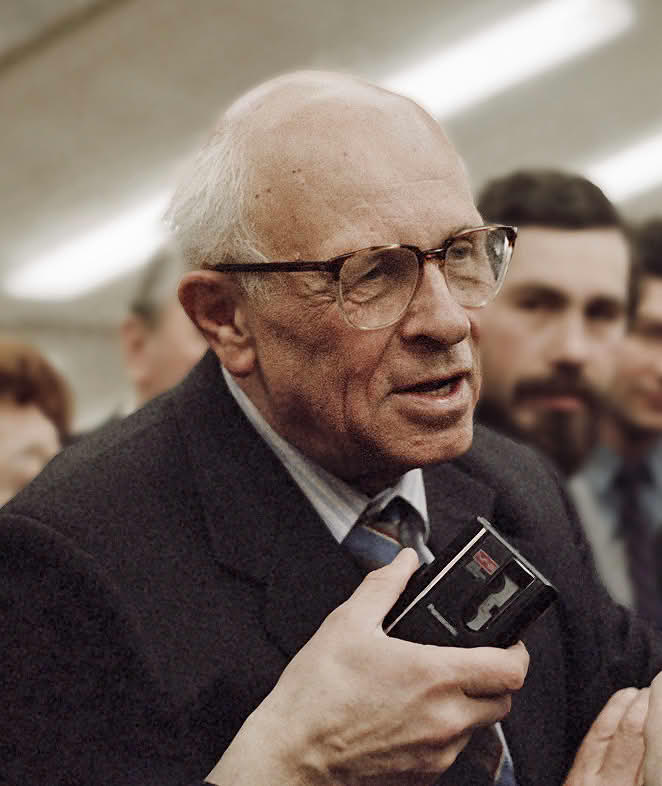
Mzia Amaglobeli, on the other hand, was already editor-in-chief of the independent outlets "Batumelebi" and "Netgazeti" when, in January 2025, she took part in peaceful protests against the Georgian government and was arrested. Her two-year prison sentence makes her Georgia's first female political prisoner since the country gained independence in 1991. She went on hunger strike to protest against what she termed “politically motivated detention”.
In 2024 and 2025, the number of imprisoned journalists worldwide reached alarming levels. According to Reporters Without Borders, in May 2025 as many as 567 media professionals were held in detention.
Specifically, Belarus ranks fourth in the world for the number of detained reporters. The Lukashenko regime designates independent publications as “extremist”, using this loosely defined category to prosecute authors. In 2024, ahead of the presidential election, the number of political trials rose by 50%, and all independent media outlets were outlawed.
Georgia presents a slightly different yet equally troubling picture. In 2024, the country underwent a dramatic shift with the adoption of the “foreign agents” law, legislation clearly modelled on Russian laws that requires organisations receiving foreign funding to register as “organisations pursuing the interests of a foreign power”. Consequently, the highest number of press freedom violation alerts among Council of Europe member states was recorded there.
Press freedom is not solely a right belonging to media workers; it is the cornerstone of democracy itself. When journalists cannot work freely, citizens lose access to independent information and the ability to hold power accountable over abuses, corruption, and human rights violations. The Sakharov Prize is a recognition of this resistance, albeit symbolic. The international community must therefore match words of solidarity with concrete actions: political pressure on governments, economic sanctions, financial support, and legal protection for independent media.
Anthony Bellanger, General Secretary of the European Federation of Journalists, welcoming the award of the 2025 Sakharov Prize to journalists Andrzej Poczobut and Mzia Amaglobeli, drew attention to their unjust plight, expressing deep concern over their conditions of detention and stating that their cases are a stark example of authoritarian governments jailing journalists and media professionals to silence them. Bellanger reiterated the call on the authorities in Belarus and Georgia to release all detained journalists.
“If I must die, you must live to tell my story”: Refaat Alareer’s testament
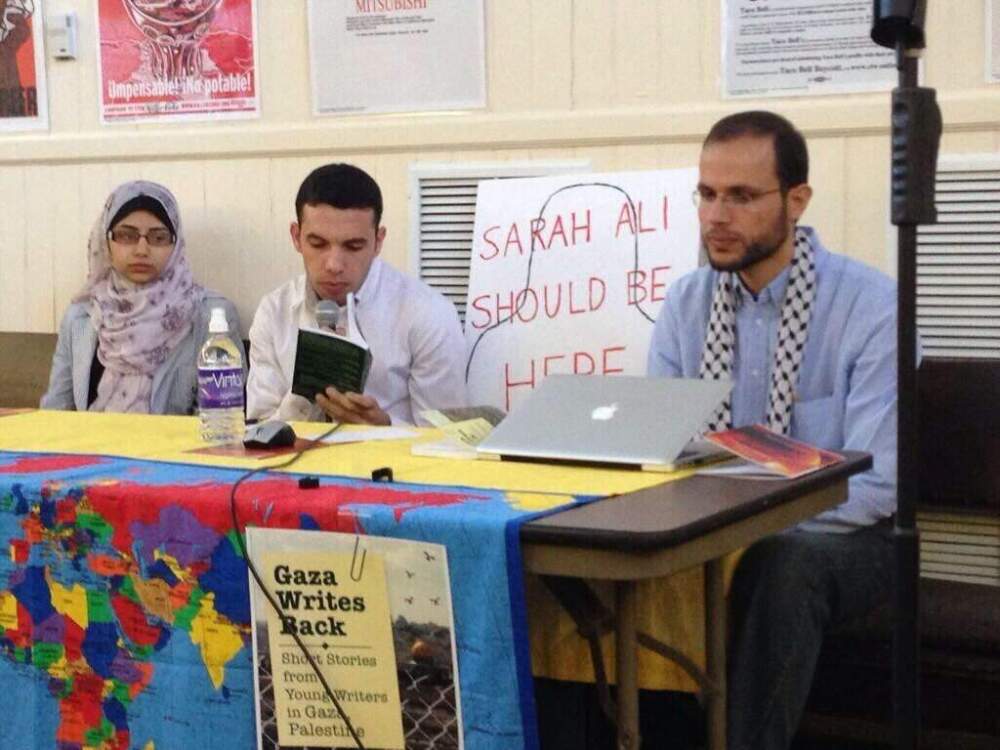
“If I must die, let it bring hope, let it be a tale!”. These are the closing lines of “If I must die” by Palestinian poet and activist Refaat Alareer, published just days before his death.
Alareer was a Palestinian writer, poet, academic, and activist killed on 6 December 2023 in a targeted Israeli strike, alongside members of his family. Alareer taught comparative literature and creative writing at the now-destroyed Islamic University of Gaza. Following his death, his poems went viral.
The horrors of war in the Gaza Strip had already struck the writer's life in 2014, when his brother was killed in a bombing. Shortly thereafter, driven by his passion for literature, in 2015 Alareer became one of the co-founders of We Are Not Numbers, a non-profit organisation running a mentorship programme designed to connect young Gazan authors with native English-speaking mentors abroad working in literature or journalism. To this day, through this platform, WANN shares authentic, compelling stories from the next generation of Palestinian writers and leaders with the world.
Central to Refaat Alareer's mission was the belief that writing and knowledge were essential tools to challenge widespread disinformation and dismantle Israeli propaganda. According to Euro-Med Human Rights Monitor, the poet was deliberately targeted and killed by Israel: according to the report published on 8 December 2023, he had reportedly received death threats via social media and electronic devices since the onset of the conflict.
On 25 October, Club Tenco, in collaboration with Amnesty International Italy, awarded the Yorum Prize—established in 2020—to the memory of Refaat Alareer. Accepting it on his behalf was the Italian-Palestinian singer-songwriter and journalist Nabil Bey Salameh, co-founder of the Italian-Palestinian band Radiodervish, who took to the stage alongside the newly reconstituted Grup Yorum, after whom the award is named.
Every year, this ceremony reminds us how vital art, writing, and widespread knowledge are for safeguarding human rights. The legacy of those who lost their lives for expressing their ideas remains indelible: “If I must die, you must live to tell my story”.
The struggle for civil rights in the language of Pier Paolo Pasolini fifty years on from his death
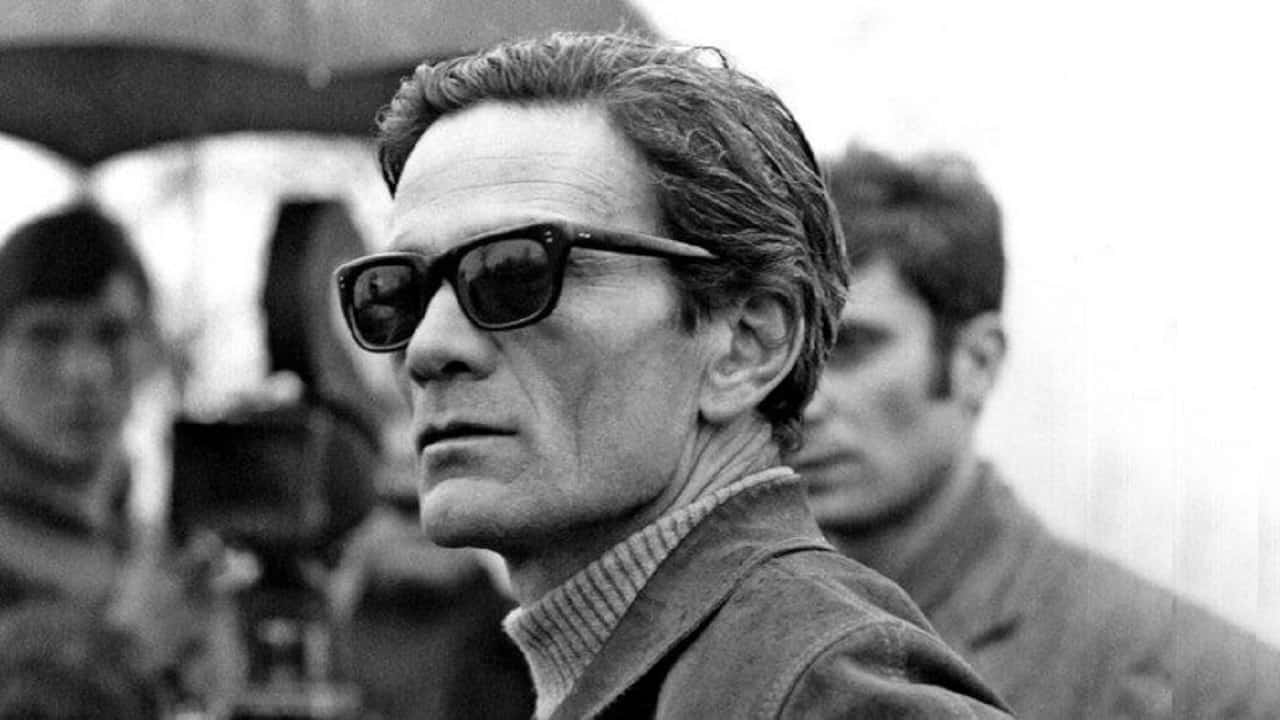
On 2 November 1975, Pier Paolo Pasolini was murdered at the Idroscalo in Ostia. Fifty years on, his figure continues to challenge us: poet, filmmaker, polemicist, Pasolini was a “scandalous” intellectual who defied simplification. His voice, often isolated, denounced the contradictions of a changing Italy—from the post-war era to the economic miracle, through to the “anthropological mutation” brought on by consumerism. In this context, human and civil rights occupy a central, albeit ambiguous, place in his thinking.
Pasolini conceived civil rights as “the rights of others”, a concept that rejects individualistic logic and is grounded in a collective and relational dimension. This vision stemmed from a deeply anti-individualistic conviction: for him, a right is not a personal privilege, but an ethical bond compelling us to recognise and safeguard the freedom and dignity of others. In other words, rights are not tools for self-assertion, but preconditions for authentic coexistence founded on mutual respect. This perspective opposes majoritarian logic, which tends to reduce rights to partisan concessions dependent on political expedience rather than universal principles.
In "Lutheran Letters" (1975), Pasolini denounced the reduction of rights to ideological slogans and warned against the danger of their attainment becoming an instrument of social conformism.
In the speech prepared for the Radical Party Congress, which went undelivered due to his death, Pasolini warned that the struggle for civil rights, if co-opted by the system, risked turning into «false tolerance» and «false secularism», serving a new progressive conformism. For him, the recognition of rights had to remain an act of rupture, capable of defending difference rather than erasing it.
Pasolini's stance on rights was complex: on the one hand, he recognised their necessity as a vehicle for emancipation; on the other, he decried their standardising effect, capable of turning the oppressed into "bourgeois" once their rights were granted. For Pasolini, genuine justice did not stem from legal codes, but from a “pure and direct” revolution of the oppressed, far removed from institutional mediation.
In "Corsair Writings" (1975), Pasolini denounced the “anthropological mutation” produced by consumerism and the loss of genuine freedom. Here, his notion of anarchy emerges as a radical rejection of an order that reduces human beings to economic functions, alongside his call for cultural, rather than political, resistance.
Pasolini did not adhere to anarchism as a doctrine, but embodied its spirit: a rejection of hierarchy, a distrust of institutions, and a defence of freedom as an absolute value. He did not believe in ideological revolution, but in individual and cultural resistance.
In the film "Salò, or the 120 Days of Sodom", Pasolini pushed his reflection on power and its capacity to obliterate human dignity to its limits. Set in the Republic of Salò, the film does not merely depict fascist violence: it transfigures it into a universal paradigm where the body becomes the terrain of absolute domination. Oppression is not merely physical, but ontological: individuals are reduced to objects, stripped of all identity, turned into raw matter to be manipulated and consumed.
The sadistic ritual of the four Masters—inspired by Sade yet transposed into the Italian historical context—is not gratuitous excess, but the depiction of a power that seizes biological life itself, extinguishing any remaining shred of freedom. It is the prophecy of a society in which freedom flips into an instrument of control, and life itself becomes a commodity. In this light, Salò is not merely a film about violence, but an indictment of the anthropological transformation Pasolini already saw underway in neo-capitalism: the end of the human being as a subject, and their reduction to a mere biological function.
In the film "La Rabbia" (1963), Pasolini juxtaposed images of war and destitution with visions of beauty and solidarity, suggesting that poetry and art could still resist barbarism. In the "Trilogy of Life" ("The Decameron", "The Canterbury Tales", "The Arabian Nights"), he celebrated the body, pleasure, and sexuality as realms of freedom and innocence before power could colonise them. It was a fragile hope, which he would renounce shortly afterwards, yet one that bore witness to a yearning for a more humane world where life is not reduced to a commodity.
Pasolini remains a controversial author who defies simple classification. His uncomfortable, prophetic voice unmasked the hypocrisies of power and the illusions of progress, paying for the truth with solitude. Fifty years on, his contradictions do not weaken his legacy: they make him unique and unforgettable. In an era leaning towards conformity, Pasolini continues to be a vibrant source of reflection—an invitation to think against the grain and defend human dignity, even when all seems lost.


Did someone send you this link? Get it every month
Subscribe to Diritti al Punto: the next issue straight to your inbox.
Check your inbox
We have sent you a confirmation link. Click the button in the email to complete your subscription. The link is valid for 7 days.
Can't see the email? Check your spam and promotions folders, or.