
Editorial
Dear Readers,
A recent report by Amnesty International has uncovered a system used by the Russian Federation to recruit migrants into the national army to fight in the conflict in Ukraine. The report exposes deceptive and coercive methods to enlist foreign nationals, mostly migrants from Brazil, Colombia, Cuba, Egypt, Somalia, and Sri Lanka, who were already in Russia in precarious circumstances.
Last September, several European countries announced the introduction of trade restrictions on goods originating from Israeli settlements in Palestinian territory, which are deemed illegal under international law and according to the advisory opinion issued by the International Court of Justice in July 2024. Italy is not among these countries. Amnesty International reiterates its commitment to curbing Israel's colonial project.
On 30 and 31 July, approximately 72,000 people crossed the border between Morocco and Ceuta. To date, the humanitarian crisis linked to migration flows in Ceuta remains unresolved. Amnesty International calls on the Spanish authorities to guarantee access to asylum and uphold the principle of non-refoulement, enshrined in the 1951 Geneva Convention relating to the Status of Refugees.
If you enjoy our newsletter, please share it and invite others to subscribe by clicking the link at the bottom of the page.
The Great Deception: How Russia recruits migrants from the Global South for the war in Ukraine
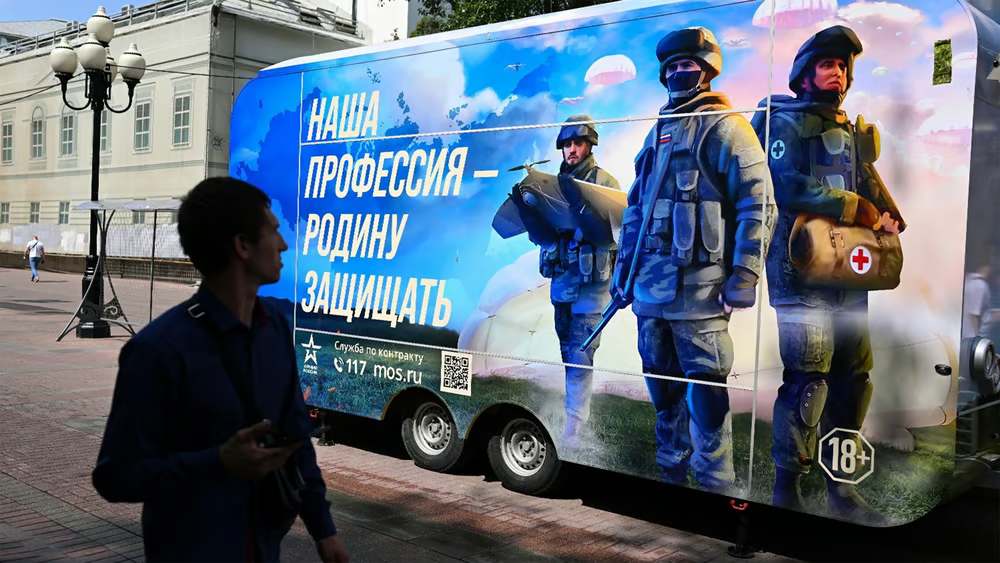
An Amnesty International report exposes a recruitment scheme based on blackmail, bogus job offers, and the confiscation of documents.
Fake job advertisements online, promises of lucrative salaries, and blackmail linked to residence permits. And then the reality of the trenches, under drone fire, holding a rifle after barely two weeks of training. A new research report published by Amnesty International, entitled "Russia: Forced and deceptive recruitment of foreign nationals into the armed forces", accuses Russia of employing deceptive and coercive tactics to recruit foreign nationals, turning them into "cannon fodder" in the war of aggression against Ukraine. According to the human rights organisation, this systematic practice in many instances amounts to the international crime of human trafficking.
This specific aspect of the conflict – the systematic exploitation of third-country nationals – has so far remained virtually invisible in public debate, overshadowed by conventional military and geopolitical coverage. Amnesty International's report therefore performs the vital service of shining a light on a hidden reality, providing an essential resource for both the public and governments seeking to protect their citizens.
The trap of false promises
The mechanism documented in the report primarily affects the most vulnerable individuals, originating mainly from low-income countries in the Global South. Recruiters prey on the economic desperation or precarious legal status of those already living in Russia as migrants or refugees.
The tactics employed vary, but all share the same degree of deception. On the one hand, there is bureaucratic blackmail: foreign nationals whose work visas have expired and individuals detained for minor offences are offered enlistment as the sole alternative to deportation or imprisonment. On the other hand, there are online traps. Local agents and misleading adverts promise well-paid jobs in civilian sectors such as logistics, IT, construction, or security.
A case in point is that of a South African national who responded to an advert for a lorry-driving job in Poland. Upon landing in Moscow, the authorities seized everything, including his passport, telling him he would never see Poland: he had become a Russian soldier. Many others were promised safe jobs as cooks or drivers far behind the front lines, only to find themselves dispatched to the frontline within a matter of weeks.
Trapped with no way out
Amnesty International's report draws on interviews conducted in Ukrainian prisoner-of-war camps between 2024 and 2026, involving nationals from Brazil, Colombia, Cuba, Egypt, Sierra Leone, Sri Lanka, Somalia, and South Africa. The accounts of survivors describe a rigid system of deprivation of liberty.
Once contracts are signed – often written exclusively in Russian, which the recruits do not understand – passports and mobile phones are confiscated. Movements are strictly surveilled, and any attempt to withdraw is met with violence. "If you try to escape, you'll either end up in prison or we'll kill you", Pedro, a Brazilian IT specialist who had asked to terminate his contract, was told.
In addition to the psychological trauma, deployment to the front takes place without adequate preparation. Most foreign nationals are sent into combat after barely a fortnight's training, unable to communicate with their commanding officers due to language barriers. In Amnesty's view, this approach demonstrates a complete disregard for human life, aimed solely at boosting numbers in the trenches. Compounding the violence is financial deceit: most foreign soldiers never received the lucrative wages or signing bonuses promised by recruiters.
An appeal to the international community
"Russian recruiters have developed a coercive and fraudulent system", said Agnès Callamard, Secretary General of Amnesty International, stressing that this scheme breaches the Palermo Protocol against human trafficking. Following the Moscow authorities' ban on Amnesty International from Russian territory in 2025, the organisation has launched a global appeal.
The organisation calls on the governments of migrants' countries of origin to launch immediate awareness campaigns to protect their citizens from these fraudulent advertisements. At the same time, the international community is urged to gather evidence of these abuses to prosecute those responsible, including private intermediaries and military commanders, putting an end to a chain of exploitation that extends well beyond the borders of the Ukrainian conflict.
The full report can be consulted on Amnesty International's official website at the following address: amnesty.org/en/documents/eur46/8512/2026/en/
Stop trade with illegal settlements in the West Bank
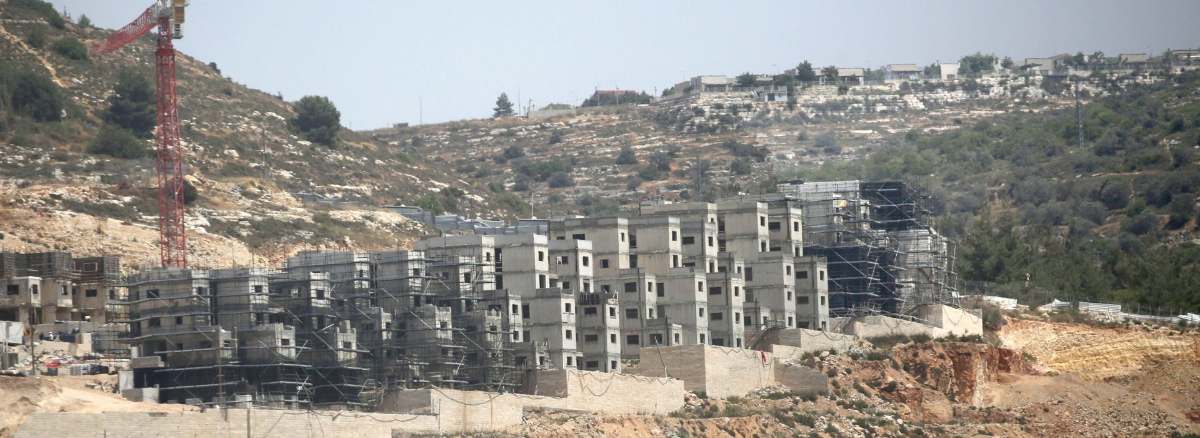
Stop trade with illegal settlements. That is the call of the campaign launched, in Italy as elsewhere, to say no to the import of goods and services originating from Israeli settlements in the Occupied Palestinian Territory. The West Bank, home to nearly 3 million Palestinians, is facing a dire situation: the population suffers repeated violence at the hands of Israeli settlers and military forces, in clear violation of international law and human rights.
According to the report "Importing Occupation" by Global Echo, a system is in place whereby agricultural produce grown in illegal Israeli settlements is routinely imported into Europe as if it were Israeli. This model breaches European laws, trade agreements, and policies by concealing the origin of goods produced through land expropriation and exploitation, without any intervention from European customs authorities. According to the report, between 2017 and 2026, one in six agricultural products imported from Israel into the European market originated from settlements, thereby fuelling the illegal occupation of the West Bank.
On 8 September, the Foreign Ministers of France, Denmark, Spain, Finland, Ireland, Poland, Portugal, and Sweden – alongside those of Canada, Iceland, Norway, and the United Kingdom – announced their intention to "introduce national restrictions and/or support European restrictions on trade in goods with Israeli settlements, which are illegal under international law".
Italy is not among these countries, despite the efforts of a coalition of over 20 civil society organisations that have been actively campaigning on the initiative since September 2025.
The campaign calls on the Italian Government to: ban trade with settlements, including the provision of services and investments; enforce mandatory transparency regarding product origin; and suspend all bilateral agreements with Israel as well as the EU-Israel Association Agreement until Israel fully complies with human rights provisions.
In response to the Italian Government's decision not to join the initiative, several opposition groups have tabled a bill aimed at ensuring national legislation complies with obligations under international law regarding the situation in the occupied Palestinian territories.
It is important to recall that on 19 July 2024, the International Court of Justice reaffirmed, in an advisory opinion, that the State of Israel's continued presence in the occupied territory of the West Bank and the Gaza Strip is unlawful. The Court stated that the State of Israel is obligated to cease all settlement activities and evacuate all settlers. In the Court's view, all States in the international community are under an obligation to refrain from entering into economic or commercial dealings with the State of Israel concerning the occupied Palestinian territory that could contribute to entrenching Israel's unlawful presence there.
In recent years, the number of Palestinian civilians killed by the Israeli military and settlers has risen, with numerous children among the casualties and around 40,000 newly displaced persons over the past eighteen months out of the 46,000 displaced since the beginning of the conflict.
Amnesty International reaffirms its commitment to supporting these initiatives, defending human rights, protecting the Palestinian population, and halting Israel's broader colonial project.
Gaza and the West Bank: ISPI in-depth analysis
West Bank: Death toll in three years surpasses previous 17 years combined - Oxfam
Ceuta: An ongoing humanitarian crisis
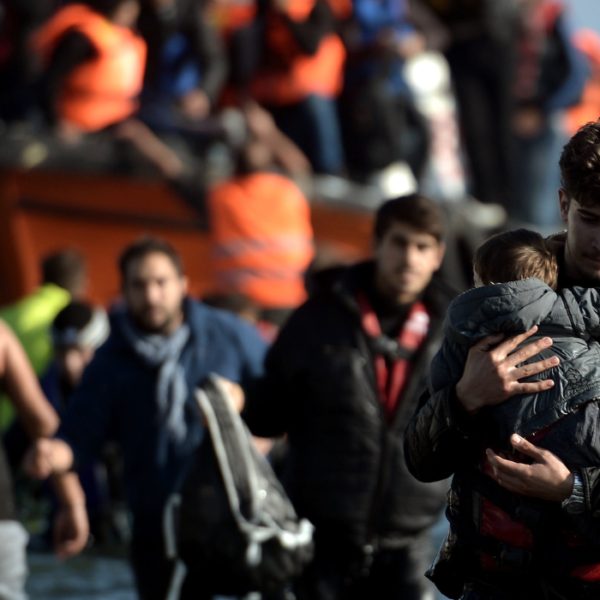
In Ceuta, following the mass arrivals in late July, the humanitarian crisis remains unresolved. Amnesty International calls on the Spanish authorities to guarantee access to asylum and uphold the principle of non-refoulement.
On 30 and 31 July, approximately 72,000 people crossed the border between Morocco and Ceuta, the Spanish enclave on the North African coast. By mid-October, thousands were still living on the streets, on beaches, or in makeshift shelters. Amnesty International has also requested information from Spain regarding its response to the arrivals and has denounced potential summary expulsions. This is not merely a matter of border management: reception, protection, and fundamental rights are at stake.
Among the factors leading up to the arrivals was a ruling by the Tribunal Supremo (Spanish Supreme Court) issued in late June and made public in early July. The Court ruled that the rechazo en frontera (border rejection / pushback) cannot be applied to those who reach Ceuta or Melilla by swimming; in such cases, the standard repatriation procedure must be followed. The ruling therefore did not "open" the border, nor did it grant an automatic right to remain in Spain. On social media, however, it was interpreted misleadingly. As documented by Maldita.es, a Spanish fact-checking organisation, these messages had little traction for weeks before going viral precisely during the days of the border crossings. This neither proves an orchestrated campaign nor does it alone account for the mass crossings.
Ceuta is a geopolitically sensitive border. Along with Melilla, it is a Spanish city claimed by Morocco, a key partner of Madrid and the European Union in controlling migration routes. The events of July have precedents: in 2021, a diplomatic crisis between Madrid and Rabat – triggered by Spain hosting Brahim Ghali, leader of the Polisario Front, for medical treatment – led thousands of people to enter Ceuta within days. That episode took place against the backdrop of the dispute over Western Sahara, a contested territory between Morocco and the Polisario Front.
Responsibility for and the circumstances surrounding the latest crossings are still under investigation. Nevertheless, the crisis highlights a broader issue: Europe's reliance on cooperation with third countries to police its borders. On 3 August, Amnesty International called on European leaders to respond with "humanity and solidarity".
At the European level, meanwhile, new measures for managing sudden, mass arrivals are currently being debated. Following the new returns regulation, the European Commission announced a new emergency response framework, prompted in part by situations such as the one in Ceuta. Among interior ministers, several governments have proposed fast-track procedures and, under certain circumstances, even the suspension of asylum rules. These proposals raise serious concerns regarding the protection of the right to asylum, adherence to the principle of non-refoulement, and the risk of collective expulsions.
Meanwhile, concerns persist in Ceuta over human rights compliance. On 28 August, Amnesty International Spain reported credible testimonies of excessive use of force against migrants and assaults by private individuals, in some instances accompanied by racist abuse. Particularly alarming is the situation of unaccompanied minors: by August, hundreds of children and teenagers were still on the streets, lacking adequate water, food, and sanitation facilities. Amnesty called for them to be swiftly identified and placed under protective care.
From 10 to 15 September, an Amnesty International Spain delegation in Ceuta met with over 65 migrants and asylum seekers. On 30 September, the organisation denounced substandard reception conditions and accounts of torture and other cruel, inhuman or degrading treatment attributed to members of the Spanish Armed Forces.
International law provides that anyone in need of international protection must be able to lodge an asylum claim and have access to an individual and effective procedure.
Under Article 33 of the 1951 Geneva Convention relating to the Status of Refugees, the principle of non-refoulement applies, prohibiting the return of an individual to territories where their life or freedom would be threatened. Irrespective of the root causes of the crossings or tensions between governments, border management must therefore be conducted in compliance with international obligations and human rights.
Guaranteeing asylum, respecting non-refoulement, and safeguarding minors and vulnerable people remain core obligations that States are bound to uphold.
View original email version
Did someone send you this link? Get it every month
Subscribe to Diritti al Punto: the next issue straight to your inbox.
Check your inbox
We have sent you a confirmation link. Click the button in the email to complete your subscription. The link is valid for 7 days.
Can't see the email? Check your spam and promotions folders, or.
