Editorial
Dear Readers,
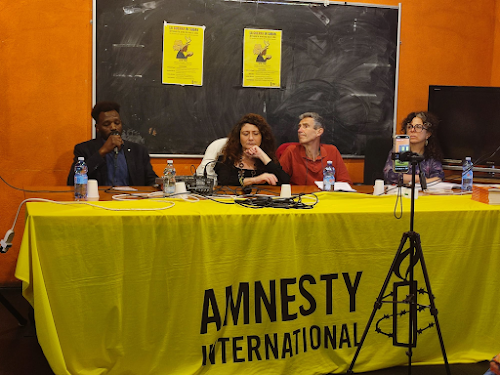
On 19 May, a meeting on the humanitarian crisis in Sudan was held in Rome. The speakers, including the journalist Antonella Napoli, activist and spokesperson for the Sudanese community in Italy Adambosh Nor M., journalist Luciano Bertozzi, and Ilaria Masinara from Amnesty, spoke about the grave human rights situation in Sudan, particularly since April 2023, when clashes broke out between the regular Sudanese army and the Rapid Support Forces. The United Nations has described the conflict as “the worst humanitarian crisis in the world”, with 12 million people displaced.
Since the beginning of 2026, an energy, food, and social crisis has been unfolding in Cuba. Continuous blackouts and fuel shortages, alongside a scarcity of medicines and basic foodstuffs, have brought the country near to collapse as a consequence of the sanctions and trade embargo imposed by the United States. In addition to highlighting the violation of economic, social, and cultural rights, the 2026 Amnesty report denounces a systematic policy of repression, cases of arbitrary detention, and the torture of political prisoners.
2025 “will be remembered for its bullies and predators”. “Voracious predators preyed on our global commons, whilst the post-1948 international order faced a direct assault on the foundations of human rights, waged by powerful states, corporate giants, and anti-rights movements for control, impunity, and profit.” With these words, Amnesty International’s Secretary General, Agnès Callamard, opens the 2026 Amnesty Report. A snapshot of the state of human rights across the world, this document serves both as an indictment of severe rights violations and as a tool to consult whenever news requires context and in-depth analysis.
If you enjoy our newsletter, please share it and invite anyone you wish to subscribe by clicking on the link at the bottom of the page.
Why is it so vital to talk about Sudan today?
Amnesty International is a global movement that exposes human rights violations worldwide through research and action. Every place where conflict unfolds or where human rights are violated is equally important. For this reason, Amnesty works and campaigns to ensure that no conflict is overshadowed and no country forgotten. In recent months, Sudan has become the site of one of the gravest humanitarian crises in recent decades; the conflict, which escalated from 2023 onwards, has deeply scarred the civilian population, who have endured severe human rights violations. Media focus on the conflict in Ukraine and the crisis in the Middle East has overshadowed the situation in Sudan, leading to waning attention on the country. According to War Watch, there are currently 34 international armed conflicts and more than 50 civil wars in the world. Shining a spotlight on under-reported humanitarian crises and mobilising civil society and the international community to take action—denouncing and halting human rights abuses—lies at the heart of Amnesty International's mission.
On 19 May in Rome, at the Spin Time space, a meeting on Sudan took place entitled “The War in Sudan: Weapons Arrive, but Food Does Not”, organised by several Amnesty groups in Rome in collaboration with the Central and Eastern Africa Coordination. The objective of the gathering was to raise awareness about events unfolding in the country and the suffering of civilians. Among the guests was Antonella Napoli, journalist, international affairs analyst, and director of the magazine “Focus on Africa”. Antonella Napoli has covered Sudan for several years; during one of her trips to the country, she produced a report for TV2000 and wrote articles for La Repubblica at a time when very little was known about Sudan. In her address, she traced the history of the country, focusing on the conflict's crucial moments—particularly the aftermath of the 2021 coup, when the democratic civilian government established following the revolution and led by Prime Minister Abdallah Hamdok was ousted, ushering in a military regime. From that point on, friction flared between the two military factions: the Sudanese Armed Forces led by General Abdel Fattah al-Burhan and the Rapid Support Forces (RSF) led by Mohamed Hamdan Dagalo, known as Hemedti. A full-scale struggle for power ensued, leading in 2023 to intensified clashes and the outbreak of a new phase of war that persists today with familiar, devastating consequences. Antonella Napoli recalled the massacre in the Zamzam displacement camp in Darfur, carried out by RSF paramilitaries in April 2025. Amnesty International conducted an investigation into this attack, concluding that the actions committed by the RSF constitute war crimes. Field research and interviews with surviving witnesses—including victims' relatives, journalists, analysts, and medical staff on the ground—revealed that RSF members committed indiscriminate attacks against civilians, hostage-taking, looting, and the destruction of civilian infrastructure, including homes and schools. Agnès Callamard, Secretary General of Amnesty International, stated that the RSF militia attack on the camp was “not an isolated action, but an integral part of the RSF’s campaign against villages and camps for displaced persons”.
Antonella Napoli's speech was followed by that of Adambosh Nor M., spokesperson for the Sudanese community, mediator, and activist. Adambosh addressed an important question: whose side are the Sudanese people on? A difficult and controversial issue. A segment of the Sudanese population wishes to back the Sudanese Armed Forces, looking to the state military for authority and protection, which in reality fails to materialise. Adambosh also reflected on the role of the Sudanese diaspora. The testimonies and voices of the Sudanese people, supported by local organisations such as the Community of Sant'Egidio, Amnesty, and Baobab, provide a vital contribution to awareness-raising and information campaigns on the humanitarian crisis in Sudan. The issue of humanitarian aid is equally thorny. Part of this aid is direct and comes from African countries of emigration, including Chad, Egypt, and Ethiopia. International humanitarian assistance, meanwhile, has dropped dramatically, both due to the emergence of new crises (Gaza, Middle East) and the decision by key donor countries, such as the United States, to drastically slash funding for humanitarian crises.
Also present at the meeting in Rome was Luciano Bertozzi, a freelance journalist who collaborates with Focus on Africa and the Archivio Disarmo International Research Institute. He addressed the persistent issue of child soldiers, the presence of mercenaries, and what he viewed as the meagre results of the Peace Conference on Sudan held in Berlin last April.
Ilaria Masinara, Campaigns Director at Amnesty International Italy, brought the speeches to a close by focusing on the newly published 2026 Amnesty Report on the state of human rights worldwide, and on Amnesty’s work for Sudan. The Amnesty annual report portrays a catastrophic situation in Sudan: 33 million people in need of humanitarian assistance, an impending famine, more than 70% of health facilities destroyed, and a lack of medical staff. Further grave concerns include the frequent use of sexual violence as a weapon of war by RSF militias, reprisals against activists, and arms transfers via the United Arab Emirates. Faced with this dramatic reality, we are witnessing the paralysis of an international community that fails to act effectively and often remains passive, rendering itself complicit in serious crimes. What can we do? Refuse to look away, keep attention focused on the situation of civilians in Sudan, stay informed through reliable sources, take action by signing appeals and joining campaigns for human rights, and help put pressure on governments and international bodies so that grave human rights violations do not go unpunished—to restore dignity and justice to the people of Sudan.
Sign Amnesty's petition “Sudan: Arms embargo now!”
Cuba’s renewed isolation amidst energy and humanitarian crises
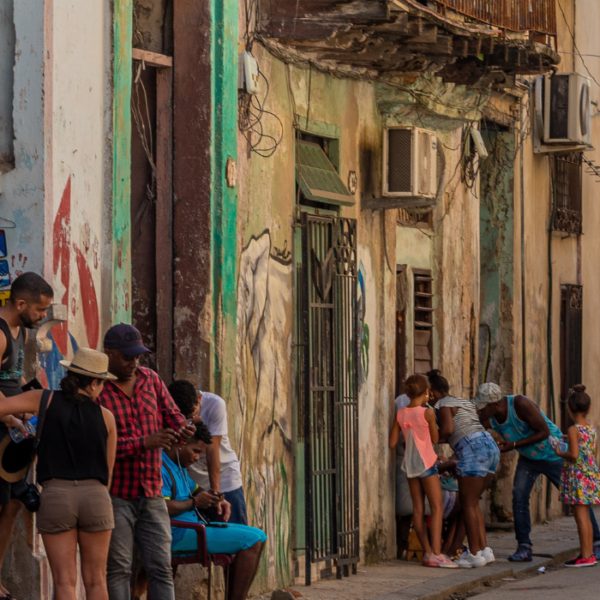
Since the early months of 2026, an unprecedented crisis has gripped Cuba. Blackouts, shortages of fuel, electricity, and food are generating severe energy and humanitarian crises across the island.
The events of recent weeks have roots deeply anchored in the history of the Americas since the 1960s, and under the Trump administration, an already thorny situation escalated dramatically.
Cuba took the socialist path in the 1960s, and in the aftermath of the revolution, a rights system was established based on three pillars: literacy, healthcare and prevention, and the distribution of food and essential goods to every household. However, this “attained freedom” plunged Cuba into the so-called “bloqueo”—the commercial, economic, and financial embargo imposed by the United States. Later, the first Trump administration introduced new unilateral sanctions, including adding Cuba to the list of State Sponsors of Terrorism.
Most recently, the January 2026 US strike on Venezuela represents the culmination of repression against the Cuban people: US control over Venezuelan oil resources and extensive sanctions (240 in total) on Cuba are cutting off the island's energy supplies, causing widespread power outages for the population and crippling essential public services.
Regular drinking water is scarce; refuse collection has been severely curtailed, leaving neighbourhoods submerged under rubbish; aircraft refuelling has been suspended, and vital routes have been cancelled, isolating the country. The fundamental right to health is compromised: basic medicines and medical supplies are missing, surgical operations cannot be performed, and the impending hurricane season combined with high temperatures will exacerbate the risk of disease outbreaks.
The United Nations High Commissioner for Human Rights, Volker Türk, who has been calling for months for the suspension of US sanctions, highlighted “a doubling of infant mortality to 9.9 per 1,000 births” and “a decline in childhood cancer survival rates from 85% to 65%”.
The education system is also under assault, with the energy crisis preventing school lessons from taking place regularly, while tourism—a vital lifeline for the island—has slumped by 50% in recent months compared with the end of 2025.
Fears that the Cuban system could definitively collapse are real, particularly given statements by President Trump, whose interests, after Venezuela and Iran, appear to be set on the Caribbean island.
In addition to highlighting the infringement of economic, social, and cultural rights, the 2026 Amnesty Report denounces a systematic policy of repression against activists and political opposition figures, instances of arbitrary detention frequently followed by enforced disappearances, inhumane detention conditions, and the torture of political prisoners.
It is time for the international community to set aside its indifference and make way for concrete action to provide the island and its people with the necessary aid—and restore light to Cuba.
«Bullies and predators»: 2025 as told by Amnesty International's Annual Report
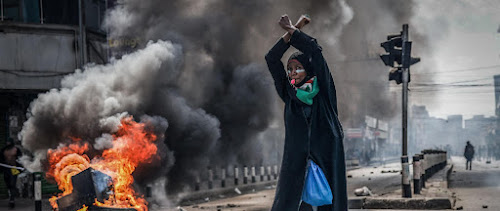
Protests brutally crushed in Iran. Civic space shrinking in Italy. Ever harsher European migration policies. In recent months we have covered them as separate developments, chapter by chapter. Then, as happens every spring, came the volume that pieces the fragments together: “The State of the World’s Human Rights”, Amnesty International’s Annual Report published on 21 April 2026. One hundred and forty-four countries reviewed, entry by entry, in what is the most comprehensive annual snapshot of the state of human rights across the world: the document that will be consulted in years to come to truly understand what 2025 was about.
2025, writes Secretary General Agnès Callamard in the foreword, “will be remembered for its bullies and predators”. Just a few pages of hers that are well worth reading on their own: “voracious predators preyed on our global commons”, whilst the post-1948 international order—“built slowly and painfully, if inadequately”—faces “a direct assault on the foundations of human rights”, waged by powerful states, corporate giants, and anti-rights movements for control, impunity, and profit. The responsibility, Callamard cautions, does not lie solely with the aggressors: “world leaders proved far too compliant in the face of attacks on international law”.
Browsing through the country entries, the diagnosis takes shape. The report documents the genocide committed by Israel against the Palestinian population in Gaza, which continued alongside the apartheid regime even after the October 2025 ceasefire. In Ukraine, Russia perpetrated crimes against humanity through enforced disappearances, torture, and attacks on civilian infrastructure, while conflicts in Sudan, Myanmar, and the Democratic Republic of the Congo continued to claim civilian lives. The United States is responsible for over 150 extrajudicial executions carried out via air strikes and, in January 2026, an act of aggression against Venezuela. It is the same logic witnessed in Iran, where the regime answered protests that began in late December 2025 with a slaughter of demonstrators, recorded by the report among the gravest events of early 2026.
Then comes the chapter on Italy, read in a single breath, holding up a mirror to the events of recent months: the law passed in June introducing new criminal offences and harsher sentences for peaceful protesters; the unlawful use of Graphite spyware against journalists and human rights defenders; overcrowded prisons and deaths in custody; and repatriation centres with bare cells, concerning which the Constitutional Court ruled in July that migrant detention breached constitutional principles. Moreover: 1,195 people died in the central Mediterranean, while the memorandum with Libya was renewed in November despite documented violations. These are the very developments that led, as we reported, to Italy being downgraded to an “obstructed civic space” country, according to the Civicus Monitor.
Yet those who read to the end will discover that the report also holds the other half of the story. 2025 was the year of Generation Z taking to the streets in more than ten countries; of roughly 300,000 people in Budapest defying the ban on Pride; of flotillas setting sail for Gaza; and of dockworkers across six European countries blocking ships laden with weapons bound for Israel. In the United Kingdom, 2,700 people were arrested for peacefully opposing the proscription of the organisation Palestine Action. And international justice, however embattled, pressed forward: the Philippines surrendered former president Duterte to the International Criminal Court.
It is this blending of denunciation and hope that elevates the Annual Report beyond a mere document: a vital companion for anyone seeking to understand the present, to keep at hand and consult whenever news calls for context and depth. The Italian edition, edited as always by Amnesty International Italy, concludes with the words with which Callamard bids farewell to the reader, capturing the essence of the entire work: “history is not just something done to us. It is also ours to make”.
View original email version
Did someone send you this link? Get it every month
Subscribe to Diritti al Punto: the next issue straight to your inbox.
Check your inbox
We have sent you a confirmation link. Click the button in the email to complete your subscription. The link is valid for 7 days.
Can't see the email? Check your spam and promotions folders, or.