Issue 24 of 24 · 27 December 2023

Diritti al punto - November December 2023

we return to migration issues, in particular discussing the Italy-Albania agreement on migrants and the UK's proposed deal with Rwanda on...

Editorial

Editorial

in this issue of Diritti al punto we return to migration issues, in particular discussing the Italy-Albania agreement on migrants and the UK's proposed deal with Rwanda on asylum seekers.

Our in-depth examination of international humanitarian law continues, focusing on the principle of distinction between civilians and combatants, and between civilian objects and military objectives.

10 November is World Science Day for Peace and Development. An observance that highlights the fundamental role of science in society by engaging the general public in debates on scientific issues.

If you enjoy our newsletter, please share it and invite anyone you like to subscribe by clicking the link at the bottom of the page. Happy reading!

Diritti al punto will return in January; thank you to all our readers, even those who change the page after the first two lines ;)

Article 1

The UK-Rwanda asylum seeker deal

On 14 April 2022, the incumbent British Prime Minister, Boris Johnson, announced a deal with Rwanda for the relocation of asylum seekers who entered the United Kingdom unlawfully.

Under the terms set out in the MoU (Memorandum of Understanding), Rwanda was to handle the assessment of asylum claims deemed inadmissible, host those granted positive decisions, and manage the removal of those refused asylum.

Immediately and from many quarters, doubts and serious concerns were voiced.

Amnesty International condemned the agreement as an abdication of the obligation to uphold the right to asylum set out in the 1951 Refugee Convention, and called on Commonwealth leaders to reconsider the appropriateness of such a deal.

Human Rights Watch - HRW sent an open letter to the British Home Secretary expressing grave concern and urging them not to proceed with the agreement.

Furthermore, it seemed from the outset that the agreement’s primary objective—reducing the number of migrants reaching British shores each year following perilous journeys in makeshift vessels—would be difficult to achieve. It seemed implausible that the scheme could act as a deterrent for people fleeing war, famine, and persecution, who often choose their destination country in the hope of reuniting with family members or do not choose at all, sometimes ending up in the hands of traffickers who choose for them.

A matter of debate and grave concern is the respect for the human rights of asylum seekers, who would be sent to a country offering no guarantees in this regard.

Predictably, the agreement faced a troubled path. The first flight arranged by the British government, scheduled for June last year to transfer 30 migrants to Rwanda, was halted after the ECHR granted the urgent applications for interim measures lodged by lawyers representing some of the asylum seekers concerned.

The Strasbourg Court ruled, with reference to the case of an Iraqi national, that the removal could not take place until the legal process regarding the claim was completed. This ruling enabled lawyers representing other migrants scheduled for Rwanda on the same flight to mount successful challenges, forcing the government to cancel the flight altogether.

The ruling, based on concerns already expressed by the UNHCR with particular reference to the principle of "non-refoulement", sparked a fierce legal battle and brought Boris Johnson's plan to a standstill.

Indeed, following an initial ruling by the High Court in favour of the government, the Court of Appeal in London overturned the decision, ruling the policy unlawful due to violations of human rights standards. This decision was also upheld on 15 November by the Supreme Court , which established that the policy breached the UK’s Human Rights Act (1998) and the European Convention on Human Rights (1950).

A year and a half on, not a single asylum seeker has been relocated to Rwanda by the UK, while the British government has spent millions of pounds to honour the agreement with Kigali. The English Channel continues to be crossed by hundreds of small boats; the UK's experience with Rwanda has demonstrated that such migration policies do not have the deterrent effect of reducing arrivals hoped for by some governments. Instead, the failure of such choices could help shift the focus towards a policy of welcome rather than the blocking of migratory flows.

Article 2

Italy-Albania Protocol: between the principle of non-refoulement and the risk of detention
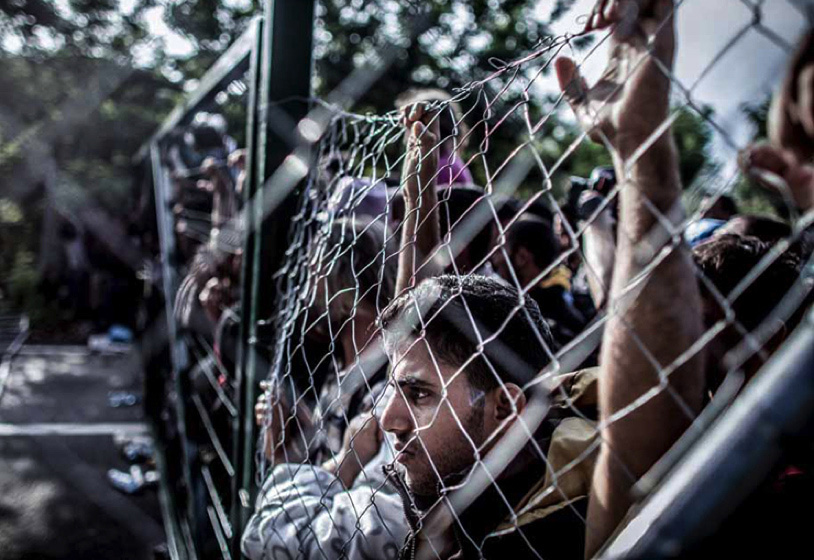
On 5 December, Council of Ministers meeting no. 61 approved the Italy-Albania protocol, after respective Heads of Government Giorgia Meloni and Edi Rama signed an agreement on migration matters on 6 November.

Several grey areas surround this deal, which immediately raised concerns within the European Commission, prompting its spokesperson for Home Affairs and Migration, Anitta Hipper, to request clarification from the Italian authorities.

The Italy-Albania Protocol provides for the establishment of two centres on Albanian territory: one at the port of Shengjin for disembarkation and identification procedures, and another inland at Gjader, which will operate as a pre-removal detention centre (CPR). The agreement represents a first attempt to externalise the examination of asylum applications to a third country.

The two centres will remain under Italian jurisdiction for the construction and operation of the facilities. Italy will also bear primary responsibility for costs: indeed, it must establish a guarantee fund to cover expenses, which include providing hospital care, purchasing medical supplies, pharmaceuticals, and vaccines, police deployment costs, fuel for transport vehicles, as well as legal fees for proceedings before international courts and compensation awarded by national or international courts.

By virtue of a clause equating the areas designated in the Protocol to border or transit zones, the facilities on Albanian territory would function like the hotspots and pre-removal detention centres provided for under the Consolidated Immigration Act .

The agreement therefore stipulates that only migrants taken aboard vessels of the Italian authorities outside the territorial waters of Italy or other EU Member States may be taken to Albanian territory. Italian and, consequently, European legislation on immigration and the admission of foreign nationals will apply to the migrants. Meanwhile, transferring a migrant from the Albanian centres to corresponding facilities in Italy will be permitted only in exceptional cases. Even on an initial reading of the agreement, ambiguities arise, given that in 2018 the European Commission clarified that the extraterritorial application of EU law is not considered permissible.

The agreement currently remains at a standstill, having not passed parliamentary muster in Albania. During the second week of December, the Constitutional Court in Tirana upheld two challenges brought by the opposition Democratic Party and suspended ratification proceedings in Parliament.

Amnesty International considered the agreement an instrument to circumvent Italian, European, and international migration law, carrying the risk of creating a system of "automatic" and prolonged detention in violation of human rights.

Elisa De Pieri, Europe Researcher at Amnesty International, stated: "This is an agreement on refoulement, a practice prohibited under European and international law and for which Italy has already been condemned by the European Court of Human Rights."

More specifically, refoulement refers to the return of refugees or asylum seekers to their countries of origin or elsewhere, where they are likely to face ill-treatment. "Any discrimination based on nationality shall be prohibited", reads the Charter of Fundamental Rights of the European Union , which enshrines the principle of non-refoulement, a fundamental right of asylum seekers and refugees. It should also be recalled that Italy was already condemned for violating the principle of non-refoulement by the European Court of Human Rights in 2012 in the case of Hirsi Jamaa and Others v. Italy .

Strong concern was also raised by the Asylum and Immigration Table (TAI), which, aligning with Amnesty International's stance, called for the revocation of the Protocol, viewing it as a basis both for violating the principle of non-refoulement and for implementing unlawful detention practices.

Amnesty International remains committed to preventing the implementation of an unlawful agreement, urging the Italian government to "respect its international legal obligations concerning non-refoulement and the guarantee of asylum" and calling on "the European Commission to ensure that Member States do not violate the body of rules on international protection".

Protocol between the Government of the Italian Republic and the Council of Ministers of the Republic of Albania on strengthening cooperation in migration matters

Article 3

The principle of distinction in international humanitarian law
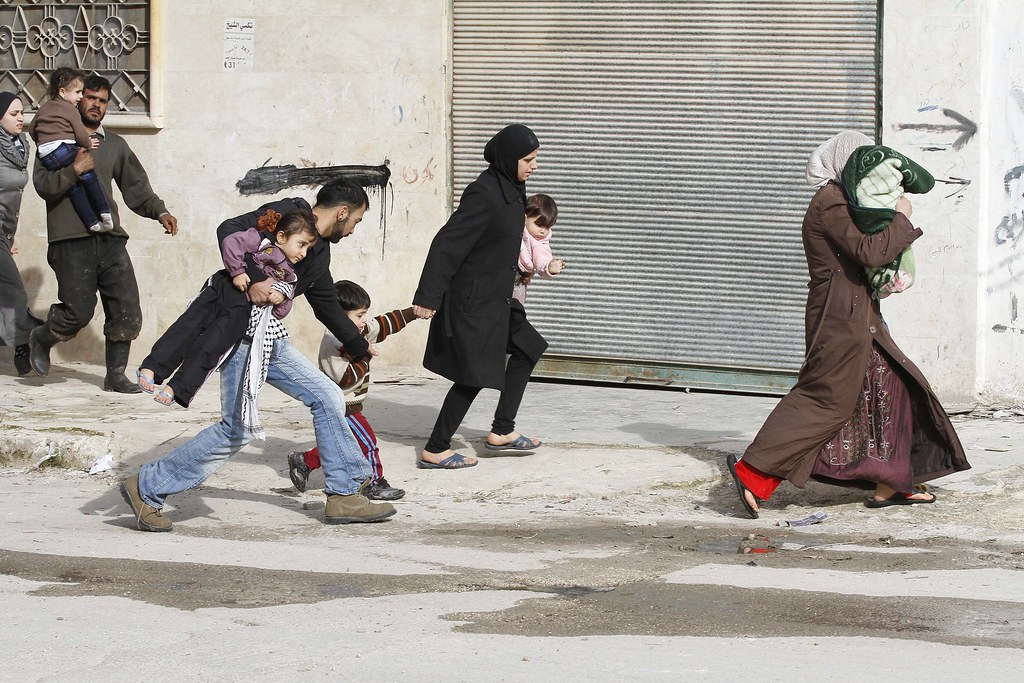
The principle of distinction between civilians and combatants, and between civilian objects and military objectives, is a core founding principle of international humanitarian law (IHL). "In order to ensure respect for and protection of the civilian population and civilian objects, the Parties to the conflict shall at all times distinguish between the civilian population and combatants and between civilian objects and military objectives and accordingly shall direct their operations only against military objectives" – Art. 48 of the First Additional Protocol to the Geneva Conventions of 1949.

Within the framework of rules that constitute IHL, the objective of the principle of distinction is to protect civilians from armed attacks and reaffirm the axiom that the only permissible use of force in an armed conflict is that aimed at weakening the military capacity of the enemy. Consequently, members of the armed forces participating in hostilities must be able to distinguish combatants from the rest of the civilian population. It is understood that the principle of distinction does not mean that all enemy combatants may be targeted at will, as rules on the conduct of hostilities still apply. Article 50 of Additional Protocol I (1977) to the Geneva Conventions of 1949 defines civilians as all persons who do not take part in hostilities and therefore do not qualify as combatants. Combatants are members of the armed forces of a party to a conflict, along with members of militias or volunteer corps, provided they have a fixed distinctive emblem recognisable at a distance, operate under the command of a person responsible for their subordinates, carry arms openly, and conduct their operations in accordance with the laws and customs of war (Art. 4 of the Fourth Geneva Convention of 1949).

In case of doubt, the person must be considered a civilian.

Civilians, therefore, do not take part in hostilities and are protected by IHL, particularly by the Fourth Geneva Convention when they find themselves "in the hands of the enemy". In addition, IHL protects civilians from the effects of hostilities.

Combatants, as defined by IHL, participate in hostilities and cannot be prosecuted merely for participating in them. Furthermore, the Geneva Conventions lay down a series of rules "protecting" combatants against certain means and methods of warfare (for example, against the use of weapons that cause superfluous injury or unnecessary suffering), when they become prisoners of war, and when they are wounded, sick, or shipwrecked.

In Russia's war of aggression against Ukraine and in the conflict in the Middle East, violations of the principle of distinction have sparked international outrage. Photographic evidence, testimonies, and field investigations confirm repeated violations of the principle of distinction: strikes have hit hospitals, schools, and locations where civilians were unquestionably present.

Given that compliance with the principle of distinction depends heavily on the conduct and actions of those participating in hostilities, there are several principles and rules regulating the means and methods of warfare that are closely tied to it. For example, the prohibition of indiscriminate attacks—that is, attacks not directed at a specific military objective, the use of weapons or methods that cannot be directed exclusively at a military objective, bombardments that hit military objectives located in villages, towns or areas where civilians are concentrated, and attacks expected to cause incidental loss of civilian life or injury to civilians that would be excessive in relation to the concrete and direct military advantage anticipated.

The International Criminal Tribunal for the former Yugoslavia in the Martić case specifically defined indiscriminate attacks in connection with an unguided rocket attack launched against the city of Zagreb, a densely populated civilian area. In that case, the military officer used a weapon and conduct with disregard for the foreseeable civilian casualties the attack would cause.

Article 4

10 November: World Science Day for Peace and Development

On 10 November, World Science Day for Peace and Development is celebrated, an observance intended to highlight the vital role of science in society by engaging the general public in debates on scientific issues. The occasion reflects Article 27 of the Universal Declaration of Human Rights, which states: "Everyone has the right freely to participate in the cultural life of the community, to enjoy the arts and to share in scientific advancement and its benefits."

The day was recommended by the World Conference on Science in 1999 and officially proclaimed by UNESCO in 2001. Since then, numerous projects and initiatives have been carried out, such as the creation of the Israeli-Palestinian Science Organization, to involve even the most vulnerable regions of the world. This year, the day was dedicated to building trust in science, seeking to untangle highly complex issues, including providing clear and compelling explanations of decisions—often taken after years of research—that also carry policy implications.

Such intricate issues have their roots in moral philosophy. Beginning with Galileo's teachings and Bacon's thought, science established itself both as a meeting point between religion and society and as a branch of knowledge whose ultimate goal is the well-being of the whole community, fully aligned with the pursuit of happiness championed by Enlightenment thought.

Moving forward to the twentieth century, in the wake of the atomic bombings of Hiroshima and Nagasaki in August 1945, a group of scientists gathered around Albert Einstein laid the groundwork for a theory of the ethical and social responsibilities of scientists—akin to drafting a professional code of ethics—marking a turning point in the history of scientific ethics.

However, there is also an opposing school of thought asserting that scientific advancements inevitably lead to practices detrimental to the planet and therefore to society. Consider, for example, industrial emissions of harmful gases: necessary for the economic system, yet notoriously damaging to the environment. Precisely because modern economic choices rely heavily on technological evolution, ethical debate has intensified in recent years. Indeed, there is a direct correlation between market forces and scientific progress, which must now adapt to economic developments. From this perspective emerges a reflection that unavoidably touches upon ethical concerns, prompting the question: to what extent should we take advantage of scientific progress without questioning issues of morality? Codes of ethics for professionals, charters of values and principles of associations and foundations, as well as corporate social responsibility reporting, serve as a guide and can reveal a great deal about the ethical choices made by humanity in relation to the benefits derived from science, progress, and market forces.
View original email version