Issue 20 of 24 · 29 April 2024

Diritti al punto - April 2024

Dear readers, Elżbieta, Anna and Joanna, Polish activists accused in 2019 of "offending religious feelings", have been acquitted. The three activists had...

Editorial

Editorial

Elżbieta, Anna and Joanna, Polish activists accused in 2019 of "offending religious feelings", have been acquitted. The three activists had put up posters depicting the Virgin Mary with a halo painted in rainbow colours, the symbol of the LGBTQIA+ movement. In the five years since the charges were brought, Amnesty International has collected over 280,000 signatures demanding their acquittal.

Over recent weeks, protests in Israel have intensified, bringing demands for Netanyahu's resignation to the streets. Demonstrators are voicing their anger at the Israeli government's failed handling of the Hamas hostage crisis; these are the largest anti-government protests to date and risk sparking a domestic political crisis as well.

Saudi Arabia will chair the next Commission on the Status of Women (CSW). The decision has sparked outrage from Amnesty International and other human-rights organisations, highlighting the glaring contradiction between the Commission's objectives and Saudi Arabia's repressive system targeting women.

Amnesty International Italy has launched a press freedom marathon. Until 3 May, World Press Freedom Day, it is possible to sign appeals supporting Russian journalist Maria Ponomarenko, Mexican journalist Alberto Amaro Jordán, and the two Israeli-Palestinian reporters, Nidal al-Waheidi and Haitham Abdelwahed. The marathon draws attention to the importance of freedom of expression and information as a fundamental right.

If you enjoy our newsletter, please share it and invite anyone interested to subscribe by clicking on the link at the bottom of the page.

Article 1

Activists behind the "Rainbow Madonna" acquitted
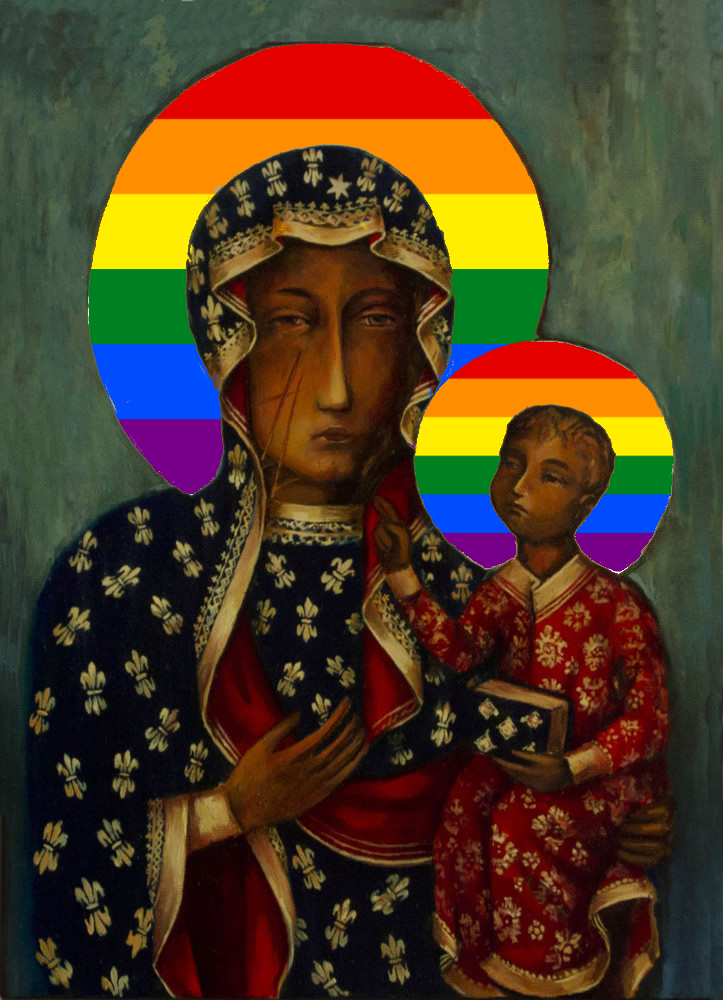
Seven hundred years ago, at the height of Byzantine art, a painting of the Black Madonna and Child arrived in the Polish sanctuary of Częstochowa from Ukraine. In the history of the Kingdom of Prussia, the icon became a symbol of resistance to foreign rule and the revered focal point of the Polish sanctuary in Częstochowa, visited every year by 4–5 million pilgrims.

However, during Pride in 2018, something fundamentally overturned how Polish society idolised the work. The idea arose to adapt the painting by colouring the halos with the rainbow colours of the LGBTQIA+ movement's flag. The colourful halos became the symbol of a protest launched in April 2019 by activists Elżbieta Podleśna, Anna Prus and Joanna Gżyra-Iskandar against the decision of a church in Płock to set up Easter displays listing the sins believers should steer clear of—including greed, envy, and so-called "gender ideology".

Barely a month later, an investigation was opened against the three women on charges of violating Article 196 of the Polish Criminal Code, which states that "whoever is found guilty of intentionally offending religious feelings through the public defamation of an object of worship or a place of worship is liable to a fine, restriction of liberty, or imprisonment for up to two years". The charges brought against the three activists under this statute prompted widespread backlash from numerous human-rights organisations across the globe, which launched an international campaign to support the activists, joined by Amnesty International.

Pressure on the Polish government culminated on 2 March 2021 in the acquittal of Elżbieta, Anna and Joanna. However, the prosecutor's office decided to appeal the verdict, reopening the proceedings, which finally ended on 28 March 2024 with a definitive acquittal.

Over these five gruelling years, Amnesty International alone gathered around 300,000 signatures in support of the acquittal, confirming that the three activists' actions were entirely at odds with the legal basis upon which the accusations against them rested.

Article 2

Licence: commons.wikimedia.org

Following the tragic events of last 7 October, in which Hamas killed and abducted Israeli women, men and children, Netanyahu's government responded with military action against Gaza whilst simultaneously attempting to implement a strategy to secure the release of the hostages. Efforts have focused primarily on the military front: first through aerial bombardment across northern Gaza, followed by a ground operation that expanded into the south of Gaza. As of April 2024, many people are still being held hostage by Hamas, and many are questioning what Israel has done—or failed to do—to secure their release.

An initial release of hostages took place during a truce agreed in late November 2023 between Hamas and Israel, achieved through the mediation of several countries, notably the United States and Qatar. In addition to enabling the entry of humanitarian aid for Palestinian civilians, the truce facilitated the release of a group of hostages by Hamas in exchange for the release of several Palestinian prisoners by Israel. Once the truce concluded, hostilities resumed, and their escalation has left no opening for a further ceasefire and the subsequent release of additional hostages.

From the onset of post-7 October hostilities, families of the hostages initially organised collective gatherings and modest demonstrations urging the Israeli government to take swift and effective action to free all those abducted. Several months have now passed, and the escalation of the conflict—fuelled in part by a disproportionate military response from Israel—has hindered any de-escalation that could pave the way for a further truce and the release of more hostages. Faced with this stalemate on the hostage issue, families have launched full-scale protests against Netanyahu's government. A few weeks ago, thousands took to the streets in Tel Aviv demanding not only the release of the hostages but also early elections—a clear demonstration of dissent against the Israeli government's inaction in managing the hostages' release. Around 100,000 people took to the streets, protesting against the failure to reach a timely deal that could have saved many still held by Hamas. According to a report by the Reuters news agency, most Israelis on the streets accuse the government of security system failures that created vulnerabilities exploited by Hamas in its brutal attack on 7 October. Netanyahu has pledged to press ahead with Israel's campaign in Gaza—which has killed over 34,000 Palestinians—until all hostages are released and Hamas is destroyed. Israel's disproportionate military intervention in Gaza, which continues to strike civilian targets, has dimmed prospects for another truce, strained relations with countries supporting Israel's right to defend itself, and prompted the UN Security Council to adopt resolutions urging Israel to agree to a ceasefire. Among the latest resolutions adopted is one calling on states to halt arms sales to Israel.

According to the monitoring platform Crisis24, Israeli police deployed water cannon and detained at least 21 demonstrators after protesters attempted to block roads. Protests unfolded in similar fashion in Tel Aviv and Jerusalem, centring on major public squares, city centres and the vicinity of government buildings. Clashes between police and protesters have not been ruled out, although there is currently no clear evidence that any occurred.

While demonstrations in the initial months following 7 October were sporadic, those of recent weeks represent the largest anti-government mobilisations to date. The conflict's escalation has influenced not only the scale of the protests but also the demonstrators' demands: initially calling on the government to do more to free the hostages, they have evolved in the latest protests into calls for Netanyahu's resignation. The Israeli government's decisions in the post-7 October crisis have heightened international tensions and stirred deep dissatisfaction across Israeli public opinion, potentially threatening Netanyahu's political survival and triggering internal destabilisation.

Article 3

Saudi Arabia at the helm of the UN Commission on the Status of Women: paradox vs opportunity
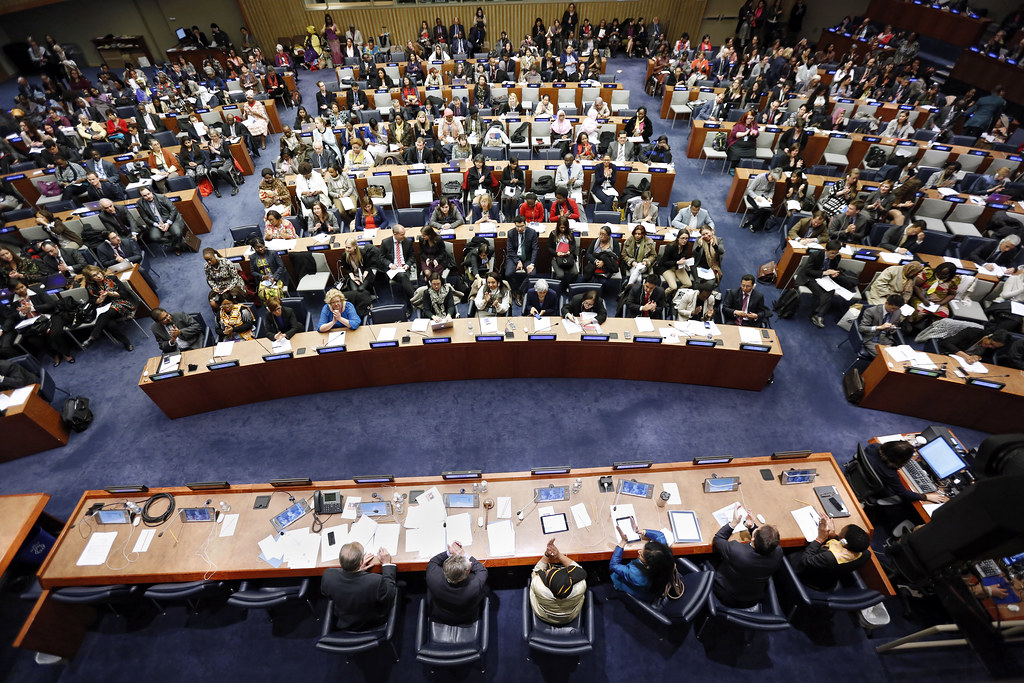
The paradoxes surrounding human rights show no sign of abating. The latest centres on Saudi Arabia, which is set to lead the global forum defining standards on gender equality and women's empowerment: the United Nations Commission on the Status of Women (UNCSW).

On 22 March, during the Commission's annual session, the 45 member states of the CSW unanimously appointed Saudi Arabia's Ambassador to the United Nations, Abdulaziz Alwasil, as Chair of the Commission for the upcoming term. The paradoxical and dismaying reality is that Saudi Arabia—a state actively committing blatant violations of women's rights—has been selected to head a Commission dedicated precisely to safeguarding and advancing those rights.

Amnesty International immediately condemned the decision to grant Saudi Arabia a leadership role within the forum, remarking that such a choice "runs completely counter to the Commission's aspirations".

Adding his voice to the outcry, Louis Charbonneau, UN director at Human Rights Watch, stated: "Saudi Arabia's election as chair of the UN Commission on the Status of Women shows shocking disregard for women’s rights everywhere. A country that jails women simply for defending their rights has no business being the face of the top UN forum for women’s rights and gender equality."

It should be noted that since 2017, following Mohammed bin Salman's appointment as Crown Prince, several initiatives aimed at advancing gender equality have been introduced under the Vision 2030 project, through which Saudi Arabia claims to be pursuing a social, cultural and industrial transformation and modernisation of society. Strides forward include the lifting in 2018 of the driving ban on women, permission to attend concerts, and the 2019 decree signed by King Salman bin Abdul-Aziz Al Saud revoking the legal requirement that women travel only when accompanied by a male guardian or with a male relative's consent.

In this light, Saudi Arabia's CSW chairship could also be seen as an opportunity: a chance for the state to showcase its reform process before the international community. Such progress would indeed be welcome, potentially explaining the unanimous decision to award Saudi Arabia the role. This might also clarify the silence and total absence of objections from the forum's 45 member states when the ambassador was nominated.

Yet Saudi Arabia continues to log numerous instances where women's rights are not only unrecognised, but actively violated. Salma al-Shehab, a PhD candidate at the University of Leeds, activist and mother of two, was sentenced on 25 January 2023 by the Specialised Criminal Court in Riyadh to 27 years in prison merely for advocating for women's rights on the social media platform X.

Manahel al-Otaibi, a fitness instructor, blogger and human rights defender, has been subjected to enforced disappearance since November 2023, guilty of having posted a photo of herself without an abaya alongside content critical of the repressive male guardianship system.

As Amnesty International highlights, the draft Saudi penal code promises a catastrophic future for women: it guarantees impunity for perpetrators of "honour killings", fails to criminalise marital rape, and criminalises both consensual same-sex relations between adults and extramarital relationships.

The overarching risk of this chairship is that the opportunity will be treated as mere "window dressing" to secure international approval and facilitate gender-washing, whilst discrimination and violence persist unabated within the country.

Article 4

Amnesty International's press freedom marathon

On 3 April, Amnesty International Italy launched a press freedom marathon.

The initiative has been endorsed by the FNSI (National Federation of the Italian Press), which has called on all Italian journalists to sign the appeals.

The initiative was launched ahead of World Press Freedom Day, observed annually on 3 May as designated by the UN. The marathon centres on a 30-day petition drive running from 3 April to 3 May in defence of freedom of information and expression, focusing on the stories of three individuals at risk.

Russian journalist Maria Ponomarenko, Mexican journalist Alberto Amaro Jordán, and the two Israeli-Palestinian reporters, Nidal al-Waheidi and Haitham Abdelwahed.

Amnesty International has issued an urgent appeal for each of them.

Maria Ponomarenko was sentenced by the Russian judiciary to six years' imprisonment and banned from practising journalism for five years. She was charged with violating a recently introduced provision of the Russian Criminal Code criminalising the intentional dissemination of "fake news" concerning the armed forces. Ponomarenko had posted a video denouncing the deaths of numerous civilians during the Russian military's bombing of the Mariupol theatre. Despite deleting the post, her action was deemed sufficient to warrant a sentence that is as harsh as it is clearly intended to intimidate anyone in Russia seeking to express their views freely and share information.

Mexican journalist Alberto Amaro Jordán exposed local criminal organisations involved in human trafficking for the purpose of sexual slavery. His dedication has brought threats and attacks, unfortunately stemming not only from criminal networks but also from police units and state institutions. He now faces the withdrawal of the protective measures granted by the Mexican government, putting his safety and that of his family in severe jeopardy.

Nidal al-Waheidi and Haitham Abdelwahed were arrested by Israeli police on 7 October while reporting on the Hamas attack, and remain detained in an undisclosed location to this day.

The Israeli authorities have not only refused to disclose where the two journalists are being held, but have also failed to state the charges against them, effectively rendering the situation an enforced disappearance—a practice condemned by the UN under a dedicated convention adopted in 2010.

The ordeals of the journalists highlighted by this marathon show that, despite hard-won progress, a long road still lies ahead. According to UN sources, 40 countries—predominantly in Asia and Africa—are currently classified as "not free" regarding freedom of expression. For this reason, it remains essential to remember that freedom of expression, enshrined in both the UN Universal Declaration of Human Rights (Article 19) and the Charter of Fundamental Rights of the European Union (Article 11), encompasses the freedom to seek, receive and impart information, and represents a fundamental human right.

If you want to make a difference and stand with Amnesty in protecting freedom of expression, add your name to the appeals!

Contributors to this issue: Francesca Cocozza, Gabriele Leggeri, Giampiero Della, Giulia Solferino

This email was sent to {{contact.EMAIL}}

You received this because you are subscribed to our newsletter.
View original email version