Editorial
Julian Assange is free. “Amnesty International welcomes the positive news that Julian Assange has been released after five years of detention in the United Kingdom.” With these words, Agnès Callamard, Secretary General of Amnesty International, commented on the news of Assange’s release, which brings an end to his long ordeal and to his detention. Let us retrace Julian Assange’s story up to his release.
The Italy-Albania migration protocol has become law. Following the parliamentary stages that led to its approval, we offer an analysis of the agreement’s content in light of its implementation conditions and the concerns emerging regarding the protection of human rights and compliance with international law.
From 31 May to 2 June, the 39th General Assembly of Amnesty International Italy took place in Ravenna. It was an opportunity to discuss ongoing campaigns and activism, but also to listen to testimonies and give voice to other civil society organisations working, like Amnesty, to defend human rights. We heard the story of Norma Bargetzi-Horisberger and Bruna Molinari, activists from "KlimaSeniorinnen" Senior Women for Climate Protection Switzerland. Through their legal action, they took Switzerland before the European Court of Human Rights and won their battle, securing recognition of the right to climate protection as a human right.
If you enjoy our newsletter, please share it and invite anyone you wish to subscribe by clicking on the link at the bottom of the page.
Licence: Wikimedia Commons
The story of Julian Assange, the Australian journalist and activist known for his work with the WikiLeaks website, has reached its conclusion. After 15 long years, Julian Assange is free.
Julian Assange "may walk out of this courtroom a free man", declared Judge Ramona Manglona at the end of the hearing. Thus, following a 5-year prison sentence in the Belmarsh high-security prison in the United Kingdom and 14 years of legal battles, Assange has regained his freedom, despite remaining legally guilty.
The WikiLeaks co-founder was reunited with his family in Canberra after the US District Court for the Northern Mariana Islands in Saipan accepted the plea agreement following his guilty plea. Assange will not be allowed to return to the United States: as announced by the US Department of Justice, entry would require prior permission.
Under the plea agreement, Assange pleaded guilty to a single charge relating to obtaining and disclosing US national defence information: "I encouraged my source", US soldier Chelsea Manning, "to provide classified material", Assange stated. The charge carried a 62-month prison sentence which, in any case, Assange had already served given his years of detention in the United Kingdom, leading to his immediate release.
Assange’s life can finally restart, bringing immense relief; the Australian government stated that the case had “dragged on for far too long”.
Amnesty International, which had campaigned for years for the charges against Assange to be dropped, expressed its satisfaction at the journalist's release through Agnès Callamard, Secretary General of Amnesty International.
“Amnesty International pays tribute to the dedication and work of Julian Assange’s family, his supporters, his legal teams, press freedom organisations and many others across the media community and beyond who stood by him and defended fundamental principles that should underpin society’s right to information and justice. We will continue to fight for their full recognition and respect by all,” the Secretary General stated.
After years of campaigning for freedom of the press, freedom of expression, and the release of a man—Assange—who became a symbol for all those whose rights have been silenced, the legacy is the hope that these events will not be forgotten, that collective memory will endure, and that it will foster ongoing vigilance for rights that remain under constant threat.
Some commentators and journalists have voiced concern over the risk of a dangerous precedent that could undermine press freedom and the work of investigative journalists. The German daily Die Tageszeitung described it as a “half victory” because Assange “had to plead guilty to a charge that criminalises the work of journalists handling documents provided by their sources”. It added that “Assange and Manning were prosecuted while the perpetrators of war crimes were not—a compelling reason for human rights organisations and media outlets to continue voicing their criticism”.
Write your message of support for Assange.
The Italy-Albania protocol is now law. Concerns over its human rights impact remain
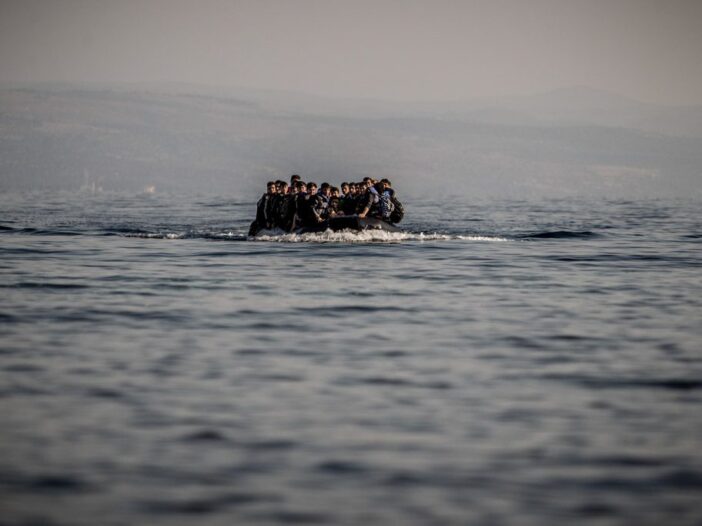
On 6 November 2023, Italy and Albania signed an agreement to establish two facilities on Albanian territory for border and repatriation procedures for migrants rescued at sea by Italian state vessels.
The two centres will be able to accommodate up to 3,000 people simultaneously and up to 36,000 people per year, provided that the procedures required to establish whether entry requirements for Italy are met are carried out promptly, ensuring that no migrant remains in the centres for more than 28 days.
The agreement was signed by Italian Prime Minister Giorgia Meloni and Albanian Prime Minister Edi Rama on the basis of previous Italian-Albanian agreements (the Treaty of Friendship and Cooperation between the Italian Republic and the Republic of Albania of 13/10/1995 and the Protocol between the Ministry of the Interior of the Italian Republic and the Ministry of the Interior of the Republic of Albania for the strengthening of bilateral cooperation in combating terrorism and human trafficking of 3/11/2017).
Initially, the Italian Government considered that the Protocol did not require parliamentary ratification, regarding it as a memorandum of understanding. Subsequently, the Government decided that it had to be submitted for parliamentary approval, taking particular account of Article 80 of the Italian Constitution. The legislation was passed by the Chamber of Deputies without any amendments on 25 January 2024, despite the fact that experts heard by the Chamber's Constitutional Affairs Committee highlighted both strengths and critical issues regarding international and European Union law, administrative law, and constitutional law. The outcome in the Senate was no different.
On 5 June, Prime Minister Giorgia Meloni visited Albania to inspect the sites where the two facilities are to be built, which are expected to be operational as early as August.
Both centres will be managed entirely by Italian personnel and will fall under Italian jurisdiction concerning migration, international protection, and reception.
The Protocol (now Law 14/2024) stipulates that only individuals taken aboard vessels of the Italian authorities outside the territorial waters of the Italian Republic or other European Union Member States may be transferred to the centres.
During the parliamentary debate, Deputy Minister of Foreign Affairs and International Cooperation Edmondo Cirielli stated that a “preliminary screening” would be carried out on board the vessels, noting that further assessments of vulnerability could also be conducted after disembarkation in Albania. Indeed, it remains unclear how screening will be carried out to identify non-deportable individuals, such as unaccompanied minors, pregnant women, victims of torture, and other vulnerable persons for whom Italian law prohibits expulsion under Article 19 of the Consolidated Immigration Act. The presence of cultural mediators, doctors, and psychologists capable of assessing the physical and psychological condition of migrants, who are often affected by trauma and disorientation, should be guaranteed on every vessel.
On 19 January, Amnesty International Italy called on the Italian Government “to refrain from ratifying and implementing the agreement, and to ensure that people seeking international protection have access to effective asylum procedures and dignified reception on its own territory, including through expanded opportunities to access safe and regular pathways”.
While awaiting the European Union’s assessment of the law, the European Commission’s Legal Service concluded its preliminary evaluation of the agreement last November, stating that it “does not violate EU law; it lies outside EU law”. However, given that Italian jurisdiction applies to the two centres built on Albanian territory, European asylum and migration legislation must still be respected, as Italy is an EU Member State.
On 10 April 2024, the European Parliament adopted ten legislative texts reforming European migration and asylum policy. Regarding the regulation on “Screening at the EU's borders”, rapporteur Birgit SIPPEL concluded:
“The new Pact on Migration and Asylum includes a comprehensive new Screening Regulation that will introduce mandatory checks for all third-country nationals entering the EU irregularly, covering identity, security, health, and vulnerability. A vital component of the regulation is the independent fundamental rights monitoring mechanism, which will ensure compliance with EU and international law throughout the screening process.”
Concerns previously raised by Amnesty regarding the potential impact of the Italy-Albania agreement, now enacted into law, on human rights remain unresolved.
Consolidated Immigration Act (Legislative Decree 286/1998); Legislative Decree 251/2007 transposing the Qualification Directive (Directive 2004/83/EC); Legislative Decree 25/2008 transposing the Asylum Procedures Directive (Directive 2005/85/EC); Legislative Decree 142/2015 transposing the Reception Conditions Directive (Directive 2013/33/EU).
Licence: Wikimedia Commons

At the end of last May, specifically from 31 May to 2 June, the 39th General Assembly of Amnesty International Italy took place in Ravenna. The General Assembly is an essential event for both the movement’s activists and its members, embodying the democratic spirit of the organisation through votes on the annual reports of the Presidency, the National Treasury, and the Board of Directors, as well as on proposed amendments to the Statute or Regulations (so-called motions). The General Assembly is also a key fixture on Amnesty’s agenda—an opportunity to address ongoing campaigns and activism, hear testimonies, and engage in dialogue with other civil society groups and individuals committed, alongside Amnesty, to defending human rights.
Among the topics addressed at the recent General Assembly was Amnesty International’s “Protect the Protest” campaign, explored across its various strands. During the second day of the Assembly, discussions focused in particular on protests by climate activists and recent, deeply concerning attempts at suppression by law enforcement during demonstrations in Italy. We heard the testimony of Martina Comparelli, an activist from Fridays for Future Milan, and engaged in discussions with Alessandro Giannì, Campaign Director of Greenpeace Italy, and Ludovico Basili, environmental activist and contributor to Osservatorio Repressione.
Recent events in Italy during demonstrations for environmental protection and climate justice are deeply alarming. In its “Protect the Protest” campaign manifesto, Amnesty International reiterates that every form of peaceful protest or demonstration must be protected and guaranteed, that the right to protest and demonstrate must be upheld, and that an end must be put to arbitrary detentions, the criminalisation of protesters, and unlawful use of force by police authorities.
While condemning all acts of defacement and vandalism against artworks and monuments, we reaffirm the vital importance of protesting and expressing dissent against government decisions and parliamentary initiatives as a form of free expression that must always be safeguarded.
Particular reference was made to police authorities’ use of mandatory dispersal orders (foglio di via) against NoTav movement protesters as a tool to stifle protest and restrict freedom of dissent. Furthermore, recent months have seen incidents involving the disproportionate use of water cannon by police forces against participants at a NoTav demonstration.
The testimony of activists Norma Bargetzi-Horisberger and Bruna Molinari from "KlimaSeniorinnen" Senior Women for Climate Protection Switzerland was of exceptional interest. “As a grandmother and a mother, I believe we have the right to a better climate than the one we have” – these were the words of Bruna, who in 2023, together with fellow activists, filed an application with the European Court of Human Rights (ECtHR). Supported by Greenpeace, the organisation brought an action against Switzerland calling for concrete measures to combat climate change, which threatens their right to life, particularly measures aimed at preventing global temperatures from rising by more than 1.5°C. On 9 April, in a landmark ruling, the ECtHR recognised the right to climate protection as a human right and found that Switzerland had failed to take the necessary measures to curb global warming, violating Articles 8 and 6 of the European Convention on Human Rights. The ruling marks a major milestone for climate justice, as explained by Cordelia Bähr, head of the legal team representing the Senior Women for Climate Protection: « This decision will be of immense importance for future climate cases against states and corporations worldwide, significantly improving their prospects of success; it clearly shows citizens, judges, and governments across Europe what must be done in terms of climate protection to uphold human rights ».
For the Senior Women for Climate Protection, the ruling is not a finish line, but a launchpad to carry forward everyone's struggle through climate litigation.
Contributors to this issue: Francesca Cocozza, Giulia Solferino, and Laura Guerri
This email was sent to {{contact.EMAIL}}
You received this email because you are subscribed to our newsletter.

View original email version
Did someone send you this link? Get it every month
Subscribe to Diritti al Punto: the next issue straight to your inbox.
Check your inbox
We have sent you a confirmation link. Click the button in the email to complete your subscription. The link is valid for 7 days.
Can't see the email? Check your spam and promotions folders, or.