Editorial
The escalation of the conflict in the Middle East has led to a worsening of the humanitarian situation in Lebanon as well. Amnesty International, together with MSF, UNICEF, and WFP, condemn grave violations of international humanitarian law against civilians and the difficulties in providing necessary medical aid. More decisive action is needed from the international community and the UN to demand respect for humanitarian law, halt arms transfers, and work towards a lasting peace.
The Tokyo High Court has definitively quashed the death sentence of Iwao Hakamada, a former boxer sentenced to death by hanging in 1968 on charges of murdering his employer and family members. Japan is the only G7 nation still applying the death penalty. Amnesty International firmly opposes the death penalty and campaigns for its total abolition across all countries that practice it.
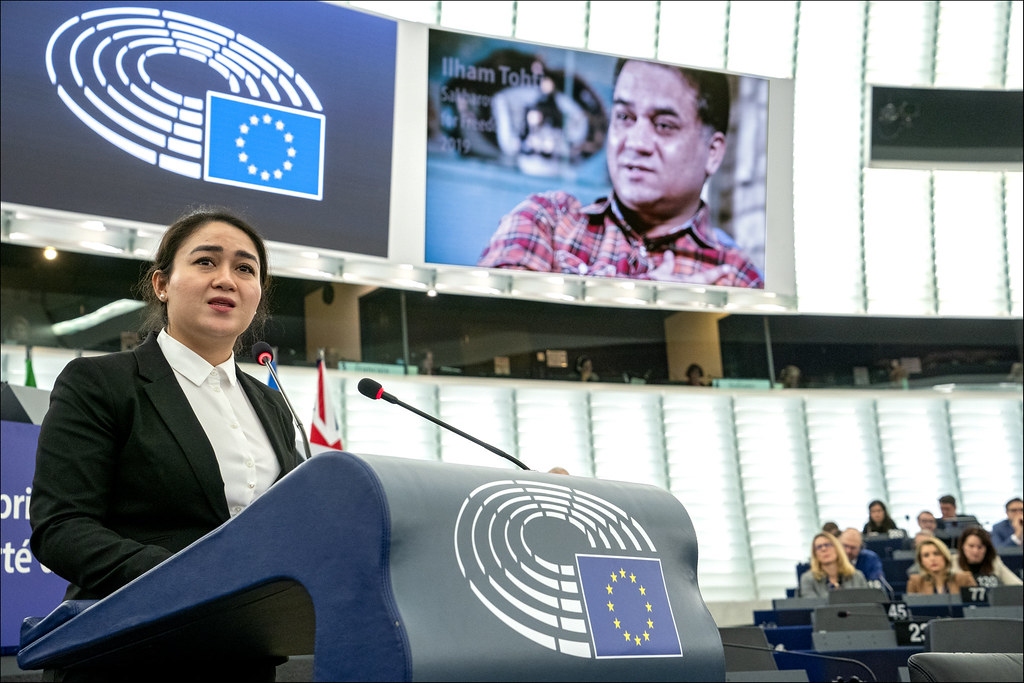
Ilham Tohti is a Uyghur scholar imprisoned since 2014 on charges of separatism. He devoted himself to fostering peaceful coexistence between Uyghurs and Han Chinese, an effort that cost him his freedom as well as subjecting him to ill-treatment. His story highlights the repression of minorities in China, including the Muslim population of Xinjiang. Amnesty International has launched an appeal calling for the release of Ilham Tohti.
If you enjoy our newsletter, please share it and invite others to subscribe by clicking the link at the bottom of the page.
The escalation of the conflict in the Middle East: What consequences for human rights in Lebanon?
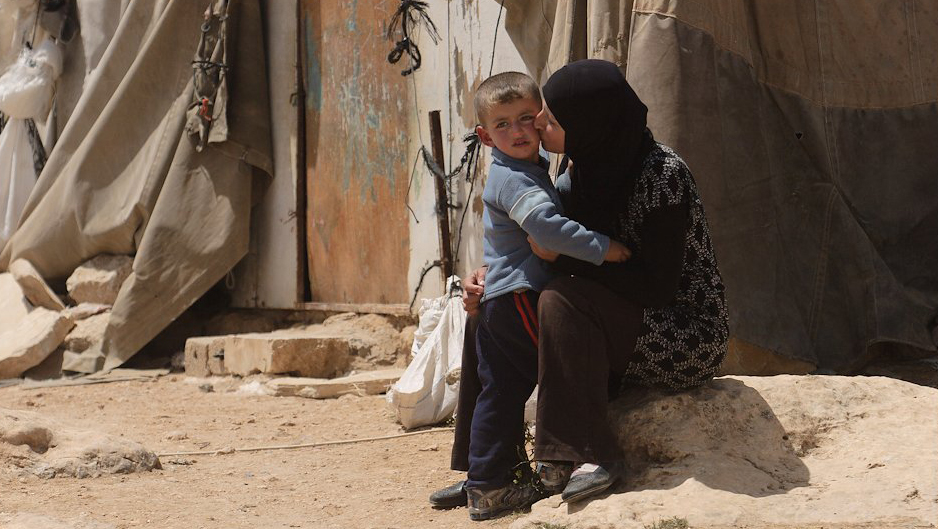
The conflict in the Middle East continues to cause deep concern due to the disastrous consequences unfolding for the civilian population. Since the regional escalation of the conflict, the people of Lebanon have also been suffering its effects alongside the population of Gaza.
Following the involvement of the paramilitary group Hezbollah and the killing of its second-in-command, Fuad Shukr, by an Israeli drone strike on 30 July, military actions and attacks from all sides have intensified. In late July, a military strike launched by Hezbollah hit civilians in Majdal Shams, and Israel reportedly responded by striking several of the organisation’s positions. Israel's military response, initially targeted at military installations, subsequently developed into large-scale ground incursions, opening up a multi-front war. In early October, Israeli military forces entered Lebanon, accompanied by continuing air strikes and evacuation orders issued by Israel for several Lebanese localities. While talks continue between leaders from various countries—including the United States, Qatar, and Saudi Arabia—to keep diplomatic options open, tensions remain high and hostilities persist, despite repeated calls by the international community for a ceasefire in both Gaza and Lebanon.
In mid-October, Hamas leader Yahya Sinwar was killed in an Israeli operation in Gaza, which was not followed by any opening for a ceasefire. Hostilities continue both in the Occupied Palestinian Territories and in Lebanon. Last September, Amnesty International Italy spoke out regarding the simultaneous mass explosions in Lebanon and Syria that caused civilian casualties, calling for an investigation. Should evidence emerge that these attacks were carried out indiscriminately, they would constitute a serious violation of international humanitarian law—specifically, a war crime. The escalation of hostilities between Israel and Hezbollah has driven up casualties and displacement among the Lebanese population, as well as displacing residents of northern Israel due to attacks launched from Lebanon. Erika Guevara-Rosas, Senior Director for Research, Advocacy, Policy and Campaigns at Amnesty International, stated that "all parties to the conflict must respect international humanitarian law and take all feasible precautions to spare civilian lives", adding a call for "all states to immediately halt transfers of arms and other forms of military assistance to Israel and Hezbollah". Médecins Sans Frontières (MSF) expressed deep concern over air strikes in Lebanon hitting densely populated urban areas. Currently, in the affected areas of Lebanon, there is an urgent need for surgical care for the severely wounded and for psychological support. MSF teams have reported widespread anxiety and depression among people forced to flee or traumatised by the loss of their homes and loved ones. Alongside medical and psychological care, basic necessities such as mattresses, blankets, and hygiene kits are urgently required.
UNICEF Deputy Executive Director Ted Chaiban and World Food Programme (WFP) Deputy Executive Director Carl Skau, in a joint statement following a three-day mission to Lebanon, outlined the dire conditions marking this humanitarian crisis while reaffirming the vital support provided by UNICEF and WFP through child-centred interventions, including psychosocial support services and food assistance.
The international community and the UN must exert pressure to ensure international humanitarian law is upheld, civilian populations and infrastructure are protected, and humanitarian aid is guaranteed. At the same time, sustained efforts are essential to secure a permanent cessation of hostilities and pave the way for lasting peace.
Website: Free Malaysia Today
The Tokyo High Court has definitively quashed the death sentence of Iwao Hakamada, recognising his innocence 56 years after his judicial ordeal began. A former boxer from Shizuoka, he was sentenced to hanging in 1968 for the alleged murder of his employer and the employer's family, who were found stabbed to death in their home. Despite the absence of decisive evidence and the presence of severe procedural irregularities—including a confession extracted under coercion and without legal representation—Hakamada was convicted and sent to death row, where he spent decades in solitary confinement.
It was not until 2014 that the Shizuoka District Court, following new DNA evidence, cast doubt on his guilt (and conviction), ordered his release, and granted a retrial. This decision was challenged by the prosecution in 2018; only after subsequent appeals was a retrial finally held in 2023, resulting in his acquittal on 26 September. In the ruling, High Court Judge Kunii Koshi reaffirmed that "the investigating authorities planted bloodstains and hid the items in the miso tank long after the incident occurred".
Following an exhausting wait, and thanks in large part to relentless campaigns by Amnesty International and other human rights organisations, justice has finally been restored to a man who spent decades awaiting execution for a crime he never committed. One can only imagine the prolonged physical and mental anguish endured over those years.
To date, the Shizuoka prosecutors have not appealed against the ruling, and are not expected to do so. Hakamada will then be entitled to claim state compensation.
Defence lawyers are considering filing a lawsuit against the government to uncover what truly happened and hold accountable those responsible for this grave miscarriage of justice.
In Japan, this acquittal has reignited the domestic debate over the death penalty. Japan is the only G7 country, alongside the United States, that still retains capital punishment within its judicial system.
The judicial history and life of Hakamada—who spent decades awaiting execution on death row before being acquitted—poses a serious challenge to the reputation of the Japanese justice system, particularly within the country. Since the 1950s, only four death row prisoners have been granted retrials, and the Japanese public has traditionally placed high trust in the domestic judiciary. It is hoped that Hakamada's landmark case may provide fresh momentum towards the abolition of the death penalty in Japan.
Hakamada's 91-year-old sister, who has stood by her brother throughout his ordeal, commented on the verdict: "Thank you everyone. We have won an acquittal... When I heard the verdict, it felt almost divine. I was so moved, I couldn't stop crying tears of joy."
Last May, Amnesty published its 2023 Global Report on the Death Penalty: "The death penalty is a cruel, inhuman and degrading punishment that most states across the world have now consigned to history. Over the years, we have steadily stepped up our efforts against capital punishment regardless of the crime committed. Internationally, we are, for example, a founding member of the World Coalition Against the Death Penalty. In Italy, since 2014 we have been working with the Task Force against the Death Penalty established by the Ministry of Foreign Affairs and International Cooperation" (Amnesty International Italy, 29/05/24).
Amnesty International opposes the death penalty unconditionally, viewing it as a cruel, inhuman and degrading punishment that is now obsolete, having been abolished in law or in practice (de facto) by more than two-thirds of the world's countries.
The death penalty violates the right to life, is irreversible, and risks executing the innocent. It has no proven deterrent effect, and its disproportionate use against the poor and marginalised makes it an instrument of discrimination and repression.
Ilham Tohti, prisoner of conscience

"For two decades he has worked tirelessly to foster dialogue and understanding between Uyghurs and Han Chinese. He has rejected separatism and violence, seeking reconciliation based on respect for Uyghur culture, which has been subjected to religious, cultural and political repression in the Xinjiang Uyghur Autonomous Region." This was the citation of the Jury that awarded Ilham Tohti the Martin Ennals Award for Human Rights Defenders in 2016.
Ilham Tohti was born in Artush, in the Xinjiang Uyghur Autonomous Region, on 25 October 1969, and dedicated himself to his work as a university professor. In 1994, he came under scrutiny by Chinese authorities for his writings highlighting the discrimination taking place in Xinjiang.
Considered a threat, he was barred from teaching in 1999 and banned from publishing his work. Tohti then turned to the internet, founding the website uyghurbiz.net to promote dialogue between Uyghurs and Han Chinese. The site was repeatedly shut down by Chinese authorities, who eventually arrested those supporting the platform with their ideas.
In 2014, Ilham Tohti was sentenced to life imprisonment on charges of separatism following a two-day show trial that fell far short of international fair trial standards.
The persecution of the Uyghurs in the Xinjiang region by the Han Chinese majority traces back to the late 20th century, notably to 5 April 1990 in Baren, a small township in southwestern Xinjiang, when around 200 armed Uyghur militants led by Zeydin Yusup, leader of the East Turkistan Islamic Party, staged an uprising against Chinese security forces demanding a halt to Han migration into the region.
That marked the beginning of decades of restrictions on personal freedoms, internment camps, political indoctrination, pervasive surveillance, suppression of freedom of thought, and "re-education campaigns" targeting the Uyghur minority.
These same abuses have been inflicted on Ilham Tohti, who has faced ill-treatment in prison, the use of handcuffs and leg irons, inadequate medical care, and deprivation of essential supplies such as food, solely for peacefully exercising his right to freedom of expression.
Amnesty International calls for the release of Ilham Tohti and urges international scrutiny over events in the region to end the suffering of at least one million people arbitrarily detained and to demand the immediate closure of the secret "re-education" camps targeting ethnic minorities in the region.
Sign the Amnesty International petition
Who are the Uyghurs: a history of persecution in Xinjiang - Osservatorio Diritti
Contributors to this issue: Francesca Cocozza, Gabriele Leggeri, Giulia Solferino, and Laura Guerri
This email was sent to {{contact.EMAIL}}
You received this email because you are subscribed to our newsletter.

View original email version
Did someone send you this link? Get it every month
Subscribe to Diritti al Punto: the next issue straight to your inbox.
Check your inbox
We have sent you a confirmation link. Click the button in the email to complete your subscription. The link is valid for 7 days.
Can't see the email? Check your spam and promotions folders, or.