Issue 13 of 24 · 15 February 2025

Diritti al punto - January 2025

Dear readers, on 5 December, Amnesty International published a report on violations of human rights and international law...

Editorial

Editorial

On 5 December, Amnesty International published a report on violations of human rights and international law committed in Gaza, taking the clear stance that Israel is responsible for genocide against the Palestinian population.

The report generated extensive public debate, divided the international community, and caused unrest even within the movement itself. Amnesty International's mission remains to conduct research and action on all human rights violations worldwide.

The Italian section of Amnesty International is closely following developments related to the public security bill. Together with the associations of the NO DDL Sicurezza network, it took to the streets to protest against a measure that risks undermining the right to peaceful protest, repressing legitimate forms of dissent, and increasing criminal penalties.

Cecilia Sala, the young journalist arrested and detained on 19 December in Iran, has been released and returned to Italy after 21 days in prison. Amnesty International spoke out on the case from the very beginning, demanding Sala's immediate release. The affair, while ending well and swiftly, points to recurring "prisoner/hostage swap" situations over which Western states are often forced to negotiate.

If you enjoy our newsletter, please share it and invite anyone you like to subscribe by clicking the link at the bottom of the page.

Article 1

Amnesty International Report: it is genocide in Gaza
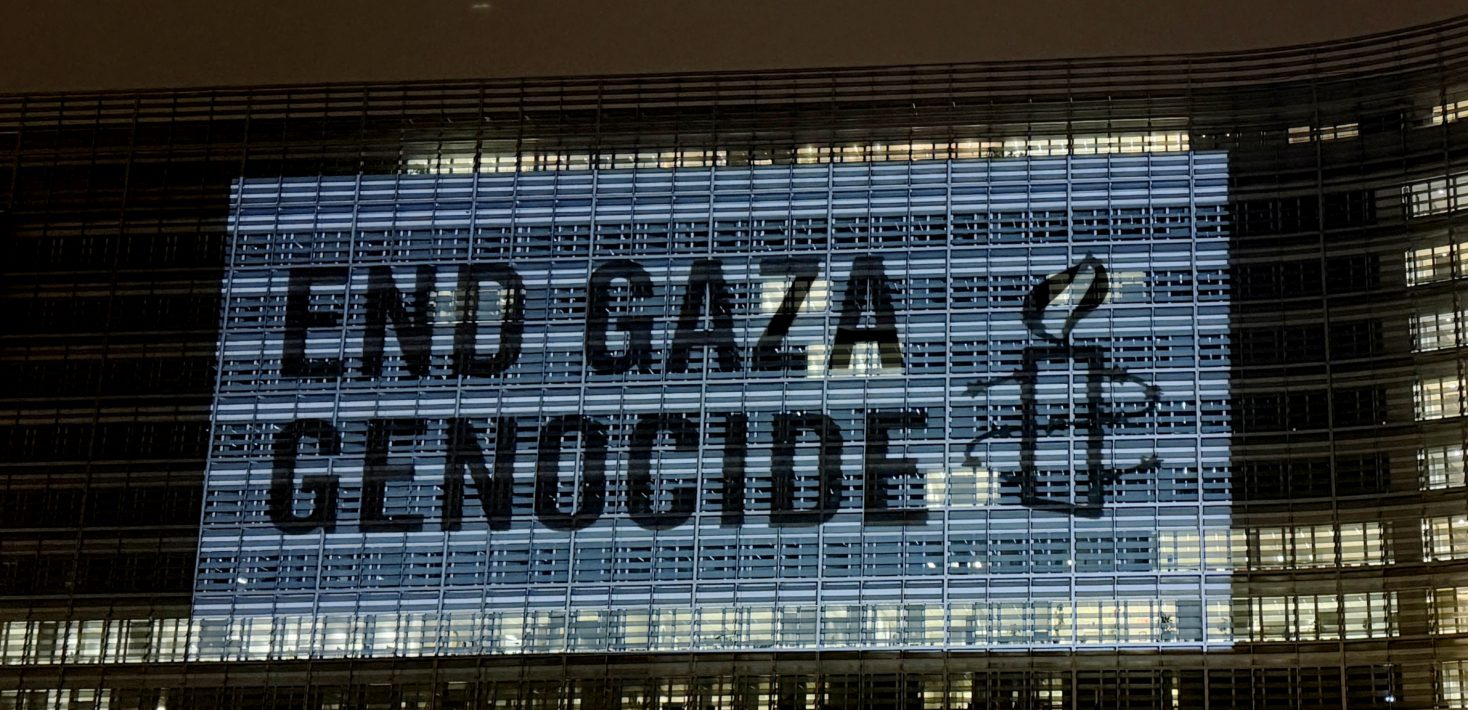
On 5 December, Amnesty International presented its report on the situation in Gaza, attributing responsibility to Israel for the crime of genocide against the Palestinian population in the Gaza Strip. The report is the culmination of extensive and rigorous monitoring, research, and evidence gathering carried out by Amnesty International. According to the organisation, Palestinians in Gaza fall within the groups protected under the 1948 UN Convention on the Prevention and Punishment of the Crime of Genocide, which protects national, ethnic, racial, or religious groups, identifying them as a distinct national, ethnic, and racial group based on: a shared language (Palestinian Arabic), shared cultural customs and practices (despite religious differences), and a collective identity deeply rooted in the territory and historically recognised.

This identification was also confirmed by the International Court of Justice (ICJ) on 26 January 2024, when it recognised Palestinians as a protected national group and ordered provisional measures against Israel to prevent the risk of genocide.

Amnesty's analysis focuses on three genocidal acts set out in the 1948 UN Convention:

As defined in both the 1948 Convention and the 1998 Rome Statute of the International Criminal Court, for an act to constitute the crime of genocide, the conduct—consisting of one of the listed criminal acts—must be accompanied by a specific mental element on the part of the perpetrator: the "intent to destroy, in whole or in part, a national, ethnical, racial or religious group".

In the first two months of the offensive, Israel carried out approximately 10,000 air strikes on Gaza, hitting densely populated residential areas, hospitals, and critical infrastructure.

Amnesty documented 15 specific air strikes that hit civilian buildings and killed at least 334 people, including 141 children. Deeply moving is the story of three-month-old baby Ayla Nasman, killed in an Israeli bombardment on 14 December 2023, whose body was found by her father after four days of searching.

Amnesty maintains that these attacks were intentionally directed against civilians, in flagrant violation of international humanitarian law.

Israeli forces used weapons of high destructive power in one of the most densely populated areas in the world. Amnesty documented the use of JDAM (Joint Direct Attack Munition) bombs capable of destroying entire residential buildings, cluster munitions (carrying the risk of delayed explosions), precision-guided missiles used against schools, hospitals, and crowded markets, and heavy artillery (including 155mm shells capable of striking wide areas without distinguishing between civilians and combatants).

The report also cites public statements by members of the Israeli government inciting destruction, including that of Israeli President Isaac Herzog, who stated on 12 October 2023: "It is an entire nation out there that is responsible. It is not true this rhetoric about civilians not being aware, not involved."

One of the most tragic aspects of the conflict documented by Amnesty is the high number of casualties among infants and children.

Among the physical and psychological harm suffered by the civilian population of Gaza, the report details over 4,500 cases of amputations, severe burns, brain trauma, and spinal injuries resulting in permanent neurological damage, blindness, and deafness caused by high-yield explosive weapons. Compounding this is the difficulty of guaranteeing timely medical care and the acute shortage of healthcare resources, given that by January 2024, 84% of healthcare facilities had been damaged or destroyed. According to a UNICEF Global Nutrition Cluster assessment, in January 2024, 15% of children under two in northern Gaza suffered from wasting, alongside numerous acute respiratory infections caused by precarious water and sanitation conditions documented by the WHO at the end of April.

The report highlights the psychological toll on survivors caused by trauma, continuous feelings of danger and disorientation, post-traumatic stress disorders, panic attacks, and depression.

Deliberately inflicting conditions of life calculated to bring about the physical destruction of the group in whole or in part

From 13 October 2023, the Israeli military ordered the evacuation of 1.1 million Palestinians from northern Gaza without ensuring food, water, or medical care. On 6 May 2024, Israel launched a ground operation in Rafah, where over one million displaced Palestinians had sought shelter. Israel also repeatedly obstructed the entry of humanitarian aid, blocking consignments, which triggered an unprecedented food crisis and a surge in child malnutrition. On 1 April 2024, an Israeli strike killed seven humanitarian aid workers from World Central Kitchen.

Amnesty documented cases of prolonged food shortages that forced families to go without food for days, exacerbated by a water crisis that completely cut off access to safe drinking water due to the bombing of water infrastructure and restrictions imposed by Israel.

Amnesty International "recognises that Hamas and other Palestinian armed groups have endangered the Palestinian civilian population through their conduct by operating from, or in the vicinity of, densely populated residential areas and have violated their obligation to take all feasible precautions to protect civilians and civilian objects under their control from the effects of attacks; however, this does not absolve Israel of its obligations under international humanitarian law to spare civilians and avoid attacks that are indiscriminate or disproportionate"

Amnesty International's unambiguous and firm stance through the publication of the report triggered fierce public debate, which even resulted in accusations of antisemitism against Amnesty and pushback from Amnesty International's Israeli section, which was suspended for two years by the international board after distancing itself from the report.

It should also be remembered that Amnesty had already published a report in 2022 accusing Israel of the crime of apartheid.

For a few weeks now, a ceasefire has taken hold in Gaza; more than 2 million Palestinians are heading back towards the north of the Strip to return "home", where they will find destruction and desolation. And while the international community pledges millions of dollars for reconstruction and Israel contemplates the annexation of the West Bank, the Palestinians of Gaza strive to reclaim the dignity of a people whose only need and right is to be recognised.

Article 2

Security Bill: risks and concerns for human rights
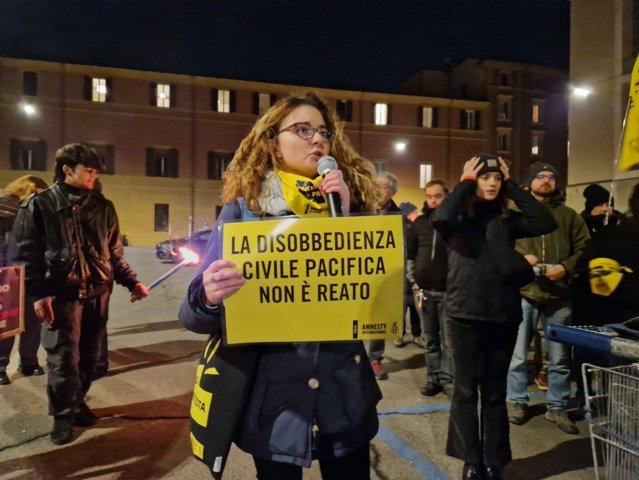
The Public Security Bill (DDL Sicurezza) represents a significant piece of legislation regarding public security in Italy. It consists of 38 articles divided into six chapters, aimed at enhancing security measures and tackling terrorism and organised crime. However, it must be noted that these provisions raise serious concerns regarding human rights and freedom of expression, sparking debates and raising doubts over the legitimacy and proportionality of several measures.

The legislative journey of the bill began on 27 February 2024 and witnessed intense parliamentary debate. Following its approval by the Chamber of Deputies on 18 September 2024, the bill is currently under review by the Senate. During hearings before the relevant parliamentary committees, Amnesty International Italy gave evidence and expressed deep concern over proposed amendments that could further worsen the human rights situation in the country. In particular, the issues alarming legal scholars and the majority of human rights organisations can be summarised as follows:

Amnesty International Italy has closely monitored the progression of the Security Bill, expressing grave concern over its potential impact on civil liberties. The organisation stresses that many of the proposed provisions could severely curtail the right to peaceful protest and criminalise legitimate forms of dissent. In particular, it emphasised that harsher penalties for protesters represent a direct assault on freedom of expression, as such measures can deter citizens from voicing their opinions on public issues, thereby fostering a climate of fear and repression.

Furthermore, Amnesty denounced the broad and vague definitions contained in the bill, which could lead to arbitrary interpretations by authorities: for instance, the proposed amendment to Article 53 of the Criminal Code on the legitimate use of weapons is particularly alarming, as it could allow law enforcement officials to use weapons without adequate legal safeguards.

It must be pointed out, however, that Amnesty does not condemn every aspect of the bill, but in fact supports certain elements. For example, it welcomes the amendments aimed at removing references to passive resistance as a punishable offence during potential unrest in prisons or immigration removal centres (CPRs). It also expresses equal satisfaction with several proposed amendments introducing identification codes for police officers deployed in public order operations.

In conclusion, while the government justifies the bill as a necessary response to security threats, Amnesty International continues to urge a genuine commitment to safeguarding human rights and ensuring that every measure adopted respects fundamental democratic principles. It is essential to ensure that security policies do not take precedence over citizens' fundamental rights, maintaining a balance between security and freedom.

Article 3

21 days in Evin: the Sala case and hostage diplomacy in Iran
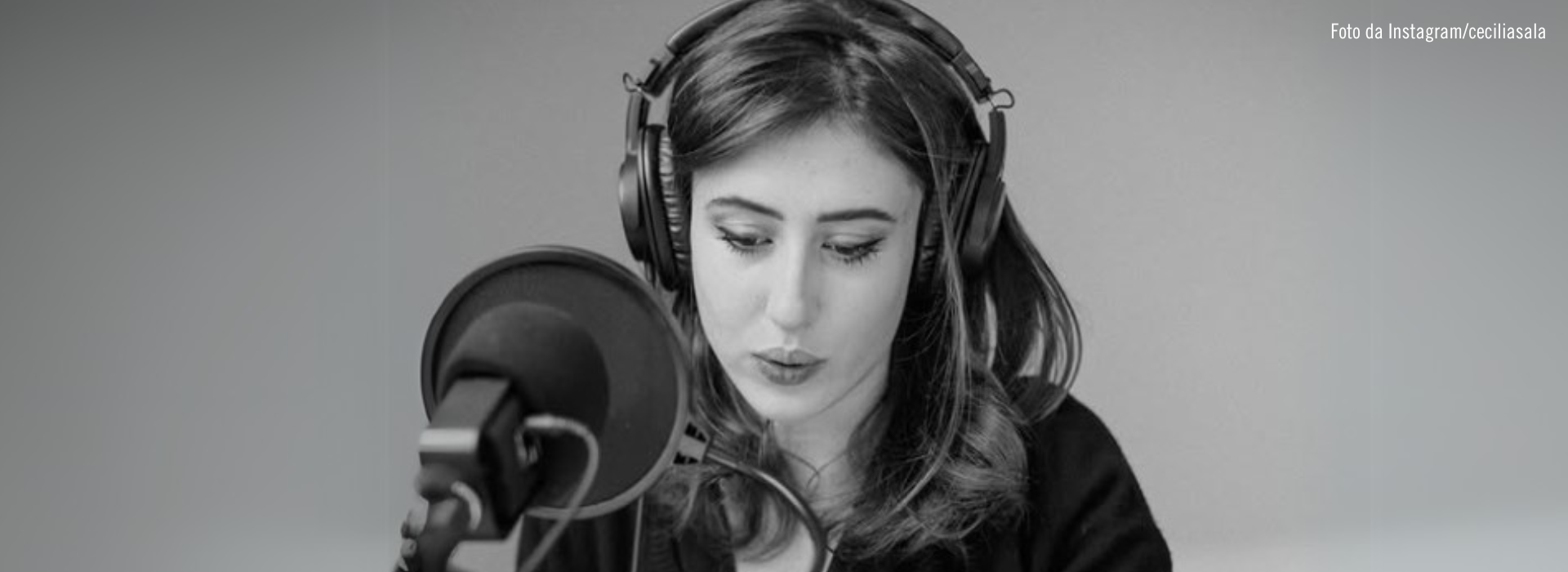
“The thing I wanted most was a book." In prison, "I managed to laugh twice: the first time when I saw the sky, and then when a little bird made a funny chirp": this is how Cecilia Sala, interviewed by Mario Calabresi, recounts her 21 days in Evin prison.

It is 19 December 2024 and Cecilia Sala is, as usual, working on a new episode of her podcast that morning in Tehran, ready to board a flight that would take her home to Italy the following day.

Someone knocks on her hotel room door. It is not, as she initially thinks, the cleaning staff, but Iranian authorities who take her away and transfer her to Evin prison, where she would remain in solitary confinement for 21 days.

The Italian government made news of Cecilia's arrest public on 27 December. Soon afterwards, a unanimous outcry called for the release of the journalist, who had only been carrying out her journalistic work in Iran.

The Iranian government brought no formal, specific charges, and the authorities' position was unclear from the outset. It was not until 31 December that the press reported a statement issued by the Ministry of Culture and Islamic Guidance asserting that Cecilia Sala «had violated the laws of the Islamic Republic of Iran». Meanwhile, Cecilia was interrogated daily for the first two weeks. She slept on the floor, without a mattress, on a blanket. Deprived of her glasses, she had no books to read and no pens to write with.

Iranian sources soon linked Cecilia Sala's arrest to that of Mohamed Abedini, an Iranian engineer detained at Milan Malpensa Airport on 16 December 2024. The Iranian government demanded his release. The hypothesis that the Sala and Abedini cases amounted to so-called "hostage diplomacy" grew increasingly tangible: an entrenched practice in Iran whereby Western nationals or dual citizens are arrested on sham charges, such as espionage, in order to use them as bargaining chips in hostage swaps.

Cecilia's ordeal is not an isolated incident. As Amnesty International has documented, Iran is frequently involved in prisoner exchanges, such as the case of Nazanin Zaghari-Ratcliffe, who returned home after six years following the UK government's payment of £400 million to Iran, and the 2023 prisoner swap between Iran and Belgium. Excluded from negotiations, however, was Ahmadreza Djalali, a Swedish-Iranian researcher at the University of Eastern Piedmont in Novara, arrested in 2016, sentenced to death, and still held in prison in very frail health. Amnesty remains vigilant and continues to consistently demand his release.

Cecilia Sala was released and returned to Italy on 8 January 2025. A few days later, news emerged that Mohamed Abedini had been released by the Italian authorities. Amnesty International will continue its research, campaigning, and advocacy work to curb Iran's practice of "hostage swaps" and to ensure that people can freely express their views and carry out journalism unhindered.
View original email version