Issue 10 of 24 · 5 June 2025

Diritti al punto - April May 2025

Dear readers, on Sunday 8 and Monday 9 June we will be called to the polls to vote on five referendums. Among the issues addressed by the questions are...

Editorial

Editorial

On Sunday 8 and Monday 9 June we will be called to the polls to vote on five referendums. Among the issues addressed by the questions are labour regulations and the acquisition of Italian citizenship. In particular, regarding the latter, it will be decided whether to reduce the required period of legal residence from 10 to 5 years for a foreign national to apply for Italian citizenship. Amnesty International Italy urges citizens to go to the polling stations to cast their vote and is committed to supporting a YES vote in the referendum.

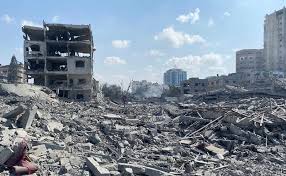
Time has run out in Gaza. Despite Israel’s recent authorisation allowing humanitarian aid to enter the Strip, the Israeli government’s serious and persistent unlawful conduct in managing humanitarian assistance—which must be unconditionally guaranteed to the Palestinian population—remains. Amnesty International has consistently called for a ceasefire in Gaza, condemning the Israeli government, which it holds responsible for genocide against the Palestinian population.

We return to the issue of migrants and the Pre-Removal Detention Centres (CPRs) in Albania. While the Court of Cassation has deemed the CPR system in Albania lawful, the ruling of the European Court of Justice remains pending. Amnesty Italy has repeatedly voiced its opposition to the CPR system in Albania, alongside denouncing their inhumane conditions.

If you enjoy our newsletter, please share it and invite anyone you wish to subscribe by clicking on the link at the bottom of the page.

Article 1

The repealing referendums of 8 and 9 June
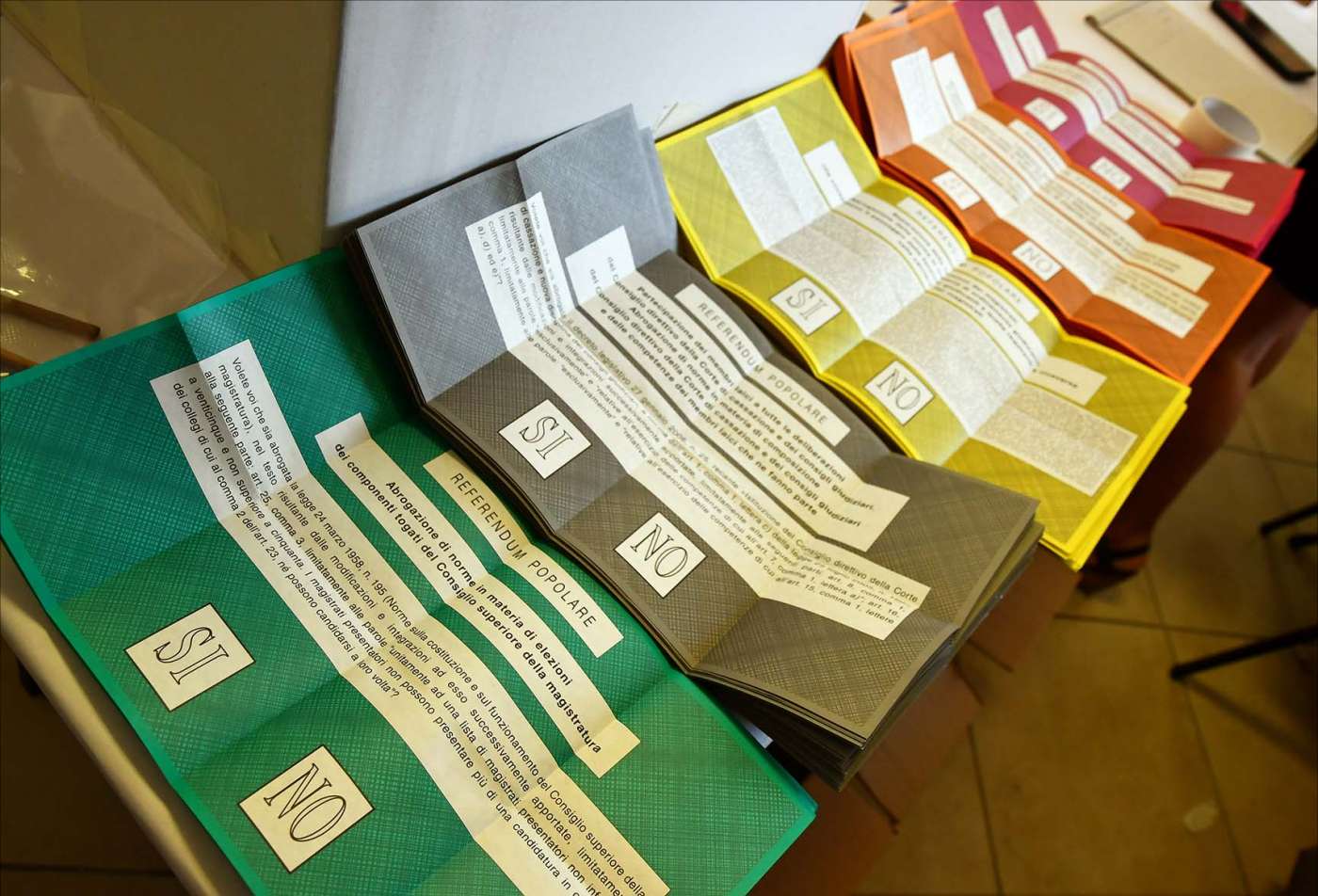
On Sunday 8 and Monday 9 June, voters will be called to the polls to cast their vote on five repealing referendums: four on issues related to the world of work and one on the acquisition of Italian citizenship.

At the heart of the labour questions are: the employment contract with increasing protections (contratto a tutele crescenti), regarding rules on unlawful dismissals; small businesses, concerning dismissals and related compensation; the setting of fixed-term limits on employment contracts, maximum duration, and conditions for extensions and renewals; and the exclusion of joint and several liability among the client, contractor, and subcontractor for workplace accidents suffered by employees of contractor or subcontractor companies as a consequence of specific risks inherent to the contractors' or subcontractors' operations.

Voters will then have to decide on the fifth question, concerning the reduction of the waiting period for obtaining citizenship. Specifically, the referendum seeks to reduce the required years of legal residence in Italy for adult non-EU foreign nationals from 10 to 5.

In principle, citizenship is the emblem of the relationship between an individual and a State. Each State establishes its own criteria for granting and revoking citizenship. In Italy, this matter is governed by Law No. 91 of 1992 (New Rules on Citizenship) as amended, and by Presidential Decree No. 362 of 1994 (Regulation governing the procedures for acquiring Italian citizenship).

Italian legislation provides that citizenship is acquired through the principle of “iure sanguinis” (right of blood), or through residence or naturalisation; by marrying an Italian citizen; by operation of law for individuals born in Italy upon reaching 18 years of age; by being born on Italian territory (“iure soli” or right of soil) to stateless parents, or if the parents are unknown or cannot transmit their citizenship to the child under the laws of their country of origin; by adoption of a minor by an Italian citizen; by acknowledgment of paternity or maternity by an Italian citizen or following a judicial declaration of filiation of a minor; it may also be granted for special merits that have distinguished the individual during their stay in the country.

The acquisition of Italian citizenship by residence is laid down in Article 9 of Law No. 91 of 5 February 1992; specifically, paragraph (f) provides that Italian citizenship may be granted to a foreign national who has legally resided in the territory of the Republic for at least 10 years.

What would happen, then, if this provision were repealed? If the citizenship referendum were to approve the repeal of the current provision, a foreign national legally residing in Italy could apply for citizenship after just 5 years. This would reduce the waiting time for the recognition of citizenship and support school-age boys and girls as well as young men and women in their journey towards integration and building a sense of belonging and identity.

Finally, taking part in the vote on the citizenship question would represent, first and foremost, an opportunity to implement a precise legal reform, but above all to have a say on a crucial issue that directly impacts society as a whole and would allow us to choose a more open and inclusive path for our community than the one we have today.

Amnesty International Italy urges citizens to go to the polling stations to cast their vote and is committed to supporting a YES vote in the referendum. In particular, regarding the question on citizenship, Riccardo Noury, spokesperson for Amnesty Italy, clarified that reducing the required period would make the system fairer and more realistic, without overturning the existing criteria.

L’Unità - Interview: Noury speaks: “A YES vote in the citizenship referendums to tear down discrimination”

Ministry of the Interior - How to become an Italian citizen

IDOS Study and Research Centre - Estimate of potential beneficiaries of the citizenship referendum reform through naturalisation (8-9 June 2025)

Article 2

Time has run out in Gaza

“Palestinians too must have a homeland and a territory, otherwise there will never be peace in the Middle East” Sandro Pertini, President of the Italian Republic, 31 December 1981

The Israeli-Palestinian issue has reached a tragic point where the debate over the “two-state solution” has been pushed into the background by the catastrophic humanitarian situation gripping Gaza and the Palestinian people. The urgent priority is no longer finding a solution to a decades-long conflict, but preventing the destruction of an entire people. Numerous appeals have followed one another from civil society and humanitarian organisations operating on the ground, calling not only for a ceasefire, but above all for the entry of humanitarian aid, including food, water, and medicines. These appeals have gone unheeded; Israel persists in obstructing humanitarian access and in carrying out indiscriminate bombardments that strike the civilian population. Gaza is disappearing; Palestinians are risking their lives not only due to armed attacks, but also, and above all, due to shortages of food and medical care. Time has run out in Gaza. After long weeks of deadlock, only on 19 May did Israel announce that it had authorised United Nations trucks carrying food supplies and other humanitarian aid to enter the Strip. This permission came after Netanyahu's declaration of intent to take control of the entire Gaza Strip and launch a new ground offensive. Even more disconcerting was the Prime Minister's own explanation that the decision to allow food supplies to enter was taken not on humanitarian grounds, but based on “practical and diplomatic calculations”. Finance Minister Bezalel Smotrich went further: “Israel will destroy everything that remains of the Gaza Strip”. Pierre Haski, a journalist for France Inter, explains that “the sole purpose of these declarations is to maintain the unity of the far-right coalition in Israel”. The other reason behind such statements lies in Netanyahu's desire not to lose the support of the international community entirely. However, in the wake of the decision to authorise aid, the German Federal Foreign Office published a joint statement signed by 23 countries—including many European nations, Japan, Canada, and Australia—strongly criticising the terms of this resumption of aid, deeming it entirely contrary to humanitarian principles. Specifically, the statement addresses two clear appeals to Israel: to immediately allow the full resumption of aid to Gaza and to allow the United Nations to work independently and impartially to save lives. Furthermore, the statement reiterates the call to Hamas to immediately release the hostages and allow humanitarian assistance to be distributed without interference. While the international community, the UN, and other humanitarian organisations address appeals to both Israel and Hamas, the Netanyahu government's stance seems to defy the logic of “releasing prisoners in exchange for halting bombardments”; rather, Israel's actions reveal an outright plan for the destruction of Gaza that began well before 7 October 2023, through illegal settlements in the Strip and the West Bank.

Israel has never shown signs of agreement on the “two-state solution” and is using its defensive response as an opportunity to implement the project of driving Palestinians from their lands. It is pursuing this project at all costs, in breach of humanitarian law and pushing a population to the brink of exhaustion by depriving them of food and humanitarian assistance, all before our very eyes. The organisation Save the Children has reported that 93% of people in Gaza are suffering the consequences of an acute food security crisis and that the situation is more desperate than ever before. António Guterres, Secretary-General of the United Nations, reiterated a few days ago that Israel has a clear and specific obligation to respect international humanitarian law and stated that the United Nations and their partners have a clear, detailed five-stage plan to deliver aid to the desperate population of Gaza: securing aid delivery; inspecting aid at access points; transporting aid from access points to humanitarian facilities; preparing aid for subsequent distribution; and transporting aid to the population in need.

Amnesty International has consistently called for a ceasefire in Gaza, condemning the Israeli government, which it holds responsible for genocide against the Palestinian population. On 23 May, on the occasion of the 40th General Assembly held in Rome—coinciding with the 50th anniversary of the founding of the Italian section—Amnesty activists staged a flash mob on the Capitoline Hill demanding an end to the genocide and reaffirming Amnesty Italy’s commitment: “50 years, never silent”.

Article 3

The Pre-Removal Detention Centre in Gjader: rulings and human rights
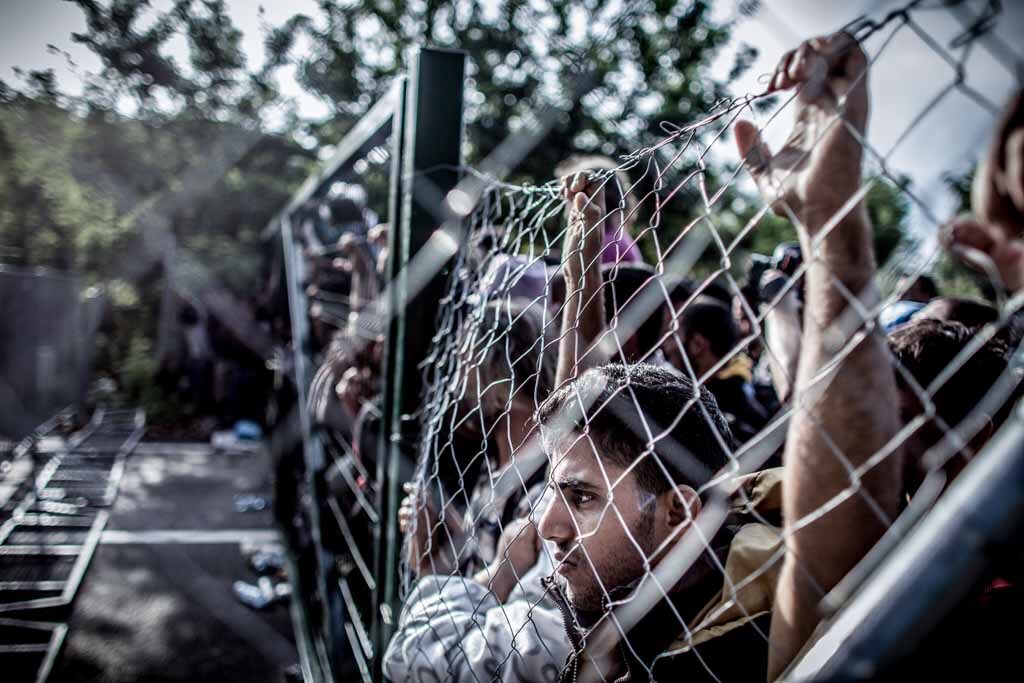
The recent judgment of the First Criminal Division of the Court of Cassation (No. 17510/2025 – 8 May 2025) ruled that migrants detained in the Pre-Removal Detention Centre (CPR) in Gjader, Albania, even if they lodge an asylum application, must not be brought back to Italy. The Court confirmed the lawfulness of detention even after an application for international protection has been submitted, placing the Gjader facility on an equal footing with Italian CPRs provided for by Article 14 of Legislative Decree No. 286/1998.

The decision concerns the case of a Moroccan national who was expelled by the Prefecture of Naples and transferred to the Albanian facility after landing in Lampedusa in 2021. Minister Piantedosi and the Rome Police Headquarters contested the asylum request as an opportunistic attempt to return to Italy. The appeal by the Ministry of the Interior and the Rome Police Headquarters was upheld, and the case was referred back to the Rome Court of Appeal for reassessment.

On 15 May, also in light of the ruling, the Chamber of Deputies passed the bill converting Decree-Law No. 37 of 28 March 2025, laying down urgent provisions to combat irregular immigration. The measure must now be approved by the Senate. The so-called “Albania Decree” legitimises the extraterritorial confinement system for migrants. The Italian section of Amnesty International commented on it, describing it as “a system that, as evidenced by findings gathered during monitoring carried out by several delegations of the Asylum and Immigration Table (Tavolo Asilo e Immigrazione) in Albania, is opaque, devoid of safeguards, and incompatible with the principles of the rule of law.”

The ruling of the European Court of Justice on the compatibility of this revised Albania model with European Union law remains pending, as beyond statements by individual EU Commission representatives, definitive legislative acts have yet to be issued. The European Return Directive 2008/115/EC does not permit pre-removal detention outside the borders of Member States; in practice, applications for international protection cannot be processed outside EU territory.

The ruling of the Court of Cassation has de facto legitimised the system established by the Meloni government regarding the centres in Albania.

To date, the results of the Albania operation are minimal. In recent days, the government reported that, in one month, 25% of the individuals transferred—amounting to 10 migrants—have actually been repatriated. These figures make no difference to domestic security, nor do they curb human trafficking in the Mediterranean. Other figures involve costs, both financial and humanitarian: the TAI (Tavolo Asilo e Immigrazione) denounces situations of bewilderment and fear among the transferred migrants, individuals who have lived in Italy for years, have family ties, or are psychologically vulnerable.

The entire “Albania project” is legally fragile: recently, Justice of the Peace Artone ordered the release of a citizen detained in Gjader, raising questions of constitutional legitimacy that will be examined by the Constitutional Court. The case involves a young man who arrived in Italy in 2017, was taken to Albania on 9 April, and was transferred to the Brindisi CPR in early 2025 after applying for asylum. The examining board rejected his application, despite his sister being an Italian citizen and his mother holding a residence permit. The young man was excluded from the special protection provided for by Article 19 of the Consolidated Immigration Act (TUI), as he had not proven cohabitation with his family members since his arrival in our country.

In an article published on 16 April, Amnesty states that “According to the TAI, the entire Albania system represents a suspension of legality and a violation of fundamental rights, masked by the rhetoric of speeding up returns, without the Protocol itself yielding any real practical benefits.”

In recent years, Amnesty has repeatedly denounced conditions inside Italian CPRs, emphasising that administrative detention must be “functional and proportionate, not punitive”. People are confined in cramped, fenced spaces, facilities are often in poor hygienic conditions, mobile phone use is prohibited or heavily restricted, and instances of ill-treatment are recorded. The violation of human dignity is condemned by Italy, and the competent authorities, rather than deporting people to extraterritorial CPRs, should carefully monitor what takes place within Italian CPRs and improve a situation that verges on breaching every humanitarian and democratic principle.

Sign Amnesty’s Appeal now: WE STAND WITH REFUGEES

Contributors to this publication: Francesca Cocozza, Gabriele Leggeri, Giulia Solferino, and Laura Guerri

This email was sent to {{contact.EMAIL}}

You received this because you are subscribed to our newsletter.
View original email version