Issue 8 of 24 · 11 August 2025

Diritti al punto - July 2025

Dear readers, on 15 April 2025, the so-called 'Anti-Pride Law' came into force in Hungary, introduced by the sovereignist government of Viktor...

Editorial

Editorial

On 15 April 2025, the so-called 'Anti-Pride Law' came into force in Hungary, introduced by the sovereignist government of Viktor Orbán, which imposes penalties of up to one year's imprisonment for organising or taking part in Pride marches. The measure expands police powers, permitting the use of facial recognition, the dispersal of officially notified demonstrations and the imposition of fines on participants in prohibited gatherings. Justified on the grounds of 'child protection', this law represents a severe restriction on the rights of LGBTQIA+ people and risks fuelling social tensions and repression in Hungary.

The story of Alberto Trentini, an Italian aid worker with Humanity & Inclusion, tells of arbitrary detention in Venezuela without formal charges and without access to statutory legal safeguards. Arrested in November 2024, he was held for months without contact with his family, until two phone calls – in May and July 2025 – brought momentary relief but did not dispel the uncertainty surrounding his fate. In this article, we retrace the mobilization of friends, universities, organisations, and civil society, who, through flash mobs, appeals, and petitions, have kept public attention alive and demanded respect for international law.

The Israeli security cabinet's recent green light for Prime Minister Netanyahu's plan to take control of Gaza City raises deep concerns over the risk of further atrocities and violations of international law. Speaking through Secretary General Agnès Callamard, Amnesty International condemned the decision, describing it as 'deeply outrageous' and potentially catastrophic for the Palestinian population, who are already enduring dire humanitarian conditions. We also take an in-depth look at domestic and international criticism of the plan, including from the families of hostages and top military brass, as well as its conflict with the advisory opinion of the International Court of Justice.

If you enjoy our newsletter, please share it and invite anyone you like to subscribe by clicking the link at the bottom of the page. Happy reading!

Article 1

The Anti-Pride Law and Budapest's Response
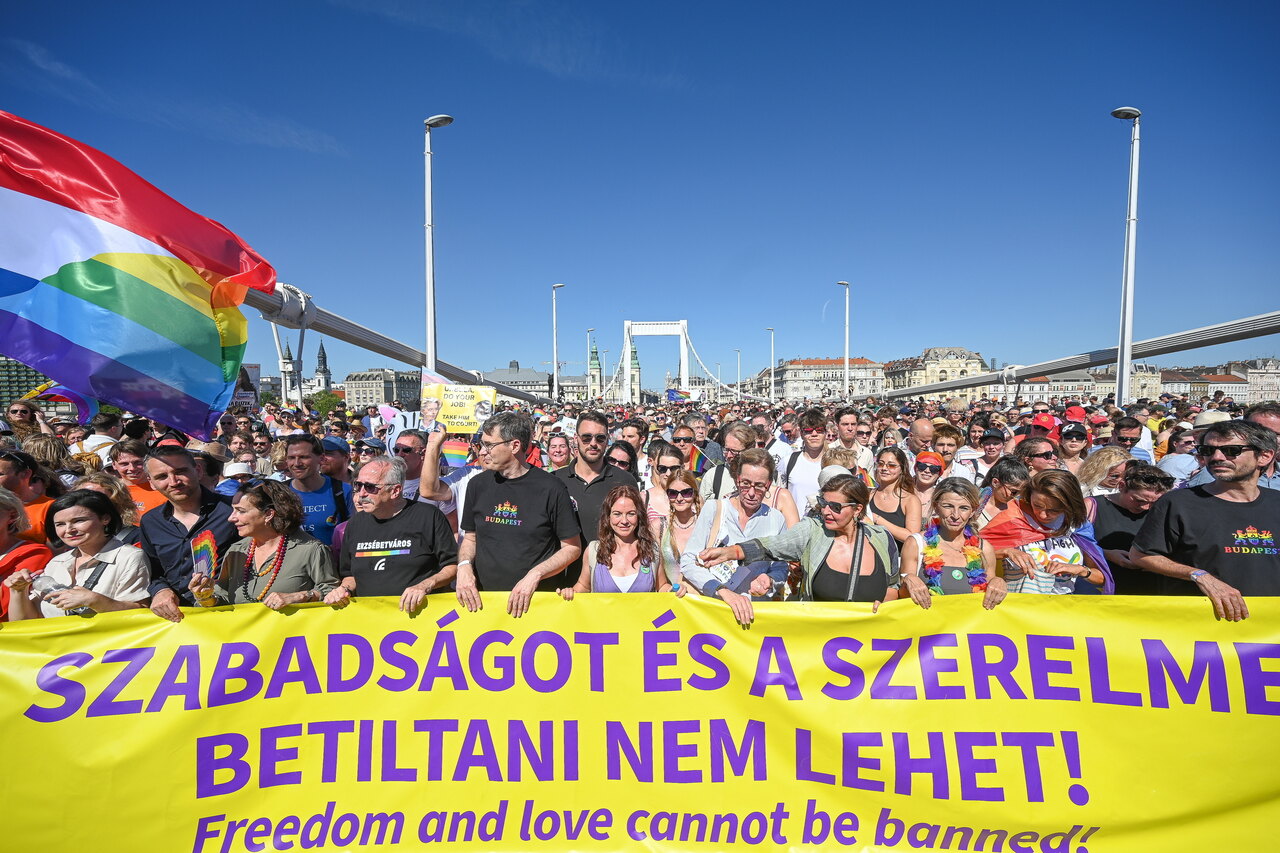
On 15 April 2025, Hungary's 'Anti-Pride Law' came into force. Promoted by Viktor Orbán's sovereignist government, it introduces a range of punitive measures, including criminal prosecution leading to up to one year in prison for anyone organising or participating in Pride events. Other provisions broaden the powers of the authorities, allowing them to use facial recognition technology to identify individuals taking part in demonstrations and to levy fines on those attending banned gatherings. Furthermore, the new law expands the grounds under which police can disperse notified demonstrations, risking tensions, unrest, and an escalation of violence. The passage of the law was made possible by a vote in the Hungarian parliament on an amendment that provides a constitutional basis for denying the gender identities of certain individuals in the country, allowing the authorities to curtail rights, particularly of LGBTQIA+ people, under the pretext of child protection.

In the wake of this new legislation, on 19 June 2025 the Hungarian police banned the Pride march scheduled for 28 June. The European Union and several political figures were swift to react. First among them was Gergely Karácsony, Mayor of Budapest, who, in response to the ban, declared Pride a municipal civic event falling under local council authority, meaning no police permits were required.

Pride thus took to the city's streets, aided also by the contribution of Amnesty International, which in the days leading up to the event had launched the #LetPrideMarch petition signed by over 120,000 people from 73 countries, demanding that the 30th Budapest Pride take place free from police intimidation, harassment, or violence.

The Anti-Pride Law represents the latest move by a government that, since taking office, has steadily intensified restrictions on the rights of LGBTQIA+ people. The new law derives its legal basis from the 2021 'Propaganda Act', over which the European Union initiated infringement proceedings against Hungary that same year. The 2021 law was passed under the guise of protecting minors from content deemed harmful to their 'moral development'. The result of this measure has been widespread censorship of books, films, and other resources addressing LGBTQIA+ issues, extending to the removal of inclusive materials from schools, bookshops, and public platforms, thereby curbing access to information for all.

The new legal framework thus reinforces a climate of persecution that began back in 2010, repressing and violating the rights of LGBTQIA+ people by preventing them from organising and publicly expressing their identity.

Ahead of 28 June, Amnesty International called for authorities to 'protect human rights and dignity, rather than enforce a law that silences those demanding equality'—a stance that must be maintained over the long term to counter the sentiments of hatred and repression that remain all too prevalent in Hungary.

Hungarian anti-LGBTIQ law: Parliament demands EU action

Article 2

Image: Mauro Biani

On 15 November 2024, Alberto Trentini, an Italian aid worker with the NGO Humanity & Inclusion who had been in Venezuela for barely a month working on a project supporting persons with disabilities, was stopped by officers of SAIME (Servicio Administrativo de Identificación, Migración y Extranjería) while travelling from Caracas to Guasdualito and subsequently disappeared (Pagella Politica). He was transferred to the General Directorate of Military Counterintelligence, without habeas corpus being granted and without any formal charges brought.

After months of obscurity, activism by friends and Italian civil society brought Alberto Trentini's case to the fore: flash mobs in Venice, solidarity fasts, petitions, and public appeals to keep the spotlight on his ordeal (UniPD Human Rights Centre). On 15 May 2025, six months after his arrest, Trentini was finally allowed to speak to his family, reassuring them that he was 'doing well', despite the gruelling prison regime, as reported by Wired Italia, which also highlighted his severe psychological and physical exhaustion. The second call came on 26 July: 'distress, but relief' was the reaction of his relatives, who reaffirmed their faith in the ongoing diplomatic efforts between Rome and Caracas.

On the institutional front, Foreign Minister Antonio Tajani initiated a diplomatic push as early as 15 January 2025, summoning the Venezuelan representative to the ministry once again to demand explanations regarding Trentini's fate and to protest the expulsion of three Italian officials from Venezuela (tg24.sky.it). Prime Minister Giorgia Meloni subsequently contacted Trentini's mother, Armanda Colusso, assuring her that the Italian government would remain fully mobilised until her son's return home, as reported by Sky TG24.

At the heart of this affair lies the broader pattern of systematic repression denounced by Amnesty International: on the one hand, the adoption of the so-called 'Anti-NGO Law' in Venezuela, designed to criminalise humanitarian work and human rights organisations—described by Amnesty itself as a grave violation of freedom of association and a direct threat to active civil society; on the other hand, the organisation has urged the UN Human Rights Council to renew the mandate of the 2024 Independent Fact-Finding Mission on post-electoral repression, which documented in detail instances of extrajudicial executions, enforced disappearances, arbitrary detentions, and torture as manifestations of a systematic assault on civil, political, and human rights in Venezuela (amnesty.org).

In the weeks immediately preceding the 19 July sit-in on the Votive Bridge in Venice, Trentini's friends took to the streets to press public institutions. Today, exactly eight months since his detention began, his situation remains uncertain: no formal charges have yet been made public, access to legal visits and medical care has been denied, and his ongoing detention is not only an individual injustice, but a stark warning of what occurs when a regime wields silence as an authoritarian tool.

For Amnesty International, this is not an isolated case but an unmistakable symptom of the unraveling of human rights protections in Venezuela: in their view, Trentini has become emblematic of 'de facto disappearance', serving as a deterrent against anyone engaged in humanitarian work or defending civil rights in the country. The organisation therefore demands formal, transparent, and documented confirmation of his detention, unhindered and regular consular and legal assistance, immediate medical access, his unconditional release in the absence of credible evidence, as well as multilateral pressure—including the exercise of universal jurisdiction—against the perpetrators and instigators of these violations, alongside targeted sanctions by European states against the Venezuelan officials involved.

Many questions remain unanswered: how can an Italian aid worker vanish like this, without any official investigations, witness testimonies, or confessions emerging? What more must happen before the authorities grant him access to legal counsel? Trentini has dedicated twenty years of his life to international solidarity, yet he has been reduced to a symbol of a repression that spares no one. Until he is finally free, his story must remain at the forefront of the minds of human rights defenders, NGOs, government ministers, and diplomatic missions: because while he remains behind bars, the silence is built not on truth, but on the fear that others might suffer the same fate.

Article 3

Gaza City: Israel's Plan Risks Decimating Human Rights
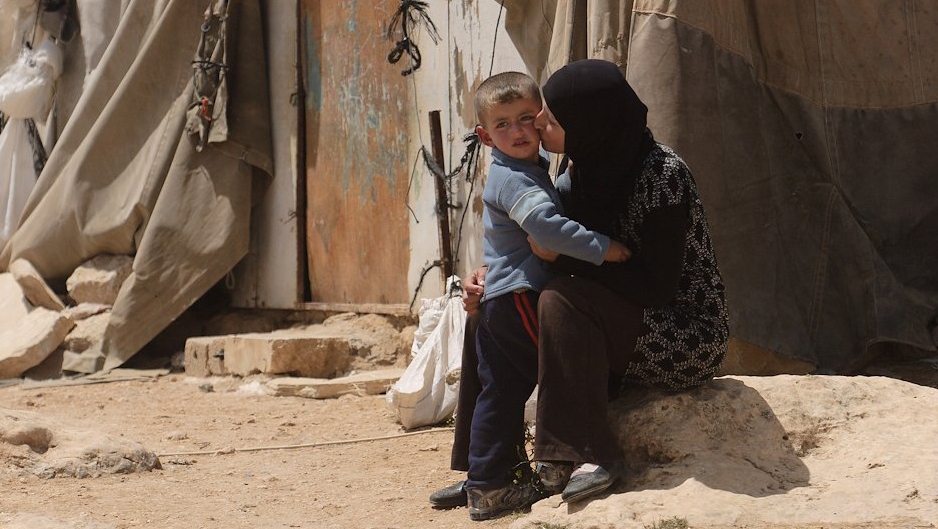
Following the Israeli security cabinet's decision to assume full military control over Gaza City—where nearly one million Palestinians are already struggling to survive in desperate conditions—Amnesty International Secretary General Agnès Callamard described the move as 'deeply outrageous and staggering'. She warned that nothing could ever justify the mass atrocities that such a military escalation would inevitably entail, reiterating that 'the worst is yet to come'.

The decision has sparked unprecedented global condemnation. The United Nations, speaking through Secretary-General António Guterres and High Commissioner for Human Rights Volker Türk, branded it a 'dangerous escalation' contrary to international law and in direct breach of the advisory opinion of the International Court of Justice, which reaffirmed the illegality of the Israeli presence in the Occupied Palestinian Territory. Under international humanitarian law, occupying powers have an obligation to protect the civilian population and ensure access to aid, rather than imposing further coercive measures that compound human suffering.

International medical organisations, including Médecins Sans Frontières and MedGlobal, have stressed that an operation of this magnitude would cause the utter collapse of Gaza's healthcare system, already brought to breaking point by months of bombardment and aid blockades. Damaged hospitals, acute shortages of medical supplies, and exhausted healthcare staff already make it impossible to guarantee adequate medical care.

Within Israel, the decision has ignited domestic protests: thousands of citizens, including relatives of hostages, have taken to the streets demanding a ceasefire and speaking out against the grave risks posed to the lives of both Israeli captives and Palestinian civilians. Criticism has also come from former senior military commanders, who warn of the dangers of an uncontrolled escalation and the risk of derailing negotiations for the release of hostages.

On the international stage, the European Union, the United Kingdom, Canada, Australia, and numerous countries across the Middle East have voiced their opposition, accusing Israel of breaching international humanitarian law and exacerbating an already catastrophic humanitarian crisis.

Amnesty International draws attention to the fact that this crisis is not an isolated development, but the latest consequence of decades of discriminatory policies, systematic repression, and impunity. In particular, the organisation denounces an apartheid regime imposed on the Palestinian population and notes that recent reports by B’Tselem and Physicians for Human Rights Israel characterise Israel's actions as genocide.

Amnesty calls on the international community to take urgent action: suspend arms transfers to Israel, impose targeted sanctions on individuals and institutions responsible for violations, and secure an immediate and lasting ceasefire. It also reiterates the urgent necessity of guaranteeing unimpeded access for humanitarian aid into Gaza, lifting the blockade, and freeing all civilian hostages held by both sides.

Contributors to this issue: Francesca Cocozza, Gabriele Leggeri, Giulia Solferino, and Laura Guerri

This email was sent to {{ contact.EMAIL }}

You received this because you are subscribed to our newsletter.
View original email version