Issue 7 of 24 · 4 November 2025

Diritti al punto - September October 2025

. The mission and future challenges of the Italian Red Cross, common goals with Amnesty International, risks and difficulties in current crisis scenarios, this and...

Editorial

Editorial

Rosario Valastro, President of the Italian Red Cross (CRI), answers questions from the editorial team of Diritti al Punto. The mission and future challenges of the CRI, shared goals with Amnesty International, the risks and difficulties in current crisis scenarios: all this and much more in our exclusive interview.

The commitment of Francesca Albanese, UN Special Rapporteur on the occupied Palestinian territories, to researching and exposing human rights violations against the Palestinian population. The published reports bearing her name have had severe repercussions on her personal life and the fulfilment of her mandate. Accused of political bias and targeted by United States sanctions.

The Global Sumud Flotilla, the maritime humanitarian mission to deliver aid to Gaza and break the siege imposed by Israel. The expedition was supported by activists from all over the world, who took to the streets to demonstrate their support for the flotilla and the Palestinian cause. Amnesty International made its voice heard in the face of Israel's unlawful attacks against the humanitarian mission.

If you enjoy our newsletter, please share it and invite anyone you wish to subscribe by clicking on the link at the bottom of the page.

Article 1

Interview with Rosario Valastro, National President of the Italian Red Cross
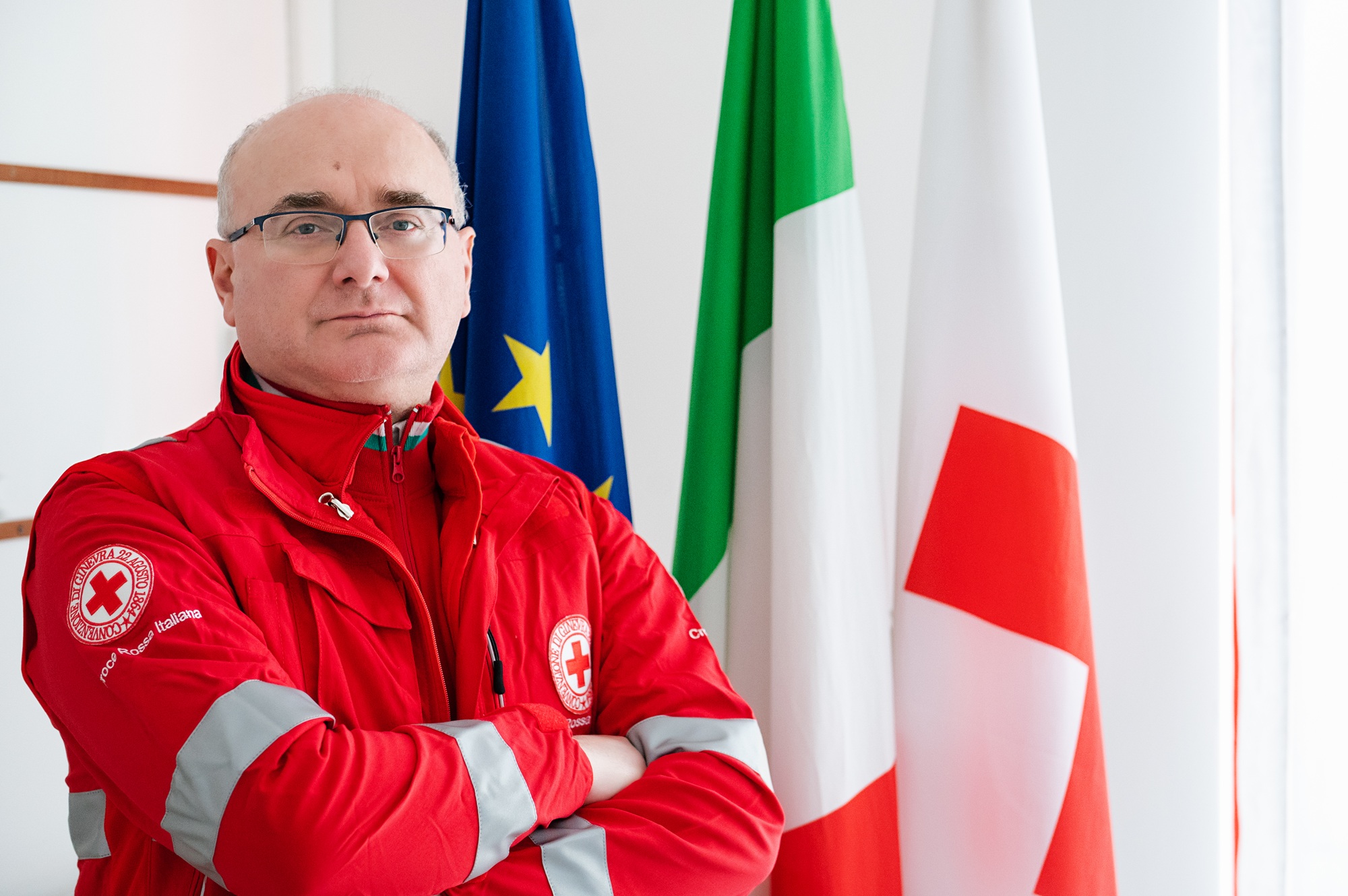
What is the mission of the CRI and what commitments or future challenges lie ahead? “The Red Cross was founded 161 years ago. During the Second War of Italian Independence, our founder, Henry Dunant, had the idea of creating an international humanitarian organisation to help the war-wounded, capable of caring for anyone in need without distinction. So many years later, our mission has not changed: the CRI's objective remains alleviating human suffering.

Our humanitarian action has expanded day by day: for a long time now, the Italian Red Cross has been far more than ‘just’ ambulances. We pay close attention to the social fabric, where we have witnessed new vulnerabilities emerge: alongside economic poverty, energy poverty has arisen, as well as issues such as social isolation, disability support, social inclusion, and, internationally, all actions supporting communities affected by crises, disasters and conflicts. We have come a long way. The Italian Red Cross has risen to new challenges by adapting its response capacity to the needs of the moment.”

How does the CRI collaborate with other associations and NGOs, including Amnesty International? Are there ongoing collaborative projects? “The Italian Red Cross and Amnesty International have different missions, yet they share a very similar foundation: both support vulnerable individuals and those whose dignity is trampled upon; both work daily alongside those who suffer and those whose rights are violated; both promote a culture of peace and mutual respect through their work. This makes our organisations far more similar than they are different.

Collaboration with associations takes place on specific projects or broader themes, depending on the case. Together with UNICEF and UNHCR, we ran a joint campaign to support the people of Myanmar after the earthquake, and another to respond to the Ukrainian crisis. Alongside IOM, UNHCR and Save the Children, we work to welcome and support migrants arriving on our shores after long sea crossings. The initiatives in which we are engaged together, where our volunteers and aid workers work side by side, are truly numerous.”

Regarding ongoing conflict situations, particularly in Gaza and Ukraine, what are the main operational challenges faced by Red Cross and Red Crescent personnel? What kind of support do you receive from local authorities and workers? “The violence and hatred we have witnessed over the past two years are deeply concerning. There is no respect for the rules of International Humanitarian Law; there is no respect for human life and dignity. Civilians, healthcare facilities, and humanitarian workers are all too often targeted in attacks. The Red Cross has been prevented from delivering aid — as it could have done — and from visiting prisoners and hostages. And we cannot allow this.

The primary need we encounter in conflict-affected areas is ensuring the safety of aid delivery: currently, in many of the 130 ongoing conflicts, this does not happen. Preventing aid from reaching those in need, and preventing conflict-affected populations from accessing water, food, and medical care, is unacceptable.

The Italian Red Cross has been engaged in Ukraine since the very first hours of the conflict. We have completed numerous initiatives to support the civilian population and the work of our sister National Society in the country. We have carried out around 300 evacuations of vulnerable individuals, provided mobile health clinics, established an aid storage hub, handed over 56 homes to residents in Zhytomyr Oblast, and are preparing another 40 in Chernivtsi, which will be opened shortly.

The situation in Gaza is dire. The Italian Red Cross has donated 271,000 kilograms of flour to the population, delivered an initial package of medical aid, and is participating, alongside the IFRC, in the ‘Food for Gaza’ project under the initiative launched by the Italian government. The situation is extremely difficult: more than 50 Palestine Red Crescent and ICRC workers have lost their lives whilst providing aid to the population — a population where over 80,000 children have been killed or maimed. A humanitarian tragedy that we hope will soon allow us to resume helping the population, with safe access for our workers on the ground.”

What has been the greatest challenge since taking office as President? “The Italian Red Cross has faced many challenges, all of them demanding. I think of the COVID-19 pandemic, the conflict in Ukraine, the floods that struck several regions across our country. These are all missions where we stood ready to act, alongside the population. We were the first to arrive and will be the last to leave. We were there, we are there, and we will be there.

Yet I believe the real challenge is the one still to come: our duty is to try to anticipate it, reading the population's needs in advance. We did this during the pandemic by training for high-level biocontainment transport. We must continue down this path.”

Article 2

Francesca Albanese's commitment in the occupied Palestinian territories

Francesca Albanese is an Italian legal scholar specialised in human rights in the Middle East. She was appointed United Nations Special Rapporteur on the occupied Palestinian territories in May 2022, following years of dedicated work in international and governmental organisations and NGOs, which led her to work extensively on the protection of rights in the occupied Palestinian territories.

As Special Rapporteur, Albanese has published periodic reports on the state of human rights in Gaza and the West Bank. The reports examine human rights violations, denouncing apartheid, war crimes, and genocide, the latter referring to Israel's military operations in Gaza. Finally, the reports conclude by making recommendations to the United Nations. Albanese has repeatedly called for actions urging compliance with international law; her statements and the findings in her reports have sparked political attacks and smear campaigns against her, culminating in US government sanctions last July.

The report, “Anatomy of a Genocide”, was presented by Francesca Albanese to the United Nations Human Rights Council in March 2024. The summary states: “By analysing the patterns of violence and Israel’s policies in its onslaught on Gaza, this report concludes that there are reasonable grounds to believe that the threshold indicating the commission of the crime of genocide by Israel has been met. One of the key findings is that Israel's executive and military leadership and soldiers have intentionally distorted jus in bello principles, subverting their protective functions, in an attempt to legitimize genocidal violence against the Palestinian people.”

Criticisms levelled against Albanese focus on two main areas: allegations of political bias — namely that her language and stances are political rather than technical and legal — and accusations of using extreme terms such as “genocide”, which some argue require specific intent that would be difficult to prove conclusively. These matters have sparked heated debates across political and journalistic spheres, even escalating to accusations of anti-Semitism against Francesca Albanese, and claims that she is a supporter of Hamas. These accusations intensified further following the presentation of the report “From economy of occupation to economy of genocide” (Italian-language version) last June, during the 59th session of the United Nations Human Rights Council. The document examines the evolution of the Israeli occupation in Palestine, interpreting it as a settler-colonial project underpinned by an extensive economic and industrial apparatus. The analysis reveals that this system has entered a new phase, termed an “economy of genocide”. The Report asserts that, while governments and political leaders shirk their responsibilities, numerous businesses have profited from an Israeli economy founded on unlawful occupation, apartheid, and now genocide. It is a meticulous, thorough study based on clear evidence. Last September, the United Nations Independent International Commission of Inquiry on the Occupied Palestinian Territory presented its Final Report, “Legal analysis of the conduct of Israel in Gaza under the Convention on the Prevention and Punishment of the Crime of Genocide”, a concluding document based on all previous Commission investigations, including Francesca Albanese's 2024 report, as well as official statements by the Israeli government. The Commission concluded that “the Israeli authorities and Israeli security forces have committed and continue to commit the following acts of genocide against Palestinians in the Gaza Strip: (i) killing members of the group; (ii) causing serious bodily or mental harm to members of the group; (iii) deliberately inflicting on the group conditions of life calculated to bring about its physical destruction in whole or in part; and (iv) imposing measures intended to prevent births within the group”... “The Commission concludes that the State of Israel is responsible for failure to prevent genocide, for the commission of genocide, and for failure to punish genocide against the Palestinians in the Gaza Strip.”

Over recent decades, Amnesty International has documented systematic human rights violations against Palestinians through reports detailing unlawful actions, including home demolitions, forcible transfers, administrative detentions, movement restrictions, and structural discrimination amounting to apartheid. In December 2024, Amnesty International published the report entitled “‘You Feel Like You Are Subhuman’: Israel’s Genocide Against Palestinians in Gaza”, unequivocally condemning Israel's genocidal practices against Palestinians.

Francesca Albanese places the issue of international accountability at the centre of the debate — not only regarding Israel, but also States and corporations that, through political or economic choices, profit from a situation of continuous rights violations against a people; she has exposed the role of external actors and called for accountability and prevention measures. The primary mandate of Francesca Albanese, as UN Special Rapporteur on the occupied Palestinian territories, is to monitor and denounce human rights violations across the territories within her remit. The attacks she has faced for publishing reports accusing Israel of severe human rights violations and exposing corporate complicity risk undermining the authority of the independent mandate entrusted to her by the United Nations. The role performed by Francesca Albanese meets a vital need for legal clarity and the upholding of international law, which States are bound to respect.

Amnesty stands with Francesca Albanese

In defence of Francesca Albanese: the inconvenient truth of human rights

Article 3

The Night of the Global Sumud Flotilla
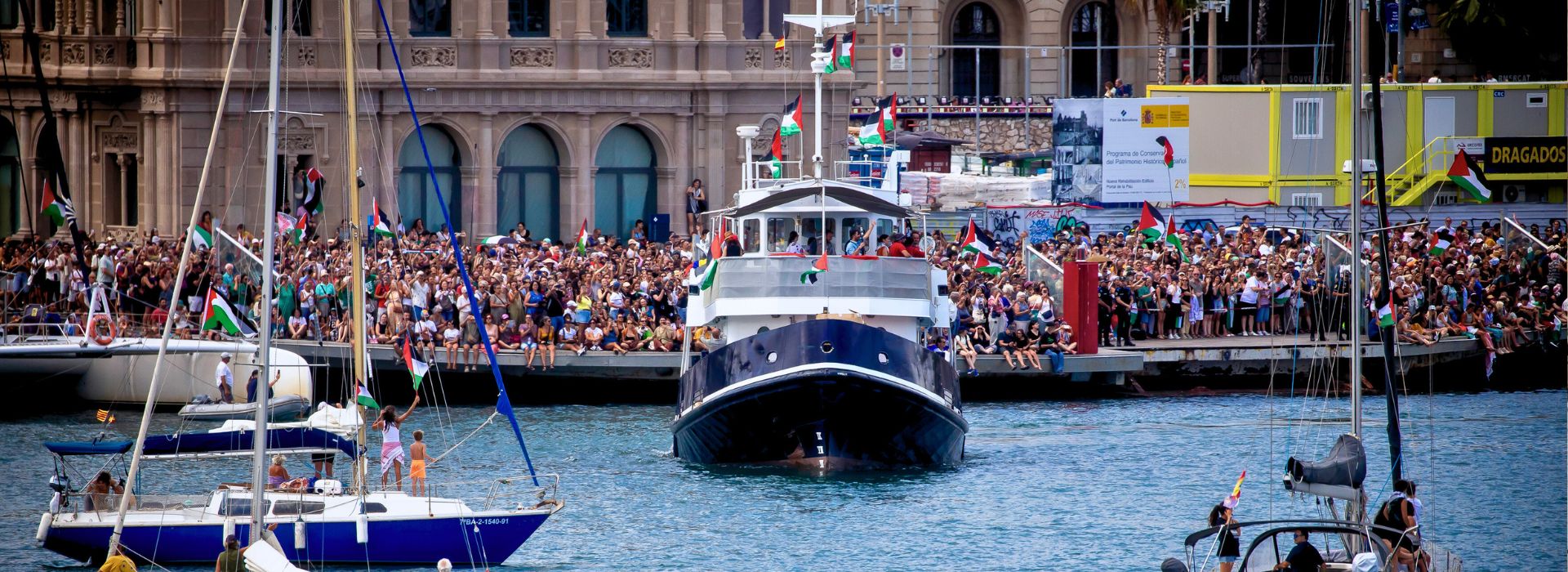
On 2 October, the vessels of the Global Sumud Flotilla, carrying activists, journalists, and parliamentarians of diverse nationalities, were intercepted by Israeli warships, which detained their crews. 47 civilian vessels had set sail from various Mediterranean ports, including Barcelona and Genoa, on a crucial humanitarian mission aimed at delivering food, medicine, and other essential supplies to the besieged Palestinian population and breaking Israel's maritime blockade of the enclave, in place since 2007.

For nearly 18 years, Israel has imposed a blockade on the occupied Gaza Strip, with measures tightened even further since October 2023. Among the blockade's consequences has been the restriction of access to food, fuel, and medical supplies, which have drastically worsened the effects of the humanitarian crisis and, alongside military strikes, led to the killing of thousands of Palestinians.

The interception of the Flotilla vessels represents yet another unlawful and violent act by Israel, which for years has carried out targeted actions against the Palestinian people, committing, according to several legal viewpoints, outright genocide in Gaza before the eyes of the entire international community.

Faced with the inaction of governments in securing peace and a ceasefire in the Strip, and amid the near-total absence of condemnation of Benjamin Netanyahu and Israel, activists from 50 different countries chose to undertake an unprecedented act of solidarity, fully aware of the potential risks to their personal safety and wellbeing.

On the night of 2 October, Israeli naval vessels unlawfully intercepted at least 39 boats of the Global Sumud Flotilla off the coast of the Gaza Strip and arbitrarily arrested dozens of individuals on board. After days of detention, the activists were released and returned safely to their home countries, reporting that they were subjected to unlawful detention and ill-treatment, including beatings and humiliating treatment. Their release should have been immediate and unconditional.

Following the arrests, Amnesty International promptly condemned the attacks on the humanitarian mission, which was entirely peaceful.

Expressing her concern, Amnesty International's Secretary General, Agnès Callamard, stated: “The threats and incitement preceding the Israeli forces’ actions were a shameful attempt to demonise peaceful solidarity initiatives calling for an end to the genocide and the cruel, unlawful blockade imposed by Israel on the Gaza Strip since 2007 and further tightened from October 2023.” Callamard then appealed to the international community: “World governments must act now and state unequivocally that they will no longer tolerate the systematic starvation of the Palestinian population in the Gaza Strip or attacks on civil society humanitarian initiatives. Decades of impunity for Israel’s blatant violations of international law must end. Nothing can justify genocide.”

Days after the Global Sumud Flotilla events, a peace plan proposed by US President Donald Trump was signed. To this day, news reports still describe children falling victim to the IDF, the Israeli military. Although the peace plan and truce were welcomed enthusiastically, as if to mark a turning point for the Middle East conflict, the resumption of military action by Israeli forces paints a very different reality that offers no cause for celebration.

The Arabic word “Sumud” signifies resilience, steadfast perseverance, and resistance in the face of adversity. These sentiments likely defined the journey and days of those aboard the Flotilla, united by a single goal: securing freedom and the right to life for the Palestinian people.

“Trump's peace plan between Israel and Hamas: what's wrong with it” - Amnesty International Italy

BBC investigation - “New images show Israeli control line deeper into Gaza than expected”

“Did the Gaza ceasefire ever really come into effect?” - Wired

Contributors to this issue: Francesca Cocozza, Gabriele Leggeri, Giulia Solferino, and Laura Guerri

This email was sent to {{ contact.EMAIL }}

You received this because you are subscribed to our newsletter.
View original email version