Issue 5 of 24 · 14 February 2026

Diritti al punto - January 2026

Dear readers, 2026 began with good news: the release of Alberto Trentini, the Italian aid worker detained for over a year...

Editorial

Editorial

2026 began with good news: the release of Alberto Trentini, the Italian aid worker detained for over a year in Venezuela. While certainly acknowledging the invaluable work of Italian diplomacy, Alberto's freedom is also the result of campaigns, struggles and appeals pursued by civil society and numerous associations, including Amnesty International Italy.

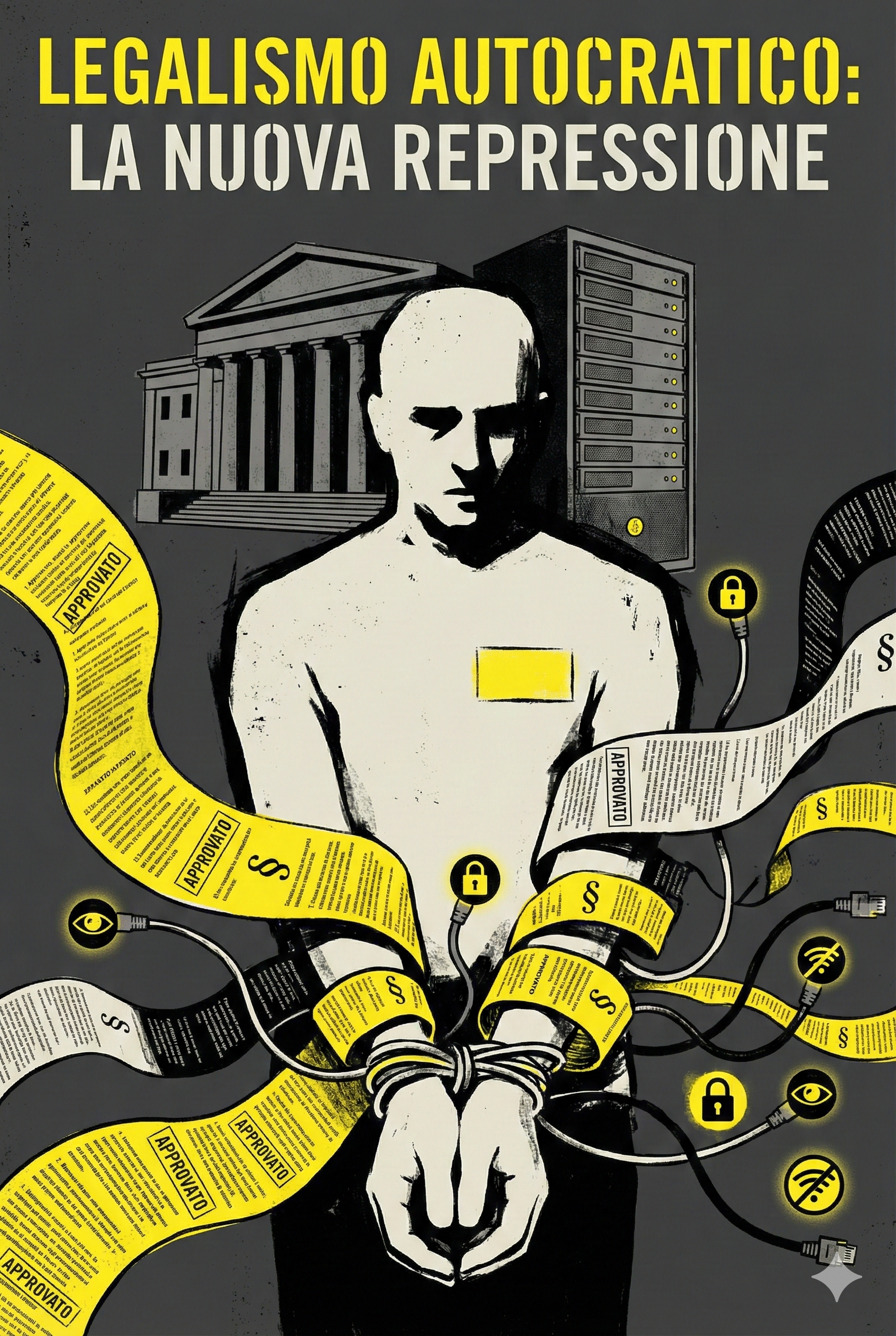
Over the past two years, control systems in several countries across the world have undergone a structural transformation. In particular, in Belarus, Egypt and the Philippines, a sophisticated architecture defined as “autocratic legalism” has become entrenched. The aim is not merely to punish the opposition, but to legally neutralise it through the manipulation of laws and the use of advanced technologies.

On 9 December 2025, Civicus Monitor, the global research platform tracking the state of civil liberties and democratic space worldwide, published the report “People Power Under Attack 2025”, highlighting that Italy is characterised by an “obstructed civic space”.

Dramatic images and videos show the killings during the protests in Iran that began in late December 2025. The Iranian regime launched a brutal crackdown on demonstrations, ordering security forces to deliberately kill civilians. Added to this was an order to cut the country off from the internet to prevent the spread of information and conceal the true death toll.

If you enjoy our newsletter, share it and invite anyone you wish to subscribe by clicking the link at the bottom of the page.

Article 1

The architecture of "autocratic legalism": how repression is transforming between 2024 and 2026
Source: Amnesty International - AI Image

Over the past two years, control systems in several countries worldwide have undergone a structural transformation. While dissent was previously countered primarily through overt physical coercion, the analysis of ongoing dynamics in Belarus, Egypt and the Philippines shows the consolidation of a sophisticated architecture termed by experts "autocratic legalism". The objective is no longer merely to punish the opposition, but to render it technically and legally impossible through the manipulation of laws and the use of advanced digital technologies.

In Belarus, Aliaksandr Lukashenka's seventh term, which began after the elections of 26 January 2025, has been marked by the systematic elimination of any remnant of domestic resistance. As of 31 December 2025, data documents the presence of 1,131 political prisoners, including 167 women. Detention management follows a specific protocol: political detainees are forced to wear yellow badges, a practice that facilitates isolation and abuse within penal colonies.

From a regulatory perspective, the primary instrument is "Resolution No. 319" of June 2025. This regulation classifies foreign financial assistance as extremist activity. Anyone receiving international support for social or monitoring activities risks inclusion on administrative watchlists managed by the KGB, entailing a ban from public office and educational activities for five years following the completion of their sentence. The religious sphere has also been regulated: by June 2025, all religious communities had to undergo a re-registration process based on adherence to "State ideology", leading to the conviction of several Catholic and Orthodox figures for "treason".

The Egyptian repressive system has evolved towards a model of "permanent emergency". The linchpin of the system is the practice of "rotation" (Tadwir): when a detainee completes their sentence or reaches the two-year limit of pretrial detention, authorities open a new legal case with similar charges, preventing their release.

A significant change occurred in February 2024 with the passage of Law No. 3. This measure transferred the security of civilian infrastructure (bridges, railways, stations) to the military and, crucially, extended military jurisdiction to offences related to "basic necessities". Amid high inflation, civilians accused of price gouging or hoarding foodstuffs are tried by military tribunals, where judges are serving military officers answering to the Ministry of Defence, stripping away the guarantee of an independent trial. In January 2025, during the United Nations Universal Periodic Review, the Egyptian government accepted some recommendations regarding public participation, but formally rejected those concerning the abolition of the death penalty and ending the practice of "rotation".

Under the presidency of Ferdinand Marcos Jr., the Philippines shifted its focus from extrajudicial killings to a calculated use of anti-terrorism laws. Despite a Supreme Court ruling in May 2024 (Deduro v. Vinoya) establishing that "red-tagging" (accusing someone of being a communist) constitutes a genuine threat to life, the security apparatus continued to operate through formal "terror-tagging".

This strategy uses the Anti-Terrorism Act (ATA) to paralyse civil society organisations. An emblematic case from 2024 is that of the NGO CERNET: the organisation was accused of financing terrorism based on a single witness testimony relating to events from 2012. The result was the immediate freezing of bank accounts, causing the suspension of humanitarian programmes in over 200 communities. This mechanism allows the State to neutralise an organisation without requiring a final conviction, using the international requirements of the FATF (Financial Action Task Force) as justification to expand legal proceedings.

The digital dimension has become the cross-cutting element of these repressive systems. In Egypt, the use of Predator spyware via "network injection" techniques has been documented. By exploiting national internet service providers' infrastructure, user traffic is redirected to malicious servers to infect devices.

In Belarus, Resolution No. 476 of September 2025 formalised the procedure of "selective disconnection": authorities can cut off telephone and internet services for specific users without a warrant. During the 2025 elections, a block on non-Belarusian (.by) domains was also implemented, turning the national network into a controlled intranet. In the Philippines, new regulations that took effect in January 2024 permit electronic surveillance and the interception of communications, often through proceedings in which the accused receives notification only after the operation has concluded.

Viasna Human Rights Centre (Belarus): https://viasna.org/en

Committee for Justice (Egypt): https://www.cfjustice.org/

Citizen Lab - Analysis of surveillance technologies: https://citizenlab.ca/

OHCHR - Universal Periodic Review (UPR) Egypt 2025: https://www.ohchr.org/en/hr-bodies/upr/eg-index

Financial Action Task Force (FATF) - Philippines Status: https://www.fatf-gafi.org/en/countries/detail/Philippines.html

Supreme Court of the Philippines - Deduro v. Vinoya ruling: https://sc.judiciary.gov.ph/

Article 2

Obstructed civic space: the new Civicus Monitor report
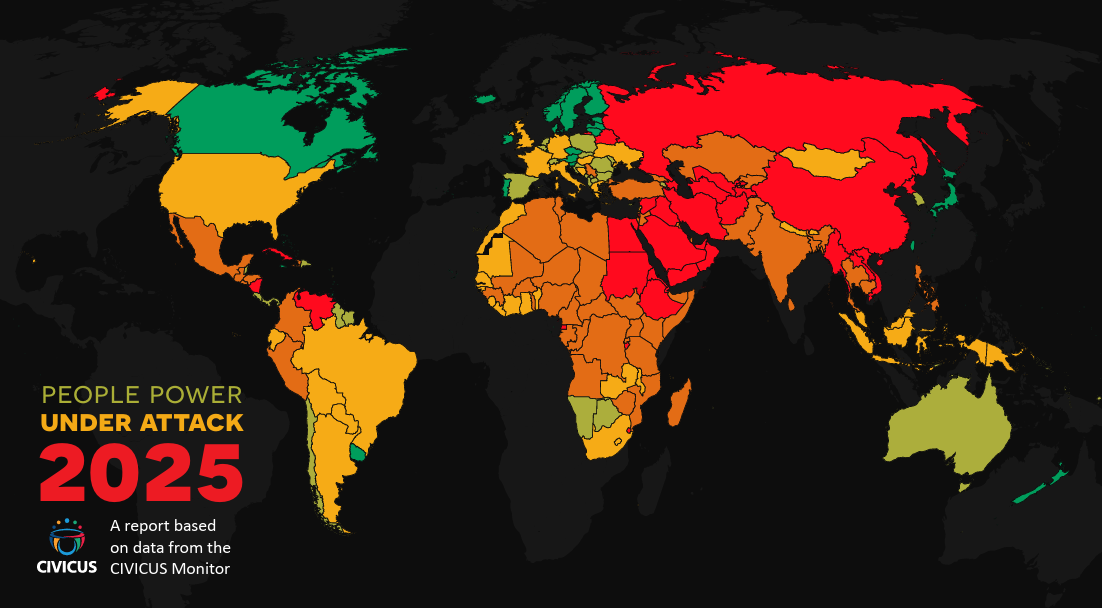
The report "People Power Under Attack 2025" by Civicus Monitor, a global research platform monitoring the state of civil liberties and democratic space worldwide, published on 9 December 2025, highlighted that Italy is now characterised by an “obstructed civic space”.

According to what emerges from the report, a central role in downgrading Italy's civic space rating was played by policies implemented by the executive led by Prime Minister Giorgia Meloni.

The ongoing analysis of multiple civic space data streams allowed Civicus Monitor to assess countries across the following categories: open, narrowed, obstructed, repressed, closed. An obstructed civic space is defined as one that is “heavily contested by power holders, who impose a combination of legal and practical constraints on the full enjoyment of fundamental rights”.

Based on this breakdown, our country is currently on the list of around 40 countries that received the same assessment, including Hungary, Brazil and South Africa, as well as other major Western powers such as France, Germany, the United States of America, Israel and Argentina.

At this point, it is worth retracing recent years marked by the Government's showdown, and recalling some of the measures that contributed to awarding this worrying new “title” to Italy.

In June 2025, Parliament gave final approval to the Security Decree, a decree-law strongly backed by the executive, which sharply increased penalties for those peacefully exercising their right to protest or voice dissent, through harsher punishments and more repressive measures.

In recent days, following violent clashes in Turin during the peaceful protest against the eviction of the Askatasuna social centre, the Italian Government drew up a further security package, on which Amnesty has stated its position.

During 2025, civic space was “obstructed” by the affair involving Paragon's Graphite spyware, in which numerous activists and journalists suffered a massive violation of fundamental human rights, and international standards were breached through the unrestrained use of unlawful surveillance systems.

Furthermore, smear campaigns against the judiciary, poorly protected journalists, and freedom that has likewise become increasingly curtailed in the name of “rules, order and force” have contributed to Italy’s downgrade.

Following the protest for Askatasuna in Turin, Giorgia Meloni wrote on her social media channels that the Government is ready “to do whatever it takes to restore the rules in this Nation”: an unsettling message that, as Amnesty International notes, brings Italy ever closer to Orbán's Hungary and foreshadows an increasingly obstructed civic space for the future.

Article 3

The fierce repression of protests in Iran
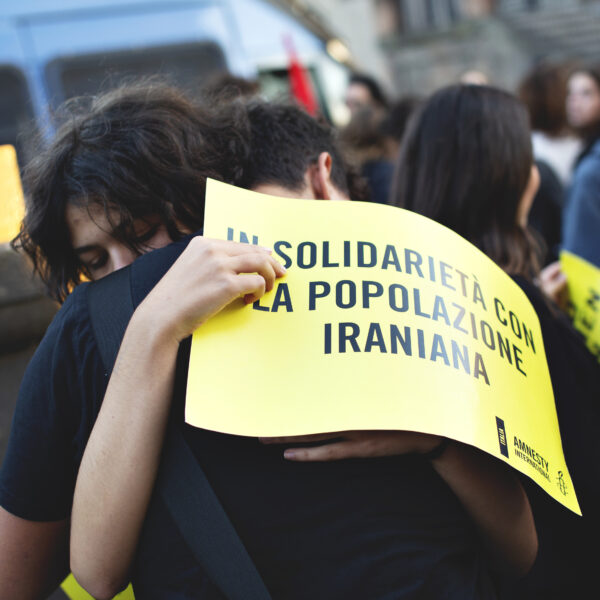
The first month of 2026 concluded leaving dismay and outrage in the face of news and harrowing images emerging from Iran about the ongoing protests across the country against the regime imposed by Ayatollah Ali Khamenei, Iran's current Supreme Leader.

In past years we have already witnessed the harsh crackdown on protests triggered by the death of Mahsa Amini, which gave rise to the Woman, Life, Freedom movement. The recent protests began in late December 2025, initiated by Iranian merchants who shuttered shops and launched strikes in the Grand Bazaar of the capital Tehran, following spiralling inflation, the sharp depreciation of the local currency, and government mismanagement of basic services such as water supply. Protests spread to the rest of the population, who took to the streets not only in support of the merchants, but to demand rights, dignity and freedom. From the very first days of the demonstrations, security forces stepped in with brutal repression: beyond unlawful detentions, numerous protesters were killed by Iranian security forces. As numbers escalated swiftly, human rights organisations, including Amnesty International, immediately condemned the brutal crackdown, calling on the international community to intervene to halt crowd executions and safeguard the right to protest.

Dramatic images and videos surfaced via media outlets in the first weeks of January, showing victims' bodies in black body bags inside makeshift mortuaries for identification by relatives. In the days following the escalation of the protests, gathering information became even more difficult due to the regime's internet shutdown, which halted the flow of news. In addition to blocking information channels and social media, the internet shutdown also crippled financial, logistical, professional and healthcare services. An article published in Wired explains that the network is shut down following a government directive to Internet Service Providers (ISPs) to cut off user access, ordering the disabling or tampering of DNS servers or severing international traffic. Furthermore, while shutting down the internet in a country of 92 million people like Iran might appear an almost impossible feat, the Islamic Republic actually relies on a single major operator connecting the nation to the global internet, acting as a bottleneck that makes it far easier for the government to sever web access. Internet shutdowns are increasingly widespread globally: throughout 2024, there were 296 disruptions across 54 countries, including Myanmar, India, Malaysia, Thailand, El Salvador and also France. Network shutdowns often occur around elections, to curb protest visibility or disrupt communications. According to the Iranian news outlet Zamaneh (an independent, exiled Persian-language news agency based in Amsterdam), the shutdown was intended to conceal lethal repression and prevent documentation. Human rights monitoring groups described it as the State’s “digital war” against society. Moreover, shutting down the internet served not only to stop people posting videos, but also to prevent them from organising protest gatherings and to stem the flow of evidence, when the streets had effectively turned into execution grounds.

Four weeks into the protests, the death toll remains uncertain. State media sources report around 3,000 casualties, whereas independent sources cite over 30,000. As reported by Euronews, among the casualties, a large number of people were listed as missing and many were labelled by Iranian authorities as “terrorists”. Khamenei himself repeatedly stated that the protesters are “rioters and terrorists” affiliated with the governments of the United States and Israel. Medical sources report fatalities caused by gunshots through the back of the neck, indicating that security forces fired at fleeing individuals. Mai Sato, the United Nations Special Rapporteur on the situation of human rights in Iran, reports that victims' families were coerced into paying sums to the Iranian authorities to have bodies returned. The Independent International Fact-Finding Mission on Iran has gathered testimonies from witnesses reporting torture, sexual violence, arbitrary arrests and coerced confessions.

Anonymous Iranian medical staff reported to the Reuters news agency that Iranian forces raided hospitals and took away protesters with gunshot wounds who were about to undergo surgery. Despite the regime isolating the population and suppressing news reporting, the work of NGOs, associations and UN agencies has nevertheless made it possible to bear witness to and condemn the atrocities committed against protesters by Iranian police.
View original email version