
Editorial
Dear Readers,
Last June, the Chinese government banned the mothers of the Tiananmen massacre victims from visiting Wan’an Cemetery to commemorate their loved ones. Prior to this year, Chinese authorities had already taken measures to prevent commemorative events. The ban imposed this year marks an escalation in the severity of these restrictions, directly striking at the sensitivities of the victims' mothers. Amnesty International described the Chinese government's decision as “heartless and devoid of compassion”.
On 19 July, the 2026 FIFA World Cup came to an end. In this tournament, just as in the one played in Qatar in 2022, the social dimension of the event and its impact on human rights were once again underestimated: repressive immigration policies implemented by the United States, violent operations carried out by ICE, denial of entry visas to nationals of certain countries, and discrimination against the LGBTQIA+ community. Amnesty International has called on FIFA not to allow the World Cup to be instrumentalised by certain countries to pursue repressive policies.
South Africa: for years, xenophobic violence against refugees and migrants has gone unpunished, further fuelled by political rhetoric. In 2026, an ultimatum issued by the "March and March" movement led to a mass expulsion disguised as "voluntary return", while vigilante groups even block access to healthcare. Amnesty International calls on the authorities to stop the violence and prosecute those responsible.
If you enjoy our newsletter, please share it and invite anyone you wish to subscribe by clicking on the link at the bottom of the page.
China: ban on commemorating Tiananmen victims
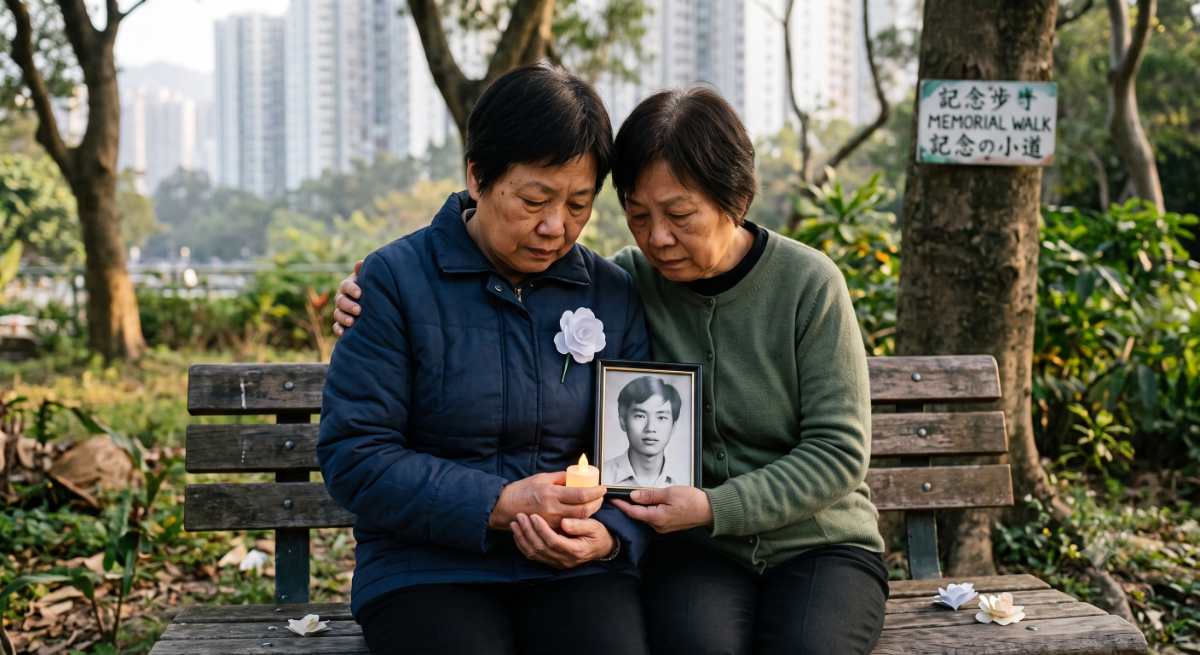
The Chinese government has banned the mothers of the victims of the Tiananmen massacre from visiting Wan’an Cemetery to commemorate their loved ones. A decision described by Amnesty International as “heartless and devoid of compassion”.
On 4 June 1989, the Chinese military violently crushed student-led demonstrations that had been ongoing for several weeks, calling for democracy and respect for human rights. Although no official casualty figures were ever released, it is estimated that several hundred civilians lost their lives. Iconic remains the image of the unarmed protester who blocked a column of Chinese tanks in the square.
Prior to this year, the Chinese government had already taken measures to prevent commemorative events. The first instance occurred in 2021, when Hong Kong police banned the annual vigil commemorating the Tiananmen Square protests in Beijing, citing the risk of spreading coronavirus among demonstrators. Furthermore, owing to their special status, Hong Kong and Macao are the only two places in China where demonstrations commemorating the protests and their victims have historically been permitted. In the rest of China, they have always been prohibited. Chow Hang-tung, Vice-Chair of the Hong Kong Alliance in Support of Patriotic Democratic Movements of China, was arrested at dawn on the day of the commemoration. The vigil was cancelled, the museum dedicated to the victims' memory was closed for the entire week, and Victoria Park, the vibrant heart of the city, was locked down by some 7,000 police officers.
The ban imposed this year directly harms the sensitivities of the victims' mothers, who until now had never been barred from visiting the cemetery to remember their loved ones who perished on that tragic day in 1989. The Chinese government's decision thus represents an escalation compared to the restrictions adopted in previous years. Sara Brooks, Amnesty International’s Regional Deputy Director, in addition to calling the measure “cruel”, stated that the Chinese authorities must hold themselves accountable for the grave human rights violations committed on 4 June 1989, and that families must be allowed to mourn the 37 victims who lost their lives simply while exercising their right to protest. As reported by Human Rights Watch, on 28 December 2025 in Beijing, the Public Security Bureau obstructed, for the first time, a gathering of the Tiananmen Mothers, a victims' support group that has held these meetings since 2009. On 27 May, the Tiananmen Mothers issued a statement signed by 107 members, urging the Chinese government to address, through lawful means and in a spirit of peace, all unresolved wounds and injustices left by those events, and to restore justice and dignity to every family who lost a loved one.
In connection with the events in Tiananmen Square, the Chinese government arrested thousands of people on charges of “counter-revolution” and other criminal offences. The absence of international sanctions following the Tiananmen Square massacres certainly did nothing to improve China's already dismal human rights record.
Despite the bans imposed, the Tiananmen protests and the victims of that tragic day continue to be remembered across the world—not only to commemorate those who paid with their lives for a legitimate demand for democracy, but also to focus international attention on the Chinese government's responsibility for those events and towards the victims.
Red card for the 2026 World Cup
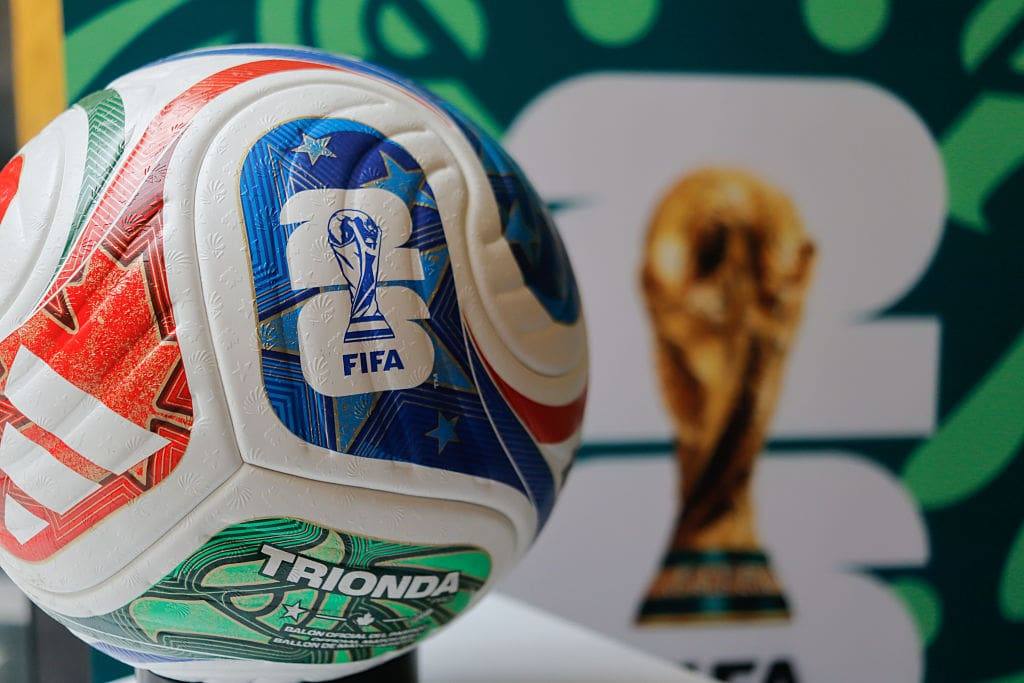
The 2026 FIFA World Cup came to an end on 19 July. For the first time, the tournament was contested by 48 teams across three host nations: the United States, Mexico, and Canada.
In this record-breaking World Cup, accompanied by exceptionally high economic forecasts, the social dimension of the tournament and its impact on human rights were once again disregarded, just as they were during Qatar 2022.
In the days leading up to the final between Spain and Argentina, several organisations—including Human Rights Watch, the Sport & Rights Alliance, Football Supporters Europe, and Amnesty International—expressed their concern and dismay at the spectacle unfolding before them.
Central to these concerns was the focus on the repressive immigration policies of the United States, alongside the violent operations of ICE, which during that very period was responsible for the killing of at least two migrants in Texas and Maine.
Participation in the tournament was also severely restricted: citizens of several countries (including Haiti, Côte d'Ivoire, Iran, and Senegal) were denied entry visas, preventing them from actively supporting their national teams.
The LGBTQIA+ community was likewise placed in jeopardy, facing severe discrimination and feeling unsafe in an arena where sportsmanship and solidarity should have prevailed.
In this context, the United States, Mexico, and Canada ought to have played a crucial role in championing respect and protection for millions of people who, on the contrary, felt threatened and endangered. According to the United Nations, FIFA shares responsibility, as the organisation and its affiliated federations are bound to uphold human rights. Looking at FIFA's track record—from the Qatar World Cup to the upcoming tournaments in Saudi Arabia—it appears that the governing body is failing to take its promises and responsibilities seriously, placing profit above human rights and the well-being of football fans.
On the occasion of the 2026 World Cup, Amnesty International called on FIFA to ensure that such events are not used as a pretext by ICE or other militarised authorities to carry out immigration status checks; above all, it stressed that no one should face discrimination and that human rights must always be respected. At such major sporting events, it is essential that sport, fellowship, and inclusion triumph over repression and discrimination.
South Africa: xenophobia becomes systemic, blocking even access to healthcare
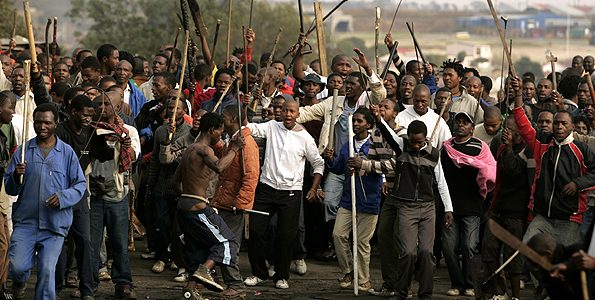
For several months, South Africa has been experiencing a new and severe wave of violence against refugees, asylum seekers, and migrants from other African countries. These are not isolated incidents: according to data compiled by Xenowatch, the monitoring project run by the African Centre for Migration & Society (ACMS) at the University of the Witwatersrand, 406 verified xenophobic incidents and 75 deaths were recorded between 2022 and 2025; in 2025 alone, 151 incidents occurred. In the first five months of 2026, an additional 22 incidents were recorded, resulting in 9 deaths and the displacement of over 4,000 people—an escalation that reached a decisive turning point in mid-2026.
That turning point was an ultimatum issued by the "March and March" movement, entirely devoid of legal standing, which ordered all undocumented migrants to leave the country by 30 June. The directive was accompanied by weeks of intimidation and violence, particularly in Gauteng and KwaZulu-Natal provinces, following which authorities described the departure of more than 53,000 individuals from South Africa as a "voluntary return". Research by Dr Jean Pierre Misago of the ACMS tells a very different story: an exodus driven by death threats and violence, amounting to an unlawful mass expulsion—one deeply rooted in a political narrative cultivated over many years.
South Africa has indeed long struggled with exceptionally high youth unemployment and strained public services. Several political leaders—including Gayton McKenzie of the Patriotic Alliance and groups affiliated with "Put South Africans First"—have built political capital by blaming migrants for crime and the collapse of public infrastructure. The data demonstrates otherwise: approximately 144,512 refugees and asylum seekers are registered in South Africa, representing a mere 0.2% of a total population of 60.6 million. However, this same narrative has also found concrete expression within the legislative sphere.
This refers to the Draft Revised White Paper on Citizenship, Immigration and Refugee Protection, the overhaul of immigration legislation approved by the Cabinet in April 2026. Among the measures most strongly contested by civil society and the UNHCR are the "first safe country" principle (which would prevent asylum seekers from choosing where to apply, creating the risk of chain refoulement), a points-based residence system grounded in economic merit rather than length of stay, and the relocation of refugee reception offices to border posts, which would drastically impede access to legal representation. Concurrently with this legislative push, an even more direct practice has taken root at border crossings and in the streets: ordinary citizens taking policing into their own hands.
Groups such as Operation Dudula carry out shop searches, forced evictions, and road blockades, improperly invoking citizen's arrest provisions under South African law—which in reality apply only to serious offences committed in plain sight, such as murder or armed robbery. Verifying residence and identity documents is the exclusive remit of immigration officers and the South African Police Service (SAPS), a mandate that competent authorities have not always managed—or chosen—to enforce.
This is confirmed by the South African Human Rights Commission, which noted that despite commitments secured from the Department of Health and the National Police Commissioner, vigilante activities have continued unabated, in some instances accompanied by police refusal to register victims' complaints. Amnesty International has documented incidents where SAPS officers stood by as passive observers during raids and evictions, as well as cases in KwaZulu-Natal where people seeking refuge in police stations to escape mobs were forcibly bundled onto buses for alleged "status verification". It is precisely within spaces intended to provide protection and care that this pattern has assumed its most extreme form.
This phenomenon has been termed "healthcare xenophobia": vigilante groups have staked out entrances to facilities including Kalafong Hospital in Tshwane, Hillbrow Community Health Centre and Jeppe Clinic in Johannesburg, and Addington Hospital in Durban. They subject patients to arbitrary tests—demanding they speak local languages such as Setswana or Sepedi—and threaten and turn away anyone who fails or cannot produce a South African identity document. The fallout from these blockades is already evident: individuals with chronic conditions such as HIV, tuberculosis, or diabetes are abandoning treatment out of fear, while pregnant women miss antenatal check-ups and only present to hospitals in acute emergencies—a direct violation of Section 27 of the South African Constitution, which guarantees everyone the right to basic healthcare. It is precisely against this siege of healthcare facilities that civil society mobilisation has gathered strength.
Amnesty International South Africa, alongside dozens of organisations—including Lawyers for Human Rights, Kopanang Africa Against Xenophobia, and the Scalabrini Centre of Cape Town—has spearheaded a joint statement demanding that authorities halt all forms of coercion against refugees and asylum seekers, launch independent investigations into the conduct of law enforcement personnel, and prosecute vigilante groups responsible for evictions, hospital blockades, and assaults. The coalition also calls on the Independent Electoral Commission to sanction political parties and candidates deploying xenophobic rhetoric on the campaign trail, and on the Government to fully implement the National Action Plan to Combat Racism, Racial Discrimination, Xenophobia and Related Intolerance. This appeal was captured succinctly by the Executive Director of Amnesty International South Africa, Shenilla Mohamed, who affirmed that while the right to peaceful protest is protected, violence, intimidation, and "vigilante enforcement" of immigration laws remain unlawful: history has already shown where this path leads.
View original email version
Did someone send you this link? Get it every month
Subscribe to Diritti al Punto: the next issue straight to your inbox.
Check your inbox
We have sent you a confirmation link. Click the button in the email to complete your subscription. The link is valid for 7 days.
Can't see the email? Check your spam and promotions folders, or.
